

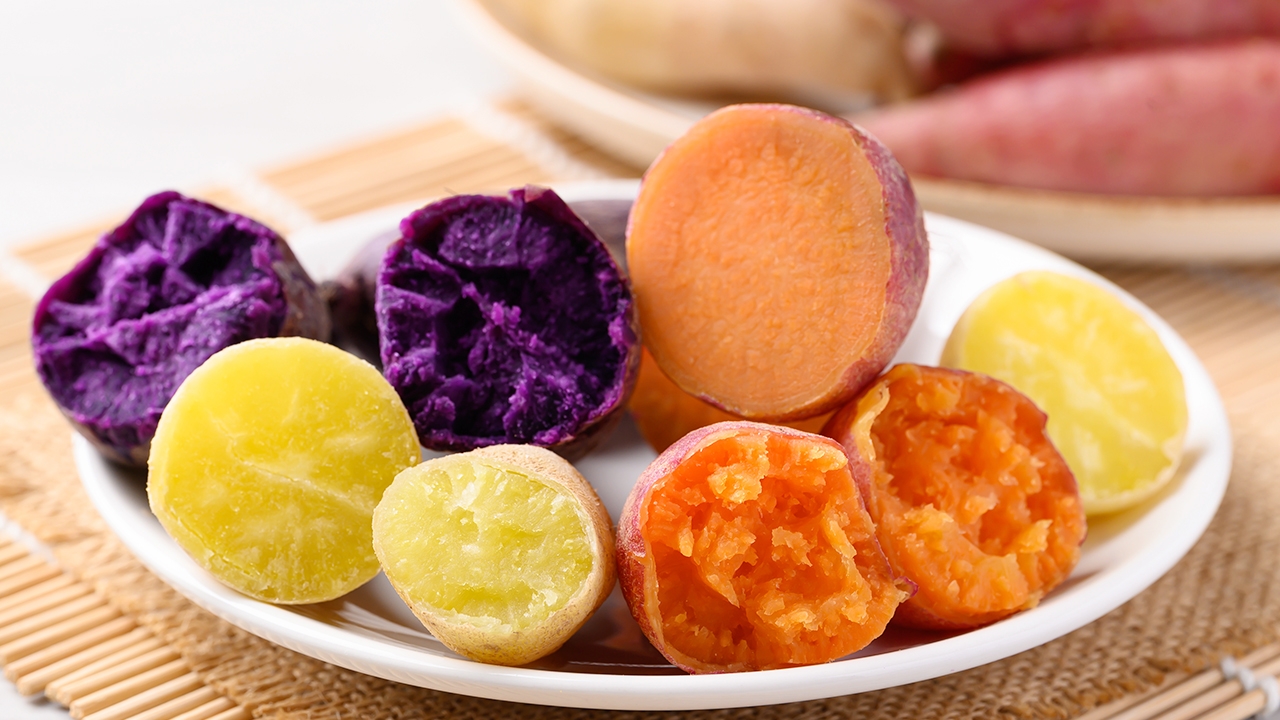
In an era when health care trends are booming, " sweet potatoes of various colors" have become one of the most popular and easily accessible ingredients that provide long-lasting fullness. Whether Japanese sweet potatoes or Thai sweet potatoes, many may not know that each color of sweet potato has distinct key nutrients and textures. Choosing the right one for your health goals can maximize benefits.
| Characteristics | Orange / Yellow | Purple | ⚪ White |
| Texture | Juicy, soft, and smooth | Relatively dry, dense, and chewy | Dry, crumbly, starchy |
| Flavor | Sweet and juicy, delicious when made into chewy sweet potato snacks | Mildly sweet with a distinctive aroma | Least sweet, with a creamy taste |
| Key Nutrients | Beta-carotene | Anthocyanin | Phenolic compounds and resistant starch |
Orange / Yellow Sweet Potatoes (Japanese sweet potato group) Notably rich in beta-carotene and vitamin A, which support eye health, boost immunity, and nourish the skin. They also have the juiciest, sweetest, and softest texture, often roasted or made into healthy chewy sweet potato snacks.
Purple Sweet Potatoes Popular among anti-aging enthusiasts, the deep purple color is packed with anthocyanins, powerful antioxidants that reduce cell degeneration, support cardiovascular and vascular health, and help regulate blood sugar levels. Their texture is firmer and chewier than other varieties.
⚪ White Sweet Potatoes Though less vibrant in color than the first two, they stand out for their resistant starch, a special type of starch acting like dietary fiber. It promotes healthy bowel movement by feeding beneficial gut bacteria (prebiotics), supporting efficient digestion. However, consumption should be moderated as they contain slightly higher carbohydrate content than other colors.
Regarding glycemic index (GI), all sweet potato colors fall into low to moderate ranges, especially when boiled or steamed, providing longer satiety and avoiding insulin spikes. This makes them popular health foods for many.