

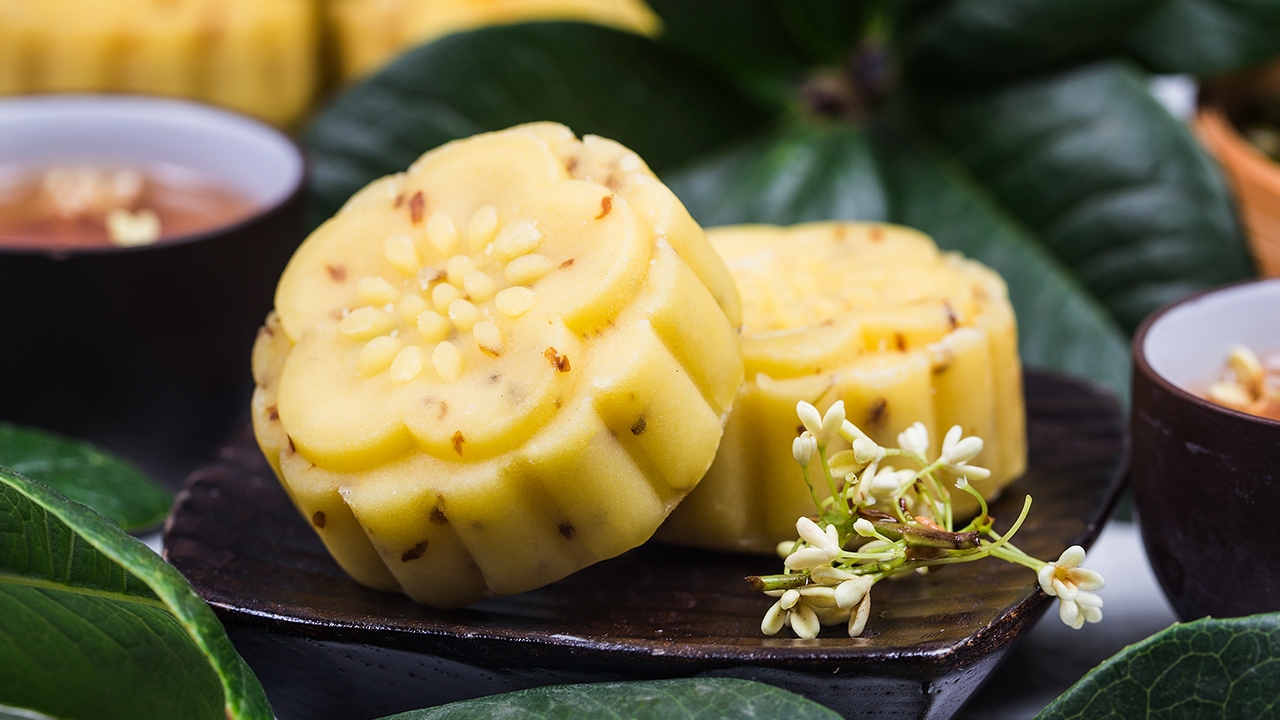
For fans of period Chinese dramas, whether historical or fantasy, it’s hard to miss scenes where the main characters sip tea while enjoying intricately beautiful pastries, one of the most frequently mentioned and seen treats being "Guihua Cake" or what many know as Guihua Gao (桂花糕 - Osmanthus Cake), which has sparked a craze, making viewers salivate and eager to try this delicacy inspired by the series.
In Chinese, the word "Hua" (花) means flower, while the term "Guihua" (桂花) refers to the osmanthus flower, a small golden-yellow flower known for its uniquely sweet fragrance.
Therefore, the Guihua Cake we see in Chinese dramas is actually "Osmanthus Flower Cake" with a history of over 300 years dating back to the Ming dynasty.
This ancient pastry comes in various regional styles, but the two most popular types are
1. Crystal jelly type, with a soft, chewy, bouncy texture, translucent enough to see the golden osmanthus petals inside, offering a mild sweetness and refreshing aroma, usually served chilled.
2. Rice cake type, made from mung bean flour, soft and ivory-white, topped with osmanthus syrup.

Beyond its visually appealing look that enhances drama scenes, this traditional Chinese pastry carries auspicious meanings and reflects the refined lifestyle of the upper class in the past.
The secret to this pastry’s deliciousness lies in the smooth mung bean texture and the fragrant aroma of osmanthus flowers.

Step 1 Prepare mung beans and grind finely.
Step 2 Cook the cake mixture.
Step 3 Mold and serve.
Guihua Cake In Chinese series, this pastry is not just a brief background prop but a culinary cultural heritage reflecting the delicate artistry of ancient Chinese people. Enjoying this floral-scented sweet pastry while watching your favorite drama is a joyful experience that fans of Chinese entertainment and cultural traditions should not miss.