

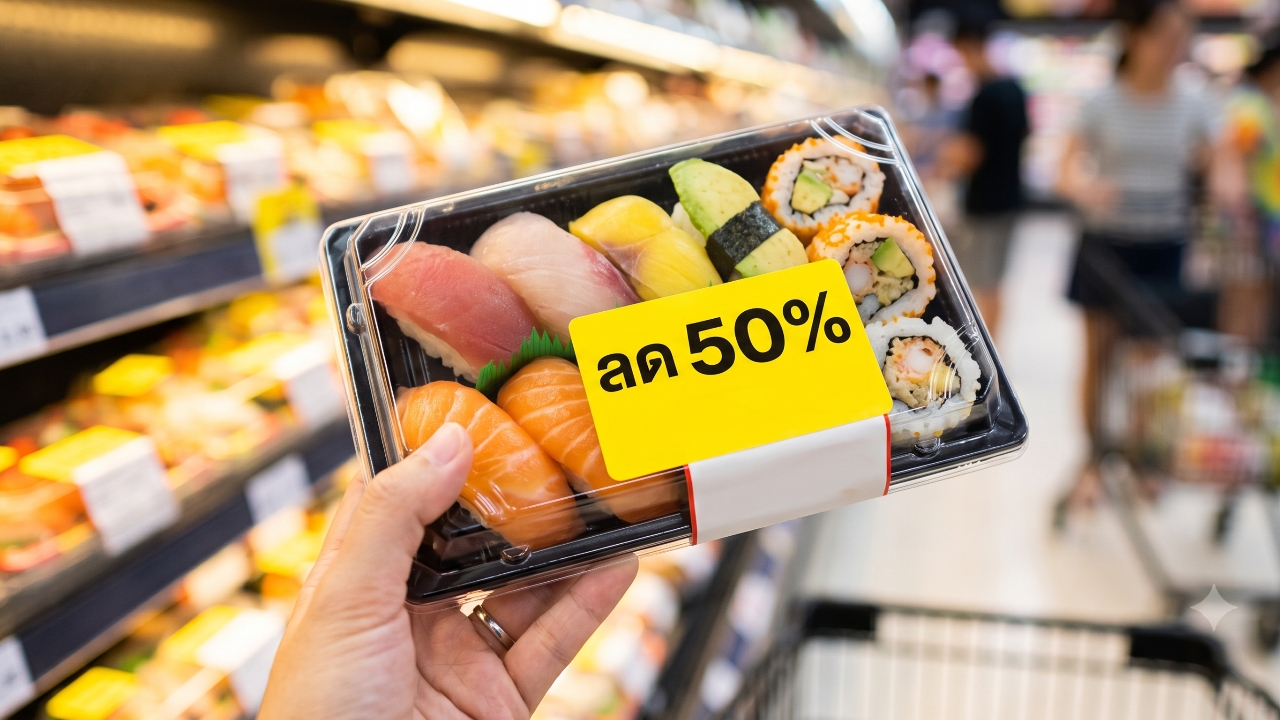
In an era of rising prices, budget-saving tips to scan"yellow-label foods"discounted in supermarkets: how to choose well, keep quality intact, avoid food poisoning, and meet the needs of value-conscious and budget-savvy shoppers
As living costs rise, managing the budget, especially"food expenses"which are a major daily cost, becomes important for many. A popular choice for value shoppers is heading straight to the"yellow-label food"or clearance sale foods in leading supermarkets, often discounted from 30% up to 70%
But getting the best value from discounted foods is not just about finding the cheapest price tag; it requires savvy selection methods to ensure good quality and safety. Here are professional tips for scanning yellow-label foods.
To maximize benefits when buying discounted supermarket foods, consider these four key factors.
The first step upon entering the discounted food zone is to read the expiration labels. According to the Food and Drug Administration (FDA), these differ as follows:

Though prices drop by half or more, safety must not be compromised. Packaging of yellow-label foods must be intact.

For fresh items like pork, chicken, or seafood on yellow-label, inspect carefully. Meat should have no dark greenish color or sliminess. Fruits and vegetables may have some bruising from discounting but must have no mold or sour odors indicating spoilage.
Midday (about 1:00–3:00 PM): usually bakery, ready-to-eat food, or fresh produce from the morning batch.