

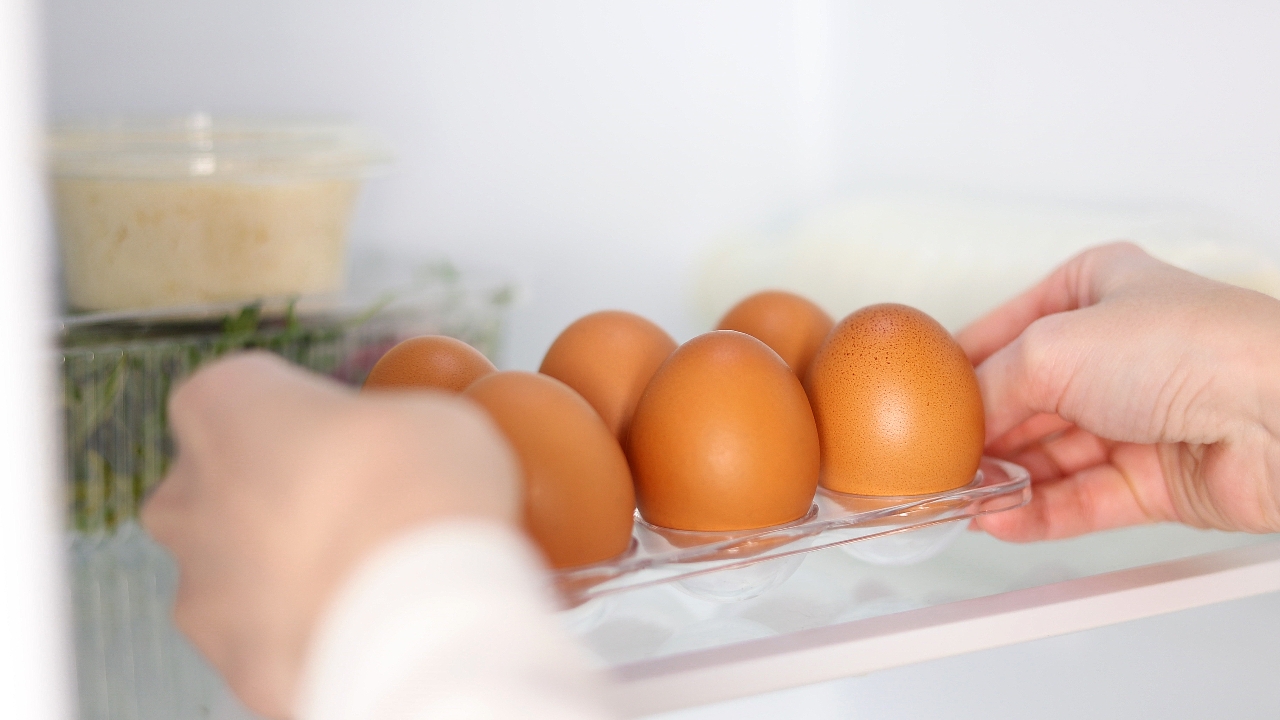
Chicken eggs are a common household staple, but did you know that improper storage can cause them to spoil faster? Let's look at scientifically proven methods to store eggs so they remain fresh and usable for over a month.
"Chicken eggs"are a versatile dry food ingredient found in nearly every kitchen. However, many people who buy eggs in bulk to stock up often face the problem of eggs spoiling prematurely or yolks becoming runny and less fresh, even when stored constantly in the refrigerator.
Food science explains this: knowing proper storage methods not only extends the shelf life of eggs but also helps preserve their nutritional value and effectively prevents bacterial contamination.
A common well-intentioned practice is washing eggs before storing them. However, food safety experts advise against washing eggs before storage because the eggshell has a natural protective coating (cuticle) that prevents moisture loss and blocks bacteria like Salmonella and external dirt from entering the porous shell. Washing eggs removes this protective layer, causing eggs to spoil faster. If eggs are dirty, gently wipe them with a dry cloth or paper towel instead.
To extend egg freshness beyond one month, here are simple tips you can follow immediately:

Surveys show that eggs stored at normal room temperature last about 7–10 days on average. However, if stored properly in the refrigerator following the above steps, eggs can remain fresh for 3–5 weeks, or even over a month.
If eggs have been stored for a long time and you're unsure how fresh they are or if they're still safe to eat, you can perform a simple test by"floating them in water"
Paying attention to these small storage detailsfor your ingredientsnot only helps save money during tough economic times but also ensures you and your family enjoy clean, fresh, and safe meals every time.