

The challenges of managing food for football players, especially in a tournament like the World Cup, and how the chef team behind the kitchen works.
Managing footballers who consume up to 6,000 kilocalories daily involves urine tests to measure hydration levels and precise calculations of protein and carbohydrate ratios for every meal. Importantly, they strive to make players feel at home despite being over 7,000 kilometers away from Norway.
This is not just about advanced sports science but also about the waffle maker they brought across the ocean with them.

At The Westin Copley Place hotel in Boston's Back Bay, three chefs from Norway's national team are preparing lunch before the final group stage match against France. The chefs must prepare four meals a day to serve the team staff and players, totaling70 people.If Norway reaches the final on 19 July, the kitchen staff's mission will extend over 54 days, serving more than 200 meals.
A report by The Athletic revealed that Norway's head chef brought nearly 300 kilograms of salmon, Arctic char, halibut, and trout from Norway, along with 100 kilograms of Jarlsberg cheese and 80 kilograms of traditional Norwegian brown cheese, avoiding the need to source ingredients from local supermarkets.

The reason Norway's chefs transport ingredients from home is not for luxury but because Norwegian salmon is renowned as the 'wagyu of the sea.' As the world's second-largest seafood exporter, this industry generates one-tenth of Norway's economy, so managing ingredient logistics is not a barrier.
Christian Karlsson, a chef working with Norway's national team since 1998, noted changes over two decades: in the past, players were content with burgers or pizza, but now they understand their bodies are tools for their careers and take nutrition seriously.
Patrick Berg, a midfielder from Bodø/Glimt, a top Norwegian league club, is one player who prioritizes his body. He strictly avoids gluten and lactose, having learned through experience which foods optimize his performance.
Naturally, striker Erling Braut Haaland, a world-class player on Norway's national team,in addition to valuing identity,also pays great attention to his health.

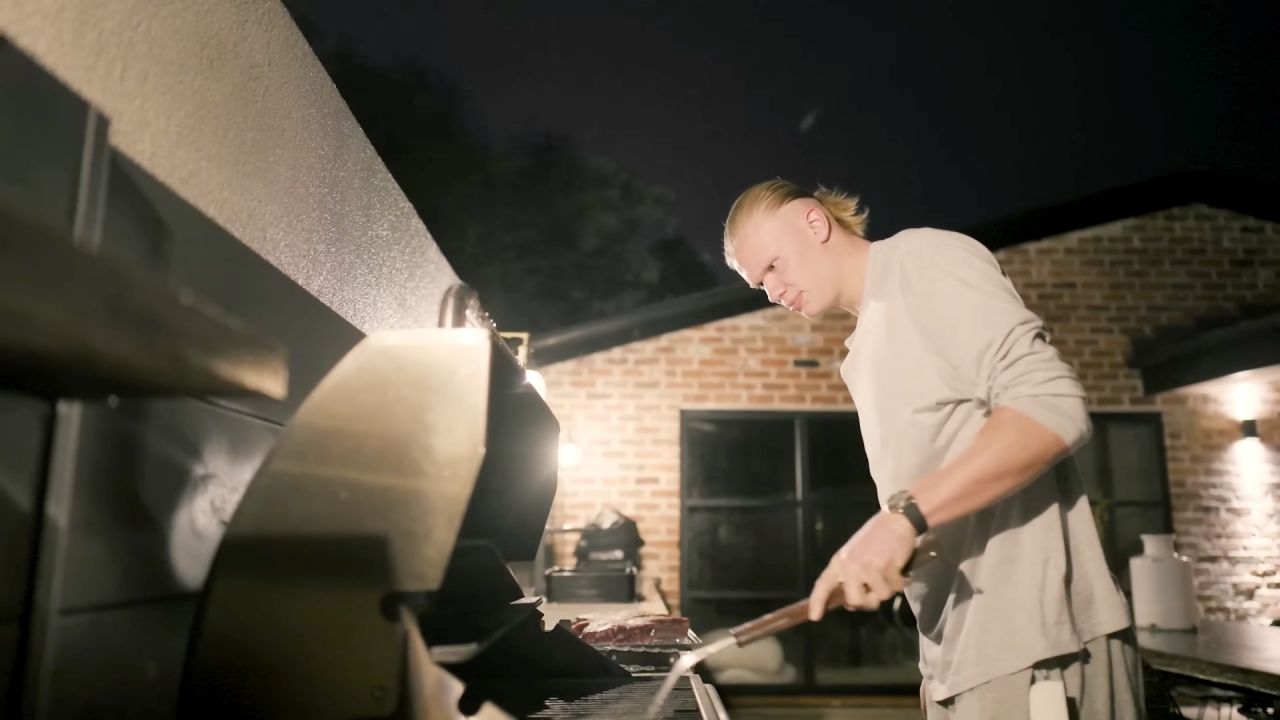
Haaland's personal YouTube channel showcases his daily routines as a professional footballer, especially his diet involving 6,000 kilocalories a day—a challenging task that many athletes admit is harder than competing itself.
Amid strict nutritional control, the chefs also focus on familiarity. Karlsson observed most players have lived and played abroad from a young age, so when they gather for the national team camp, the atmosphere should feel like returning home, evoking memories of family-cooked meals.
This is why the chefs decided to bring their own waffle maker to serve waffles with brown cheese, accompanied by raspberry and strawberry jams, tomato sauce, Mills brand caviar, and Nugatti, a Norwegian chocolate spread.
However, the most popular dish among Norway's players is oatmeal, simmered with milk for an hour and topped with bananas, nuts, berries, honey, cinnamon, and sugar. This breakfast provides complex carbohydrates. Even coffee must be familiar; the team brought coffee beans and four coffee machines because quality coffee is essential for modern players, including Haaland.
Eating together four times a day for nearly two months could become monotonous without good design. The chefs opted for long buffet tables instead of identical plated meals to create a relaxed atmosphere and encourage players to put down their smartphones and talk with teammates.

The chefs also designate one day a week as a cheat meal day, featuring relaxed dishes like tacos, pizza, or homemade burgers. If players only eat strict, health-focused food, they risk burnout, so small changes provide a good balance.
Interestingly, while the Scotland national team had not yet been eliminated, they stayed at the same hotel. Sometimes Norway’s chefs had to clearly specify how their players’ meals should be similar or different from Scotland’s chefs’ requirements.
Although the chefs behind Norway's players and coaches don't compete on the field, they are a crucial force supporting Norway's superstars' success in the world's biggest football tournament, the 2026 World Cup.
References:YouTube Erling Haaland,The Athletic
Photo: Getty Images