

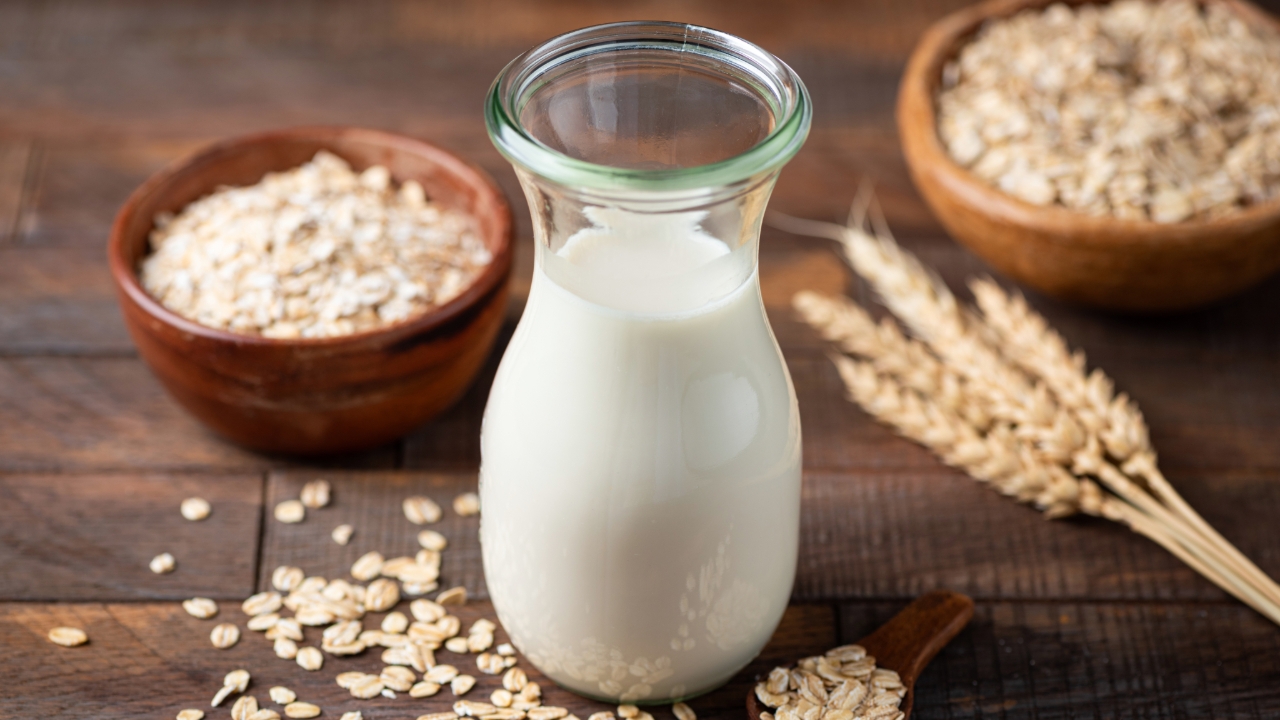
Nowadays, " oat milk " has become a popular drink among health enthusiasts. Many have switched to drinking it instead of " cow's milk " because they believe it is easier to digest, lower in calories, and beneficial for the body. However, in reality, these two types of milk differ in nutritional value, so the choice depends on one's health and individual needs.
Oat milk is made from oats, so it contains no lactose or cow's milk proteins. It is suitable for those allergic to cow's milk or unable to digest lactose. Drinking it does not cause bloating or stomach pain that some experience with cow's milk.
Additionally, oat milk is low in saturated fat and contains no cholesterol. It also has beta-glucan fiber, which helps support heart health when consumed in appropriate amounts.
However, most oat milk has much less protein than cow's milk, and some brands may add sugar or flavorings. Therefore, it is advisable to choose unsweetened formulas and products fortified with calcium, vitamin D, and vitamin B12.

Cow's milk remains a source of high-quality protein, with about 8 grams of protein per glass, including essential amino acids the body needs. It is suitable for children, teenagers, seniors, and those who exercise regularly.
Moreover, cow's milk is rich in calcium, phosphorus, vitamin B12, and nutrients that help maintain bones, teeth, and muscles. However, it is not suitable for those allergic to cow's milk or lactose intolerant, who may experience bloating, stomach pain, or diarrhea after drinking. Those concerned about fat content can opt for low-fat or skim milk.


If the goal is to obtain natural protein and calcium, " cow's milk " still has the advantage, especially for children, seniors, and those who exercise. Cow's milk is also an affordable protein source that is widely available in the market.
But if you want to avoid animal products, have lactose intolerance, or want to increase fiber intake, " oat milk " is a good option. It is recommended to choose unsweetened formulas fortified with calcium and vitamin D for more complete nutrition.
However, the choice of milk to drink should not follow trends blindly but rather be based on individual health and nutritional needs, as no milk type is best for everyone; only the one most suitable for each person.