

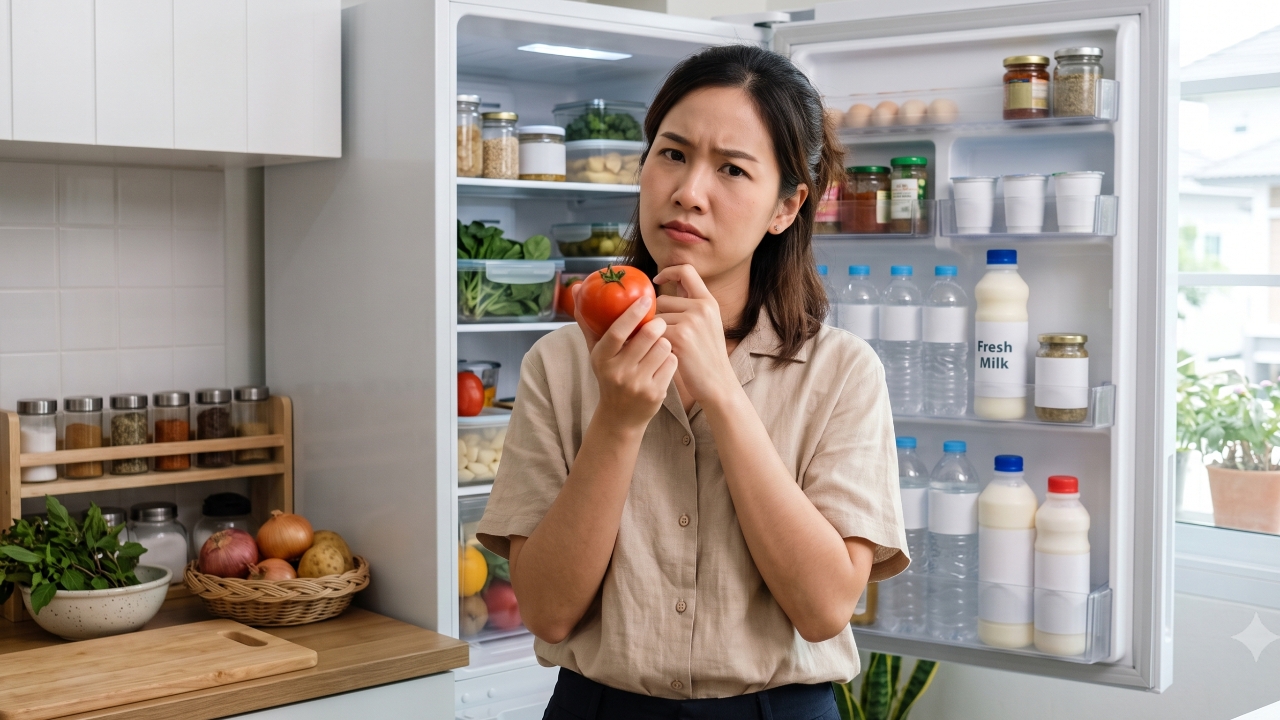
Did you know? Some garden vegetables actually spoil faster and lose their flavor when stored in the refrigerator. Let's check out 5 popular vegetables better kept outside the fridge to extend their freshness.
Many believe stuffing all produce into the refrigerator’s vegetable drawer is the best way to preserve food. However, some garden vegetables—especially tropical plants or root crops—have physical structures that do not tolerate very low temperatures.
Food science studies reveal that the high relative humidity combined with low temperatures inside refrigerators can damage plant cell walls. This causes toughness, flavor changes, or accelerates spoilage much faster than keeping them at normal room temperature.
If you're wondering why your ingredients spoil inside the fridge, check if any of these 5 garden vegetables are among them.
Refrigerating tomatoes halts their natural ripening process. The cold breaks down internal tissue, making the texture grainy, soft, and mushy, and causing loss of their distinctive aroma. It's best to store them in a ventilated basket at room temperature.
Onions require airflow and low humidity. When refrigerated, moisture in the vegetable drawer converts onion starch into sugar, causing the flesh to become soft, mushy, and encouraging rapid black mold growth.

Cold temperatures in the fridge quickly convert potato starch into sugar, making the texture hard and causing discoloration when cooked. They also spoil faster. The proper storage is in a paper bag kept in a dark, dry place.
Garlic dislikes moisture. Refrigeration stimulates sprouting of green shoots, causing the cloves to shrivel, soften, and develop mold easily on the skin.
These Thai herbs are especially sensitive to cold drafts. Exposure to low temperatures turns their leaves dark black, causes wilting, and rapid rotting into liquid within days. It’s best to place their stems in a glass of water like flowers and keep them on the kitchen counter.
Choosing the right storage method for each type of vegetable not only saves refrigerator space but also reduces food waste and saves money.