

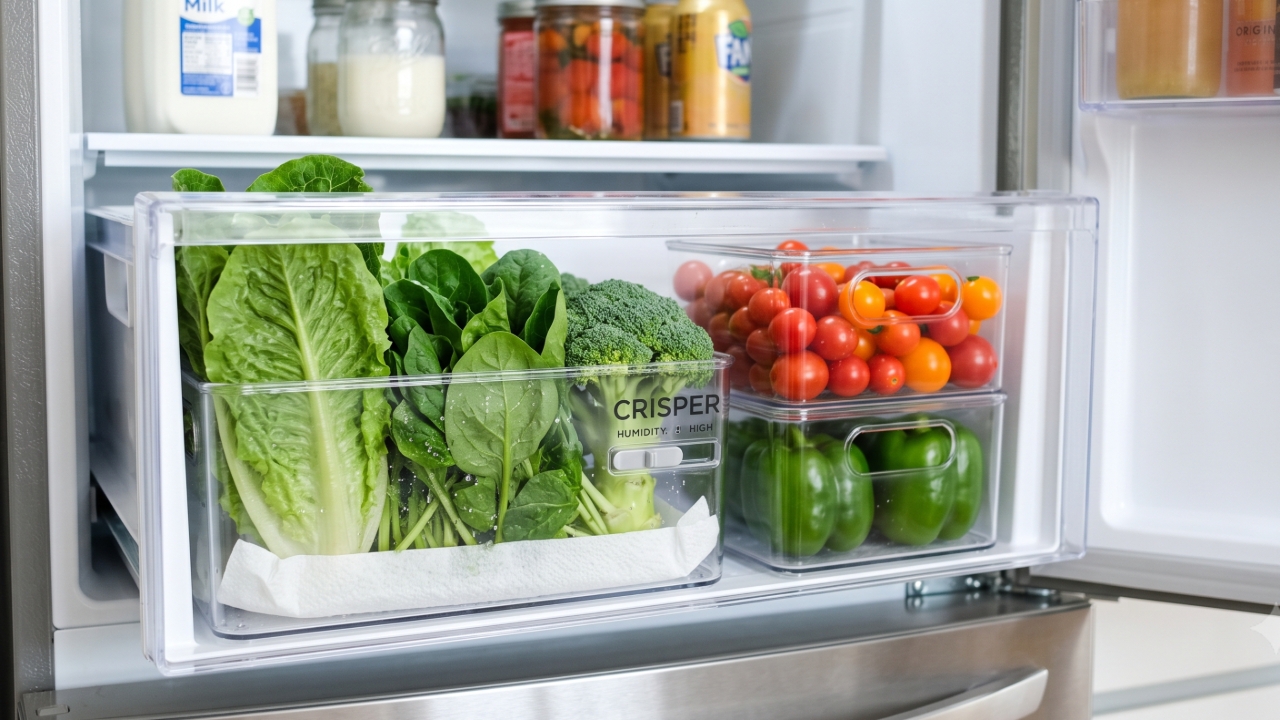
Are you tired of buying vegetables only to find them spoiled in the refrigerator after just a few days? Here is a scientifically proven way to organize your vegetable drawer to keep them fresh and crisp up to twice as long, saving money easily.
Have you ever bought fresh vegetables intending to cook healthy meals, only to see the leafy greens wilt and spoil within a few days, forcing you to throw them away regretfully? According to the Food and Agriculture Organization (FAO), one in three food items produced worldwide becomes food waste. Fresh vegetables and fruits are among the most frequently discarded due to improper storage.
Allowing vegetables to spoil not only harms the environment but also wastes money unnecessarily. Learning how to store vegetables in the refrigerator and properly organizing the vegetable drawer is a key tip to extend the freshness of your ingredients up to twice as long.
Organizing your refrigerator is not just about neatness; it involves understanding the nature of each vegetable type. You can follow these simple steps:

Some vegetables and fruits like tomatoes, bananas, and apples release ethylene gas, which speeds up ripening and spoilage. Storing them together with leafy greens such as lettuce, broccoli, or coriander causes the greens to yellow and spoil much faster. Therefore, keep them packaged separately and stored apart.

Excess moisture is the biggest enemy of fresh vegetables. Before placing vegetables in containers or zip-lock bags, use multipurpose paper towels to line the bottom or loosely wrap the vegetables. This helps absorb condensation from cold temperatures and prevents direct water contact with the vegetable surfaces.
Most refrigerators have a crisper drawer at the bottom designed to control humidity appropriately, preventing cold air from drying out vegetables. When organizing, place heavier vegetables at the bottom and delicate leafy greens on top to avoid crushing.
The Department of Health advises that if you do not plan to cook immediately, avoid washing vegetables before refrigeration, as moisture trapped in the leaves encourages rapid mold and bacterial growth. If vegetables have dirt, gently brush or wipe them off with a dry cloth before storing. If washing is necessary, ensure they are completely dry before placing in the fridge.
The ideal temperature to keep fresh vegetables in good condition and slow microbial growth is between 1°C and 4°C. Temperatures too high cause vegetables to wilt quickly, while freezing temperatures damage vegetable cells, causing frost damage.“Frost damage”which makes them inedible.
Taking a little time to properly organize your vegetable drawer and choosing storage methods suited to each type of ingredient not only keeps your vegetables fresh, crisp, and nutritious up to twice as long but also reduces household expenses, cuts down food waste, and promotes lasting good hygiene for the whole family.