

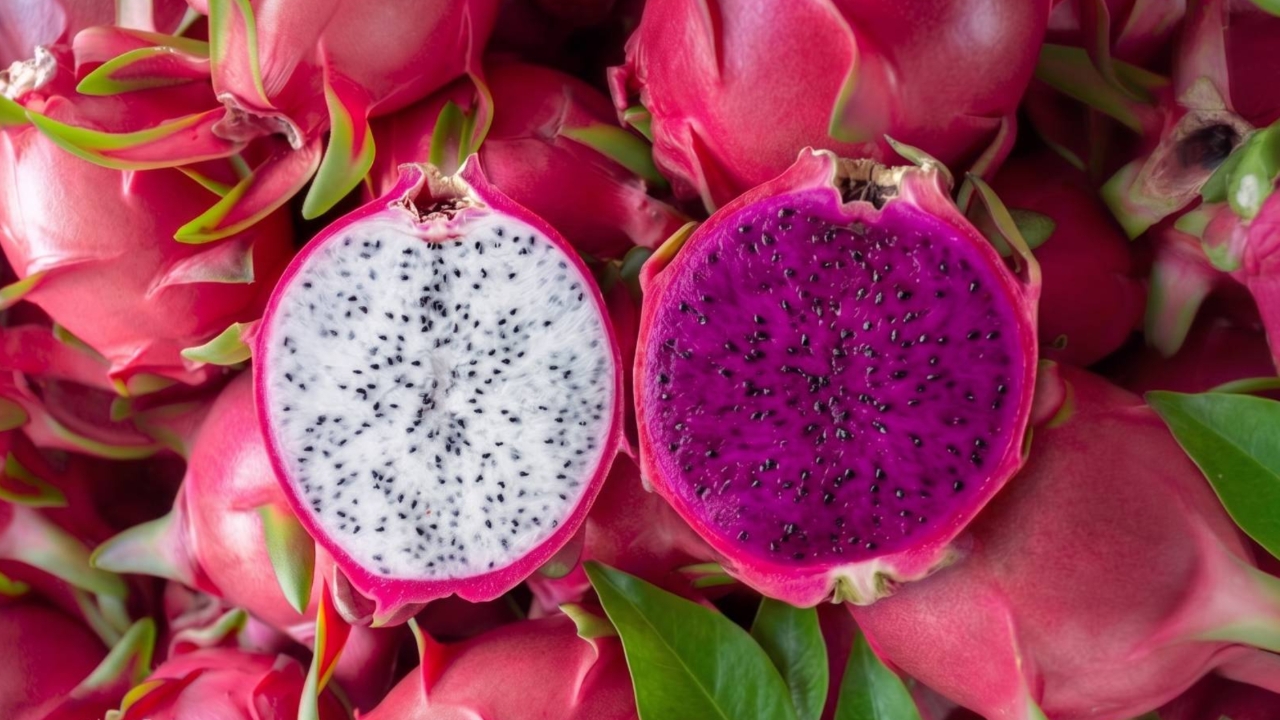
When choosing to buy" dragon fruit "many people often hesitate between" white-fleshed dragon fruit "and" red-purple-fleshed dragon fruit "because although both have similar pink skins, their prices differ, especially since the purple-fleshed variety is usually more expensive, leading many to wonder if the difference is just the flesh color or if their nutritional values truly differ.
If you are selecting healthy fruits, Thairath Online will compare their taste, nutritional value, and cost-effectiveness to determine which dragon fruit is most suitable and worthwhile.
Both types of dragon fruit belong to the same genus, known as Dragon Fruit and are part of the cactus family but are different species. Although their overall nutritional content is similar, they differ notably in taste and antioxidants, resulting in distinct characteristics as follows.

has a mildly sweet and refreshing taste, with a fairly crisp and juicy texture, making it suitable for those who prefer less sweet fruits or as a snack during the day.
is sweeter and has a more pronounced aroma, with slightly firmer flesh. It is popular for making smoothies, juices, or desserts because it naturally imparts a vibrant red-purple color without added food coloring.
Therefore, if you prefer less sweet fruit, white-fleshed dragon fruit might be more suitable, but if you like a richer, sweeter taste, red-purple-fleshed dragon fruit is an attractive choice.

Both white-fleshed and red-purple-fleshed dragon fruits are nutrient-rich fruits with beneficial compounds. Their basic nutritional profiles are quite similar, but the difference lies in"natural pigments"Overall, both types contain the following nutrients:
White-fleshed dragon fruit is high in fiber, which promotes a feeling of fullness, supports digestive health, and is ideal for those managing weight or increasing their daily fruit and vegetable intake. It is often included in salad menus for health-conscious consumers, combined with other fruits and vegetables.
Red-purple-fleshed dragon fruit contains the compound betalains (Betalains), antioxidants responsible for its red-purple color. This compound helps reduce cellular damage from free radicals, decreases inflammation, and promotes heart health, making red-purple-fleshed dragon fruit generally recognized as having higher antioxidant levels than the white-fleshed variety.

Many have noticed that red-purple-fleshed dragon fruit is usually pricier and is a health fruit rich in antioxidants. Several factors contribute to its higher price, including lower yields of some varieties and higher market demand, especially since it is popular for beverages and desserts due to its natural attractive color.

However, although prices of dragon fruit of each color may vary depending on season, growing area, and product quality, whether you choose white-fleshed or red-purple-fleshed dragon fruit, the important thing is to consume a variety of fruits, select fresh fruit with unbruised skin and firm flesh to maximize nutritional benefits and promote long-term health.