

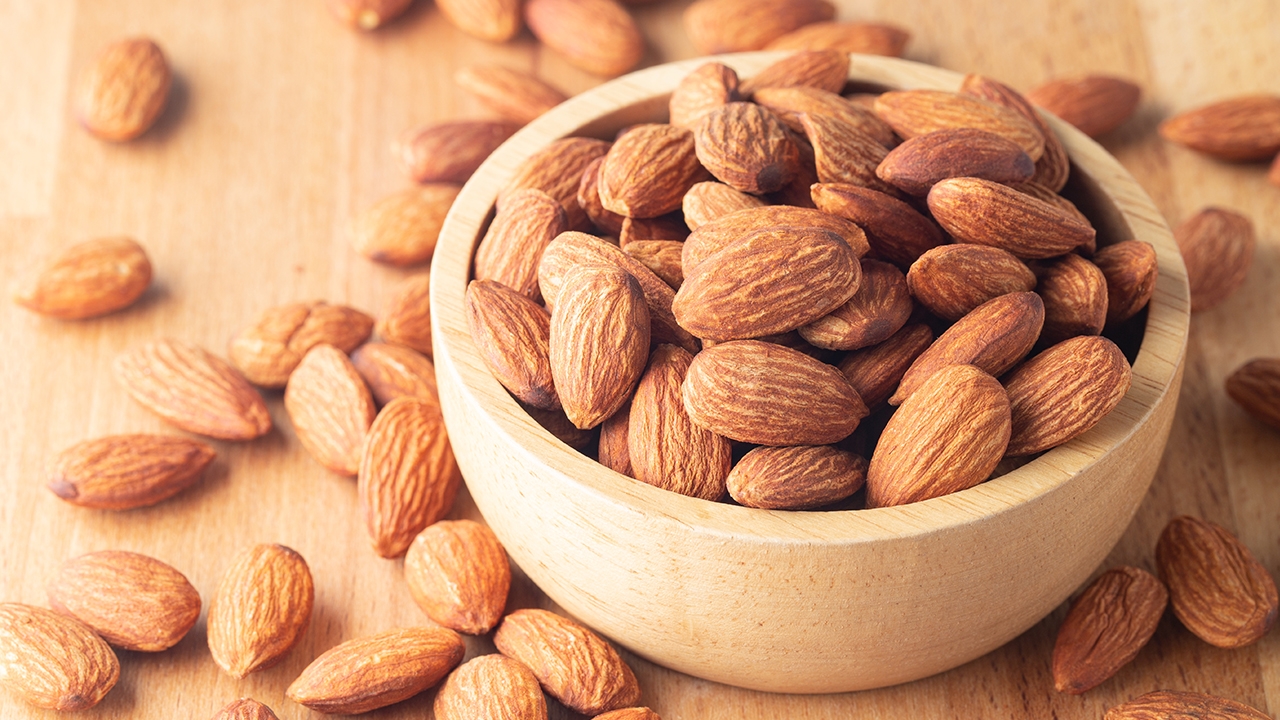
Almonds are a popular nut rich in good fats and vitamin E, but many wonder how many almonds should be eaten daily to gain the most benefits without causing weight gain. Thairath Online has compiled nutritional information for you.
In an era when more people focus on health and diet control, "almonds" (Almond) have become one of the most popular snacks. In the past, this nut was considered high in fat and potentially fattening, but in reality, the fat in almonds is "good fat" which helps lower bad cholesterol in the blood. They are also a rich source of protein, fiber, and vitamin E, earning the title of a "superfood" suitable for all ages.
Although beneficial, almonds are energy-dense nuts, so determining the daily amount is important for health-conscious people.
The appropriate serving size for almond consumption is about one handful, or 24-30 almonds (approximately 30 grams), which provides approximately 160-170 kilocalories.
This amount is ideal as it supplies necessary nutrients without excess calories or fat that might affect body weight.
Key nutrients in one handful of almonds (30 grams)

Eating almonds before meals or as a snack can keep you full longer, reduce frequent hunger, and curb sugar cravings effectively, with benefits including:
1. Supporting heart and vascular health Good fats in almonds increase good HDL cholesterol and lower bad LDL cholesterol, reducing heart disease risk.
2. Helping control blood sugar levels Almonds are high in magnesium, which helps the body use insulin effectively, suitable for those managing blood sugar or with type 2 diabetes.
3. Nourishing skin and slowing aging Vitamin E, a powerful antioxidant in almonds, protects skin cells from damage caused by pollution and sunlight.
Nowadays, almonds are processed for easier consumption. It is recommended to choose "natural roasted almonds without frying, salt, or sugar coating" because added salt and sugar can cause excess sodium and calorie intake.
Also, almonds should be thoroughly chewed before swallowing to aid digestion and nutrient absorption. However, almonds may not be suitable for everyone, especially those with tree nut allergies who should avoid them.
In summary, to gain maximum health benefits from almonds, one should eat "24-30 almonds daily" (about one handful). Eating the right amount, along with a balanced diet and regular exercise, will help maintain good health and a sustainable figure.