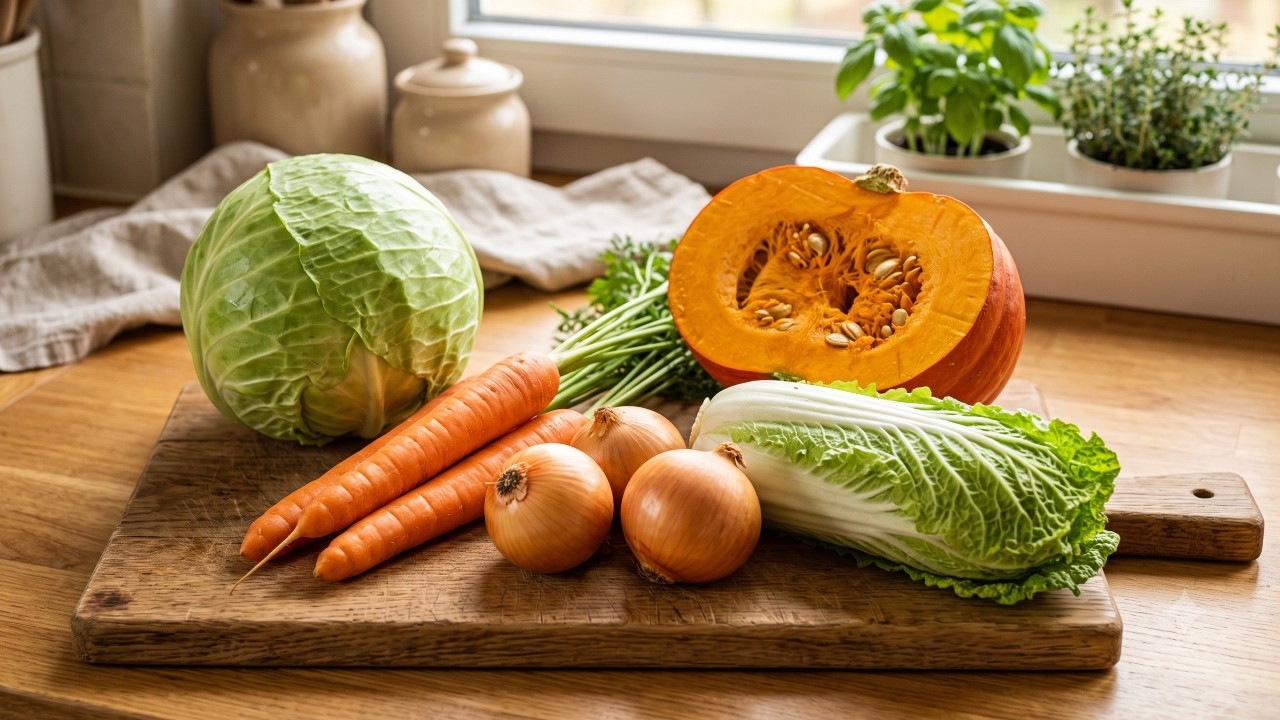
In times of rising prices, choosing cost-effective vegetables is essential. Here are five vegetables to stock in your fridge that are versatile, filling, easy to store, and help save money efficiently.
Why is choosing "cost-effective vegetables" important for home cooks?
With the cost of living increasing, cooking at home has become the main option for many families to control expenses. One common problem for home cooks is vegetables spoiling quickly and being wasted, causing food budgets to unintentionally balloon.
Nutritionists and the Institute of Nutrition at Mahidol University note that selecting vegetables high in dietary fiber and with appropriate water content not only helps keep you full longer but also involves types that resist spoilage and can be stored for weeks if handled properly.
Here is a list of 5 highly cost-effective vegetables that can be used in many dishes and have long shelf lives.
1. Cabbage – The king of value.
Cabbage is a top favorite for value due to its low price per kilogram, dense texture, and light weight.
- Value point: One head of cabbage can be divided into 3–4 meals.
- Recommended dishes: stir-fried cabbage with fish sauce, mixed vegetable soup, cabbage soup, shabu/sukiyaki, coleslaw salad.
- Storage duration: 2–4 weeks (in the refrigerator).
2. Pumpkin – Filling and suitable for both savory and sweet dishes.
Pumpkin is a starchy vegetable rich in beta-carotene that provides high energy and keeps you full longer, ideal for those controlling their food intake.
- Value point: Can be used in savory dishes, sweets, and snacks.
- Recommended dishes: Kaeng Liang (Thai vegetable curry), stir-fried pumpkin with egg, pumpkin in coconut milk dessert, pumpkin soup, steamed pumpkin with chili paste.
- Storage duration: Uncut pumpkins can last 1–2 months at room temperature.
3. Carrot – A common fridge staple that adds color and nutrition.
Carrots are highly durable, do not wilt easily, and can be included in almost any dish.
- Value point: Using half to one carrot can increase quantity and add appealing color to dishes.
- Recommended dishes: mixed vegetable stir-fry, fried rice, chicken broth soup, salads, stir-fried basil with diced carrot.
- Storage duration: 3–4 weeks (in the refrigerator).
4. Onion – A natural seasoning that adds sweetness to food.
Onions are a key ingredient for enhancing flavor, containing natural sugars that improve taste without needing MSG.
- Value point: Can be stored long without refrigeration, saving fridge space.
- Recommended dishes: stuffed eggs, tom yum soup, onion soup, stir-fried chili paste, Korean/Japanese-style pork rice bowls.
- Storage duration: 3–6 weeks (in a dry, well-ventilated place at room temperature).
5. Chinese cabbage – Natural umami, perfect for soups and stir-fries.
Chinese cabbage contains high water content and natural sweetness, which enriches broth flavor when cooked until soft.
- Value point: Ideal for large pot soups that can serve multiple meals.
- Recommended dishes: clear soup with tofu and minced pork, sukiyaki, homemade kimchi, stir-fried Chinese cabbage with shrimp.
- Storage duration: 1–2 weeks (in the refrigerator).
Comparison table of value and storage duration.
Vegetable type | Menu variety
| Storage duration
| Storage location
|
Cabbage | Very high
(stir-fried/boiled/raw) | 2–4 weeks | Vegetable drawer in fridge |
Pumpkin | High (savory/sweet) | 1–2 months | Room temperature
(avoid sunlight) |
Carrot | High (fits all dishes) | 3–4 weeks | Vegetable drawer in fridge |
Onion | Very high
(used for seasoning) | 3–6 weeks | Dry, airy, well-ventilated place |
Chinese cabbage | Medium to high
(mainly soups/stir-fries) | 1–2 weeks | Vegetable drawer in fridge
|
Tips for storing vegetables longer and preventing spoilage.
The Department of Health, Ministry of Public Health, advises on preserving fresh vegetables to extend their usability as follows.
- Do not wash vegetables before refrigerating: moisture causes spoilage. Wash only the parts you plan to cook immediately.
- Use multipurpose paper to wrap vegetables: wrapping with thick tissue before placing in zip-lock bags effectively absorbs excess moisture.
- Remove spoiled parts immediately: if any leaves begin to rot orbecome bruised,cut them off at once to prevent mold from spreading to other parts.
Choose vegetables wisely to save money and enjoy every meal.
Selecting vegetables that offer good value, versatility, and long storage life not only reduces food waste at home but also is a key strategy for effective monthly food budgeting. Keep these five vegetables at home, and you’ll always have ingredients ready to cook delicious meals without worrying about spoilage.