

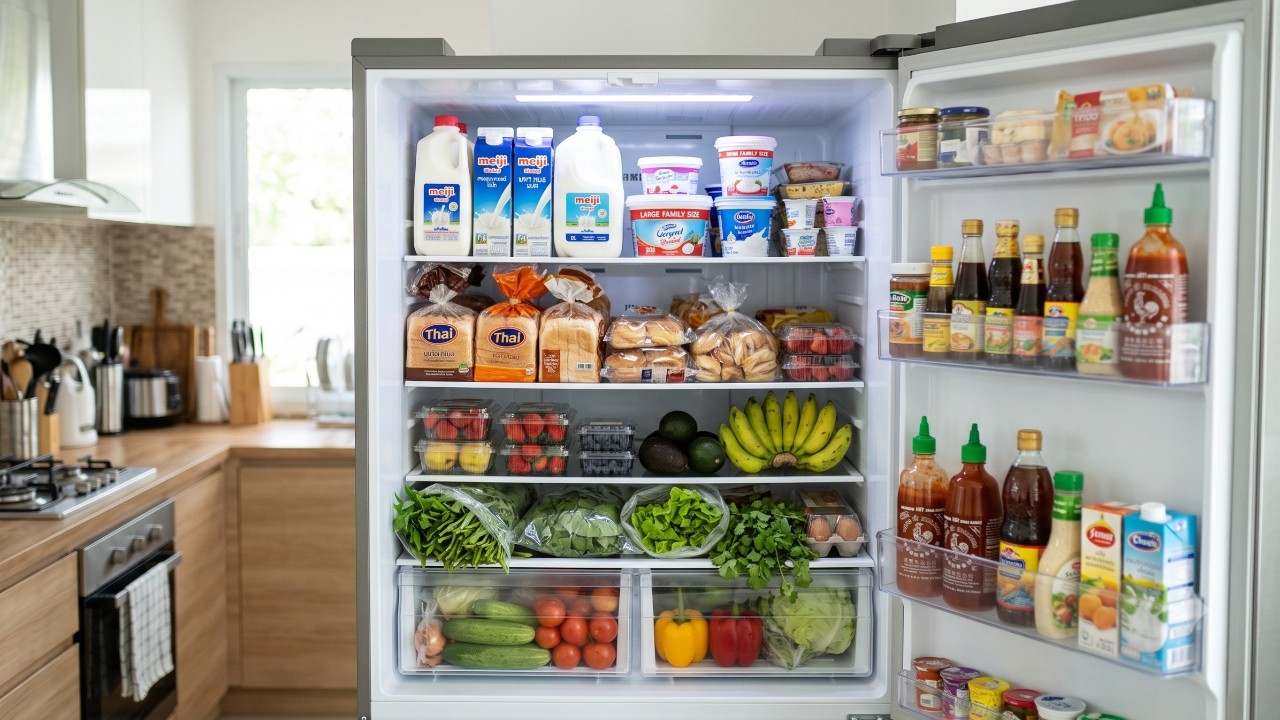
A checklist of 10 foods you should not buy in large packs, as overbuying leads to wasted money because you can't consume them in time, causing fast expiration and unnoticed food waste at home.
When shopping at department stores or large wholesalers, promotional signs like "economy size" or "jumbo pack" often entice consumers to add these items to their carts easily, intending to save cost per unit in the long run.
However, data from the Food and Agriculture Organization (FAO) states that about one-third of all food produced worldwide becomes "food waste," partly due to households buying more food than needed and letting it expire without consumption. Overstocking certain foods can unknowingly lead to spending more money.
Products with a lower unit price can quickly become a poor value if more than half must be discarded because they aren't consumed in time.
Pasteurized milk undergoes low-heat sterilization, leaving some microorganisms alive, resulting in a refrigerated shelf life of only 7–10 days from production. Once opened, it should be consumed within 3–5 days. Buying large 2–3 liter gallons for a household with only one milk drinker often ends up with milk being poured out unused.

Fresh bakery bread or large loaf bread usually lasts only 3–5 days due to minimal preservatives. In Thailand's hot, humid room temperature, mold spores develop easily. Buying overly large packs, though cheaper per piece, leads to discarding entire bags if not eaten in time.
Fast-ripening, soft-fleshed fruits like strawberries, bananas, or avocados bought in large boxes or bunches tend to ripen simultaneously in a short time. If not eaten within 1–2 days, their texture changes or they spoil immediately.
Salad greens, water spinach, or large bags of lettuce from wholesalers have high moisture when packed in plastic bags. Once opened and improperly stored, moisture causes leaves to bruise, wilt, and turn slimy and rotten within days.
Although spices do not have an expiration date that immediately harms health, food experts say essential oils and aroma in powdered spices deteriorate significantly after six months of opening. Buying large bottles and storing them for over a year results in flavorless powder.
Large cooking oil containers, once opened, react with air and heat (oxidation), causing rancid odors and quality degradation. For households that don’t frequently stir-fry or deep-fry, buying smaller or medium bottles preserves oil quality better.
Large packs of wheat or all-purpose flour stored in hot, humid conditions without vacuum sealing become ideal breeding grounds for weevils and absorb moisture, leading to musty smells or mold growth.

Buying large yogurt tubs is cheaper than small individual cups, but each time the lid is opened and a spoon is dipped in, bacteria and air contaminate the yogurt, reducing shelf life after opening to just a few days.
Raw nuts such as almonds, walnuts, or peanuts are naturally high in fat. Storing large packs at room temperature causes fats to oxidize, becoming rancid easily. Moisture increases the risk of aflatoxin toxin contamination.
Specialty sauces or unusual salad dressings often come in large promotional bottles but are used only a few times since they are not daily staples. Eventually, they sit in the refrigerator until expiration and must be discarded.
Check expiration labels carefully.