

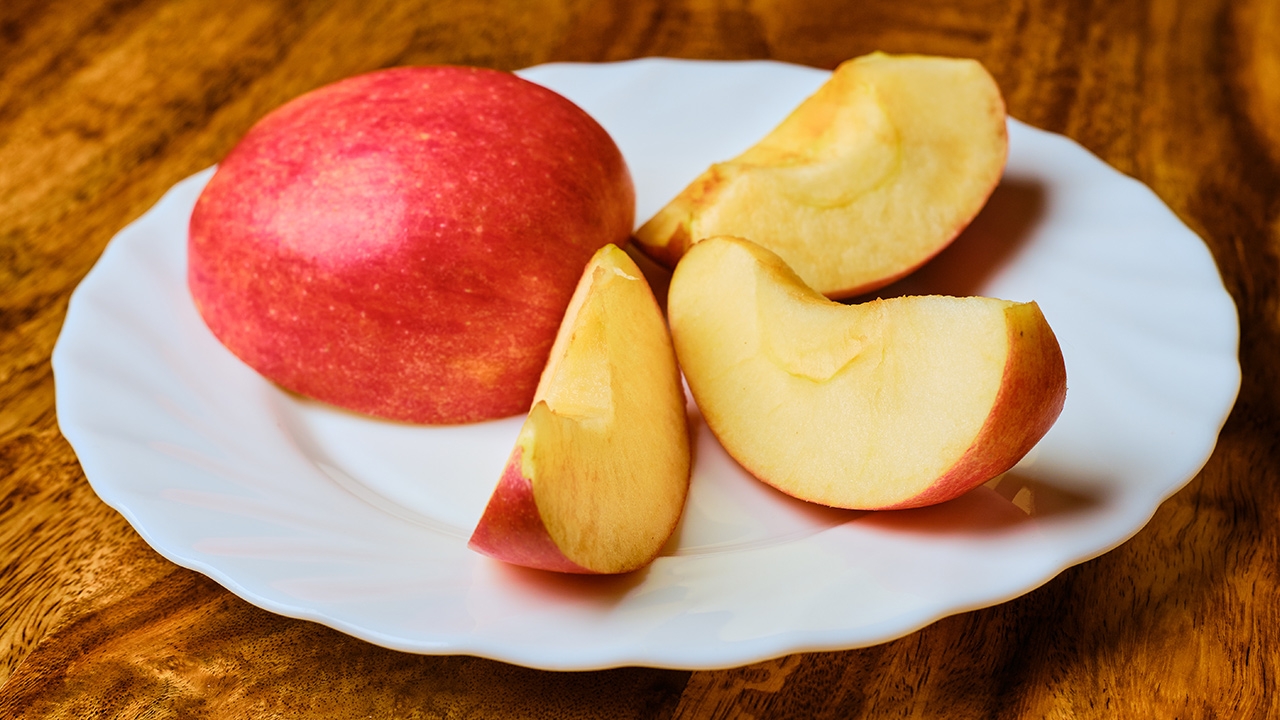
Clearing up the mystery Why do cut apples turn brown so quickly? It is caused by a reaction called “Enzymatic Browning.” When substances in fruit meet oxygen, plus tips to keep apples crisp and bright longer.
Many people have experienced cutting or peeling apples to eat, only to see the creamy white flesh gradually darken and turn an unappetizing brown within minutes. This phenomenon is not a sign of spoilage but a natural mechanism caused by chemical reactions inside the fruit's cells.
According to the Food Science and Nutrition Research Institute, the color change in apples is due to a reaction called “Enzymatic Browning.”
Normally, apple cells keep an enzyme called polyphenol oxidase (PPO) separate from phenolic compounds. But when we cut, peel, or when the fruit is bruised, the cell walls break, allowing PPO and phenolics to mix. When exposed to oxygen in the air, the enzyme speeds up oxidation, converting phenolics into brown pigments called melanin. This natural defense protects the plant by inhibiting the spread of fungi and bacteria.
Key facts to knowEnzymatic Browning doesn’t only occur in apples; it is also common in bananas, pears, potatoes, tomatoes, and avocados when cut or peeled.

Public health and nutrition experts explain that apples turning brown from oxidation “are still safe to eat and not harmful to health.” Most of the taste and texture remain intact, although some vitamin C may slightly diminish due to oxygen exposure. However, dietary fiber, minerals, and natural sugars remain fully present.
However, if apples have very dark brown color, soft mushy flesh, sour fermented smell, or slimy coating, these are signs of microbial spoilage and should not be consumed.
To maintain the color and nutritional value of apples for snacks or catering, you can easily apply these household techniques:
1. Soak in water mixed with lemon juice or citric acid The acid from lemon juice lowers the pH on the apple’s surface, inhibiting PPO enzyme activity and preventing oxidation (use 1 tablespoon lemon juice mixed with 1 cup water, soak for 3-5 minutes).
2. Soak in diluted saltwater Sodium chloride in salt effectively inhibits the enzyme. Mix half a teaspoon of salt in 1 liter of water, soak for 5 minutes, then rinse with clean water to avoid a salty taste.
3. Soak in water mixed with honey Peptide compounds in honey help inhibit browning reactions. Mix 2 tablespoons of honey with 1 cup of warm water, soak apple pieces for about 5 minutes.
4. Soak in carbonated soft drinks or chilled ginger ale Carbon dioxide and mild acids in fizzy drinks help prevent oxygen from directly contacting the fruit’s flesh.
5. Store in vacuum containers or wrap with cling film Reducing direct exposure to air and oxygen is a simple physical method that best slows browning, especially when combined with refrigeration at 4-6 degrees Celsius.