

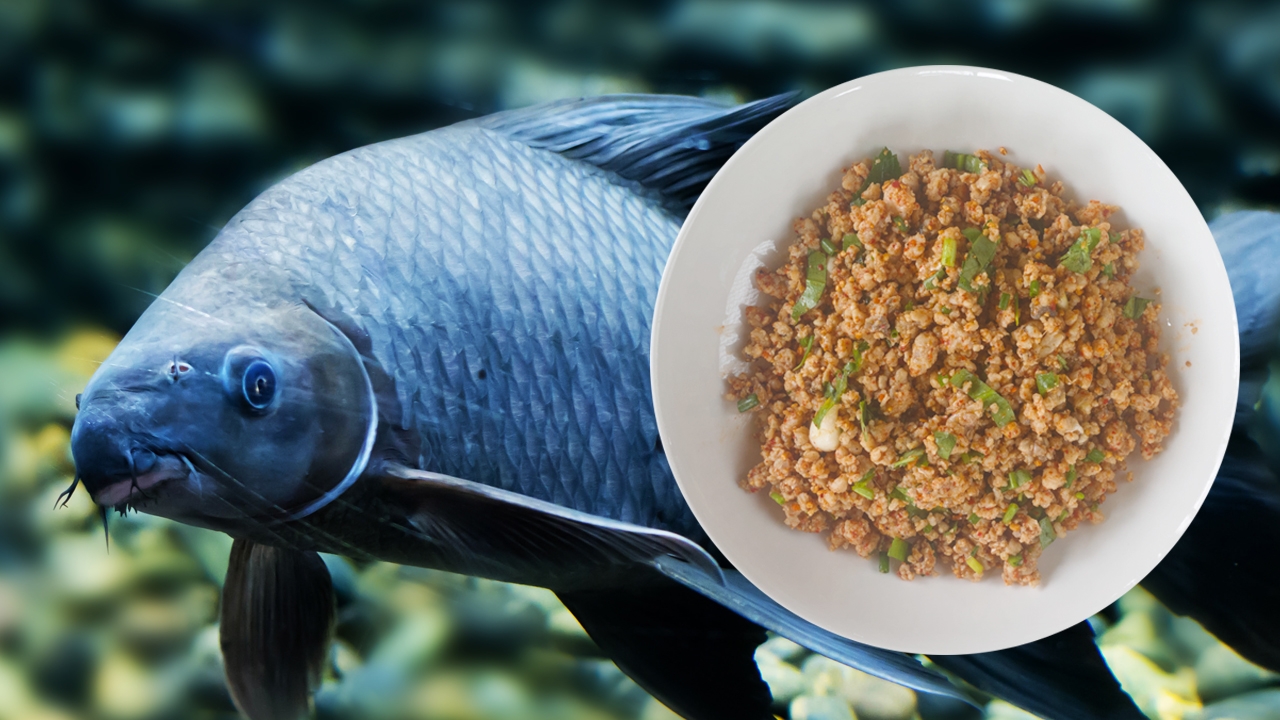
Among Thailand's native freshwater fish that stand out for their shape and color, "Pla Pia" or "Black Shark" is one species that has garnered widespread interest. Its common English name is Greater Black Shark, and its scientific name is Morulius chrysophekadion (Bleeker, 1850). It belongs to the order Cypriniformes, family Cyprinidae, subfamily Cyprininae – tribe Labeonini.
An interesting aspect of the Black Shark is its many local names across regions. In Northern Thailand, it is commonly called " Pla Pia, while in the Northeast, it is known as " Pla E-tu " or " E-kam, reflecting the deep connection between this freshwater fish and the way of life in various Thai localities over time.
"Pla Pia" or "Black Shark" is a medium to large-sized freshwater fish with an elongated, slightly compressed body. Its most distinctive feature is the dark purple-black or deep blue-black body color. It has large scales covering the body except the head. The head is pointed, with an extendable, toothless mouth. Both upper and lower lips are notched, adorned with short, hair-like fringes grouped in clusters, and it has two pairs of barbels.
Additionally, its fin structure is striking: the dorsal fin is large and tall, the pectoral, pelvic, and anal fins are similarly slender and long, while the tail fin is forked deeply. All fins are solid black, blending seamlessly with the body. When fully grown, it can reach a body length of 40–60 centimeters.
This fish inhabits flowing waters and riverbeds with rocks or boulders. Its feeding behavior involves scraping algae from the rocks. Because of this, during certain seasons, such as low water or drought periods, Pla Pia may carry a muddy odor more so than other freshwater fish.

In riverside communities, Pla Pia is a prized ingredient for cooking due to its firm, tender flesh that naturally tastes sweet. It is also a good protein source, easily digestible, and contains beneficial fatty acids.
Popular dishes made from Pla Pia include
Because Pla Pia feeds at the bottom, it sometimes carries a muddy smell. Here are some preparation tips to remove fishy or muddy odors before cooking:
1. Scrape off the mucus and wash with coarse salt. After scaling and gutting, rub the fish and its cavity with coarse salt to remove mucus completely.
2. Soak in alum water or lemon juice. Soak the fish pieces in diluted alum water or water mixed with lemon juice for about 10–15 minutes before rinsing with clean water.
3. Use aromatic Thai herbs. When boiling or stir-frying, add fragrant herbs such as ginger, galangal, lemongrass, kaffir lime leaves, and fingerroot to mask odors and enhance the dish's aroma.
However, before using Pla Pia for cooking, always select fresh fish and prepare it properly. This ensures sweet, firm flesh with reduced fishy or muddy odors. Cooking with Thai herbs and spices will perfectly bring out the fish's flavor, making it a treasured ingredient that reflects regional Thai culinary wisdom.