

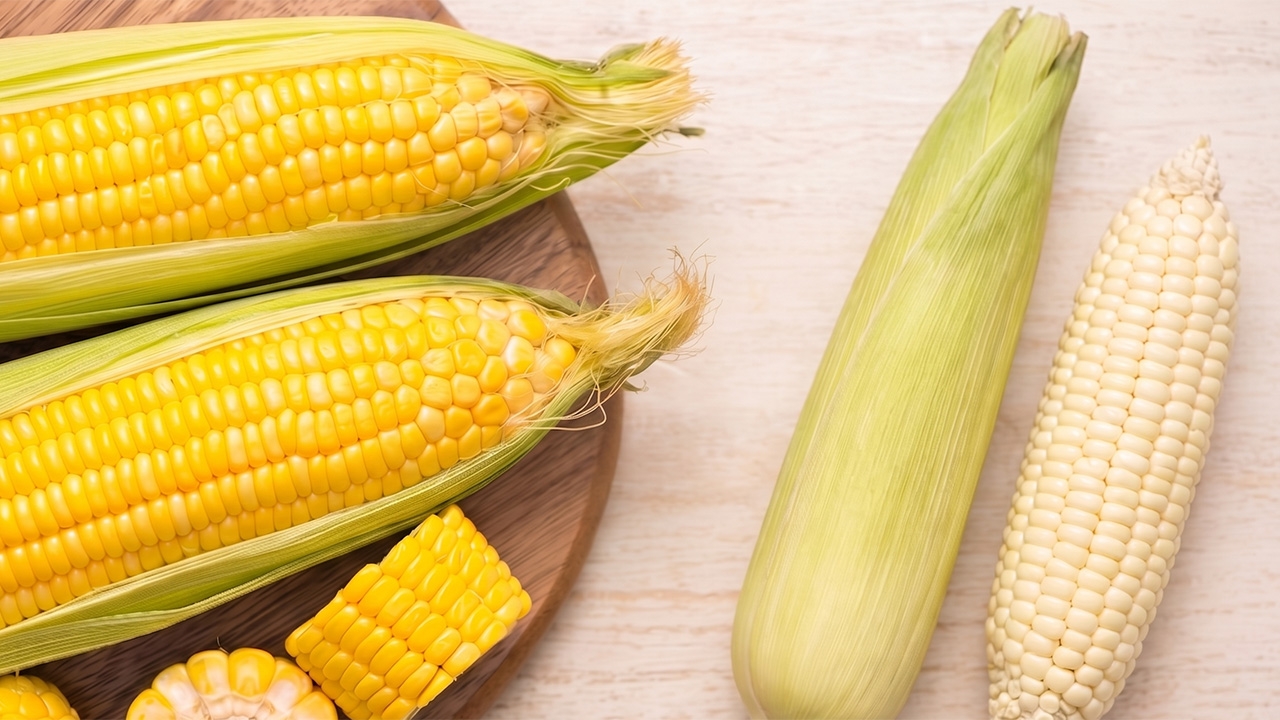
Clearing up the confusion about corn. Yellow corn. and white corn: How are they different? Updated tips for choosing fresh corn cobs, plus an in-depth look at benefits and nutrition tables, identifying which color has higher carbs and sugar, and guidance on selecting corn for your favorite recipes.
Corn is an economic crop and popular ingredient long established in Thai kitchens. Yet, many consumers hesitate at markets when choosing between "yellow corn" and "white corn" wondering about their differences in taste and culinary use.

Yellow corn, commonly called "sweet corn" in Thailand, is a variety widely found in markets.

White corn actually refers to "glutinous corn" which tastes creamier and is chewier than yellow corn.
For health-conscious people wondering which to choose, the table below compares key nutrients per 100 grams to clearly show carbohydrate and sugar content.
| Nutrient (per 100 grams) | Yellow corn (sweet corn) | White corn (glutinous corn) |
| Energy (calories) | Approximately 86 kcal | Approximately 95-100 kcal |
| Total carbohydrates | 19 grams | 21-22 grams |
| Sugar | 6 grams | 2-3 grams |
| Dietary fiber (fiber) | 2.7 grams | 3.0 grams |
| Nutritional highlights. | Rich in beta-carotene and lutein, which support eye health. | A complex carbohydrate that keeps you full longer and is high in B vitamins. |
Carbohydrates. White corn has slightly higher carbohydrates and calories because it contains more amylopectin starch, which provides a sticky, soft texture and prolongs satiety.
Sugar. Yellow corn has about 1-2 times more sugar than white corn, offering a sweeter taste but with slightly fewer total carbohydrates.
Look for husks that are bright green, not dried out or bruised. If the husk starts turning yellow, it indicates the corn has been stored for a while.
The silk at the cob’s tip should be dark brown or black and slightly moist, not overly dry or brittle.
Feel the cob: gently squeeze it. It should feel firm and heavy, indicating tightly packed kernels.
Check the kernels: after peeling, they should be plump, neatly arranged, not shriveled or dented, and have no sour smell.
In summary, choosing between yellow and white corn depends on personal preference and health goals. If you prefer sweet, crunchy corn and want eye benefits, choose yellow corn. If you want to control sugar intake, enjoy a chewy texture, and prefer carbohydrates that keep you full longer, white corn (glutinous corn) is the best choice.