

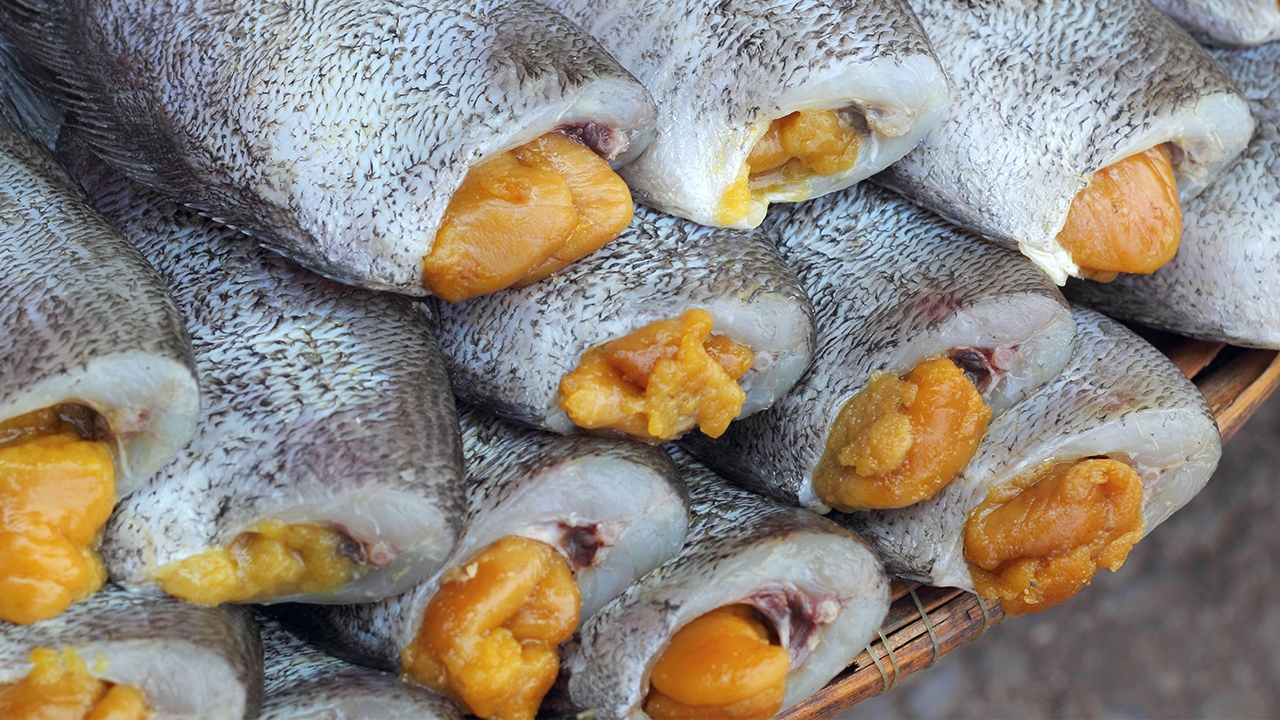
"Snakehead fish roe" is a popular ingredient among many because its flavor is rich and creamy. However, a number of consumers experience a problem after eating it, which is "oily stools" along with diarrhea or loose stools, raising concerns about whether this condition is caused by chemical contamination or poses health risks.
The snakehead fish stores energy mainly as fat, especially in its "roe" which contains a large proportion of lipids, saturated fatty acids, and unsaturated fatty acids.
Some aquatic animals, including fish roe, contain fats that are difficult to digest. Consuming amounts exceeding the digestive capacity can result in incomplete absorption, leading to fat being excreted with stool as orange or yellow oily residue.
This condition may be considered " steatorrhea " (Steatorrhea), an abnormal presence of excess fat in stool. The stool is often loose or voluminous, pale, shiny, foul-smelling, floats on water, and has greasy residues that are hard to wash off. Some may even pass oily stool.

Normally, dietary fats are digested by bile and enzymes in the digestive tract and absorbed through the small intestine. If any part of this process malfunctions, incompletely digested or absorbed fat may be excreted with stool.
Passing oily stool once after a high-fat meal can happen, but repeated or ongoing episodes may indicate abnormal fat absorption and warrant medical examination.
Fried snakehead fish roe or dishes cooked with a lot of oil can cause sensitive individuals to feel bloated, experience cramps, diarrhea, or have oily stool stains. However, no evidence shows snakehead fish roe contains hard-to-digest fats like wax esters found in some deep-sea fish.
Frequent oily stools even without eating fish roe may involve the liver, pancreas, gallbladder, bile ducts, or small intestine, impairing fat digestion or absorption and causing fat to be excreted. Medical evaluation is advised.
Fermented, dried, or unsanitarily stored fish roe may cause food poisoning, resulting in abdominal pain, nausea, vomiting, diarrhea, or fever, but this is not a direct cause of oily stool. If the roe smells rancid, changes color, or molds, it should be discarded immediately and not tasted.
For most people, "eating snakehead fish roe causing oily stools and diarrhea" is a natural bodily response to excrete undigested excess fat via the digestive tract. Choosing clean roe, proper cooking, and moderate intake are key to enjoying it deliciously and safely.