

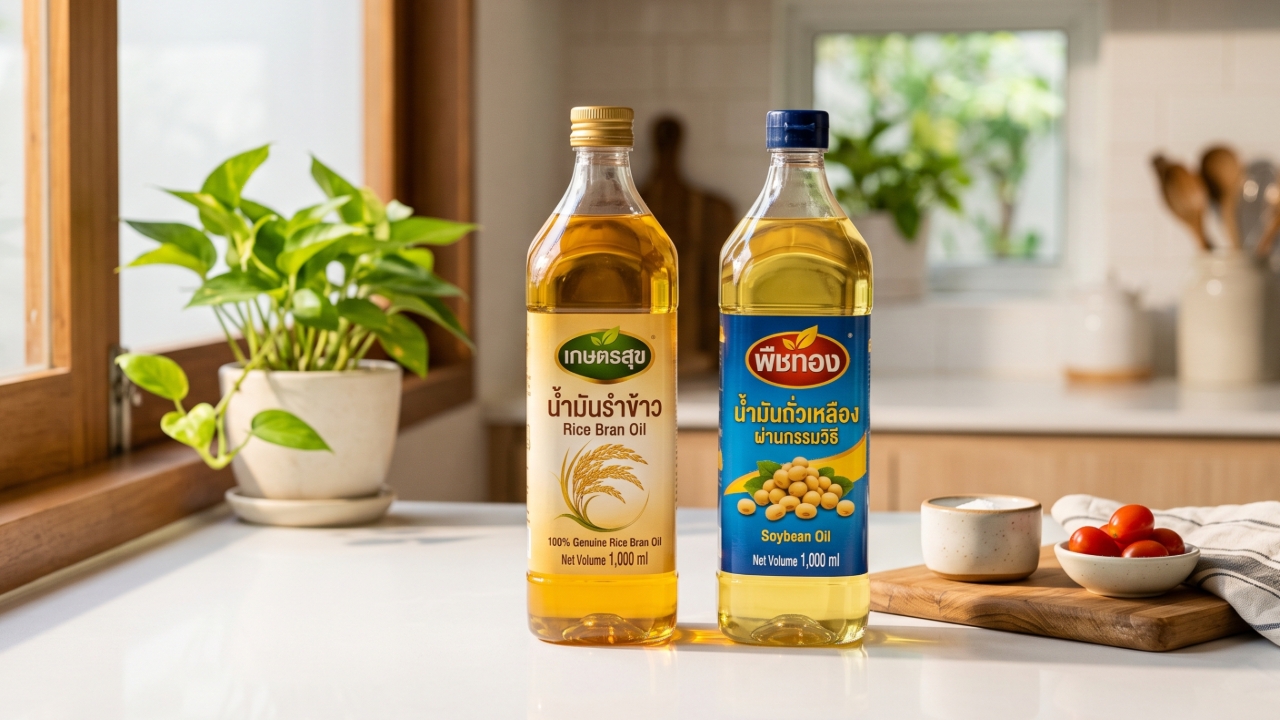
Clearing up kitchen doubts by comparing rice bran oil versus soybean oil, exploring their differences and which suits stir-fry and frying dishes best, along with tips for choosing the most budget-friendly option in today's market.
Nowadays, when buying household items, salaried workers and budget-conscious shoppers have to think carefully, especially about"cooking oil,"a staple ingredient in every kitchen. Have you ever wondered how rice bran oil and soybean oil, often displayed side by side on shelves, differ? And which offers the best value for your money?
Soybean oil is a favorite for budget-conscious consumers because it is very affordable. Extracted from soybean seeds, it contains high levels of monounsaturated and polyunsaturated fatty acids that help lower bad cholesterol. However, its smoke point is moderate; using it for prolonged high-heat frying causes it to smoke and degrade quickly.

In contrast, rice bran oil is extracted from rice bran and germ. Its standout feature is oryzanol, a powerful antioxidant, and it has a higher smoke point than soybean oil. This means it withstands heat well, does not smoke easily, and does not turn into trans fats under high heat. Although priced slightly higher per bottle, it offers long-term heart health benefits.
Using the right oil for the type of dish not only enhances flavor but also helps save money by avoiding waste.
To save on kitchen expenses, it is advisable to keep both oils at home and assign them different uses: soybean oil for everyday stir-frying to save costs, and rice bran oil for frying to promote better health and safer cooking. Additionally, buying larger sizes or purchasing during supermarket promotions is an effective way to lower the per-liter price.
Comparison Criteria | Soybean Oil | Rice Bran Oil |
Smoke Point | Moderate (~230°C) | High (~232°C - 250°C) |
Nutritional Value | High in Omega-3 and Omega-6 | High in Oryzanol and Vitamin E |
Suitable Uses | Stir-fry, salad dressing, baking | High-heat frying, stir-fry, all types of cooking |
Price Range | Affordable (good value for everyday meals) | Medium to high (worth it for health benefits) |
Choosing cooking oil wisely is not just about picking the cheapest option but about matching the oil to your daily cooking needs. Using soybean oil for stir-fry dishes and rice bran oil for frying helps balance budget savings with family health. Try applying these tips to care for both your nutrition and your finances sustainably.