

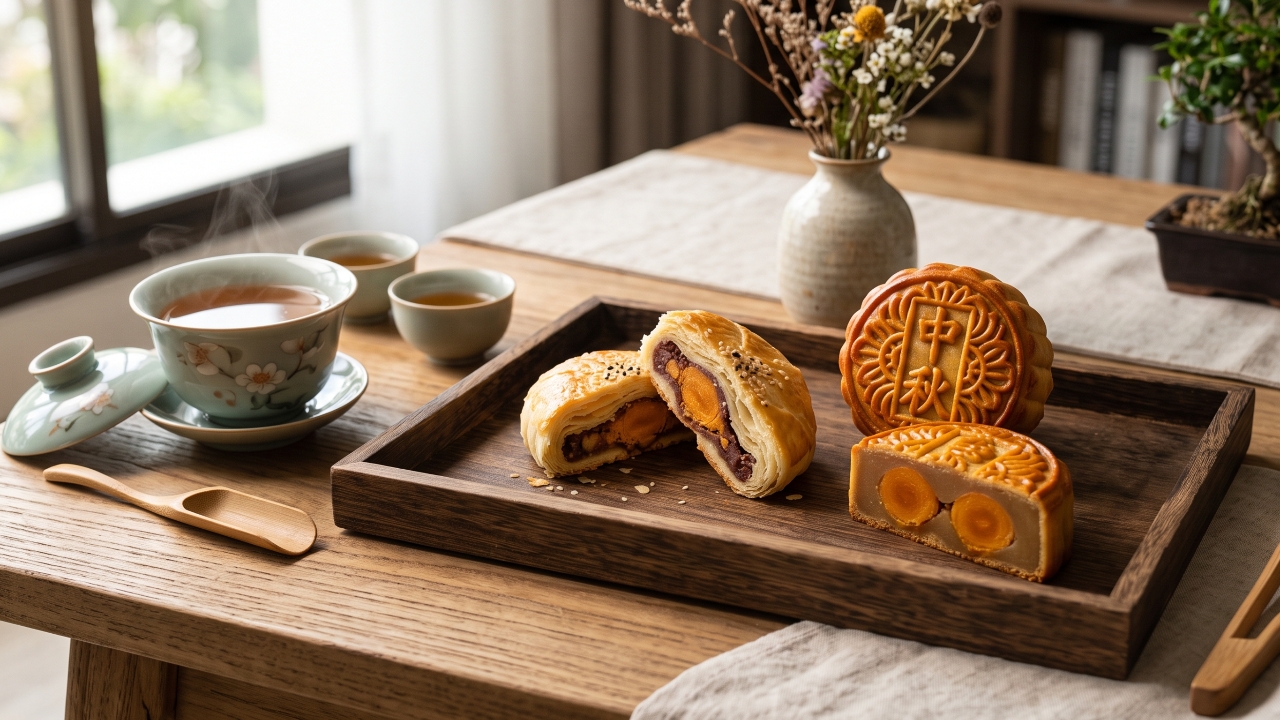
Many people may still be confused about whether "Pastry Pia" and "Mooncakes" are the same type of dessert because they are both round and have similar fillings. Today, Thairath Lifestyle will clarify their differences and explain why mooncakes are already being given as gifts during the Chinese Ghost Festival.
Although in Mandarin, mooncakes are called "Yue Bing" (月饼), where "Bing" refers to flat pastries or snacks, culturally and in terms of preparation methods, these two types of desserts are distinctly different.
Key Differences | Pastry Pia (Pastry / Pia) | Mooncake |
Dough Characteristics | The dough is layered, thin, crispy, crumbly, and can be peeled off in sheets. | The dough is soft, smooth, chewy, with a glossy golden-brown surface. |
Shaping Method | Hand-shaped into round or oval forms with a smooth top, sometimes marked with a red dot. | Pressed into carved molds that imprint clear floral or auspicious character patterns. |
Popular Fillings | Sweetened mung bean paste, taro, candied winter melon, shredded pork floss, salted egg yolk. | Lotus seed paste, five-nut mix, durian paste, salted egg yolk. |
Occasions for Consumption | Eaten year-round and used in auspicious events, engagements, and the Chinese Ghost Festival. | Specifically associated with the Mid-Autumn Festival and gift-giving periods. |

Traditionally, the main pastries offered during the Chinese Ghost Festival (15th day of the 7th lunar month) are sticky rice cakes, dumplings, steamed sponge cakes, and Pastry Pia, symbolizing abundance and family unity. The Mid-Autumn Festival falls the following month (15th day of the 8th lunar month).

Whether choosing the thin, crumbly Pastry Pia or the soft, fragrant mooncake, both desserts deeply reflect the gratitude and familial love cherished by Chinese and Thai-Chinese communities.