

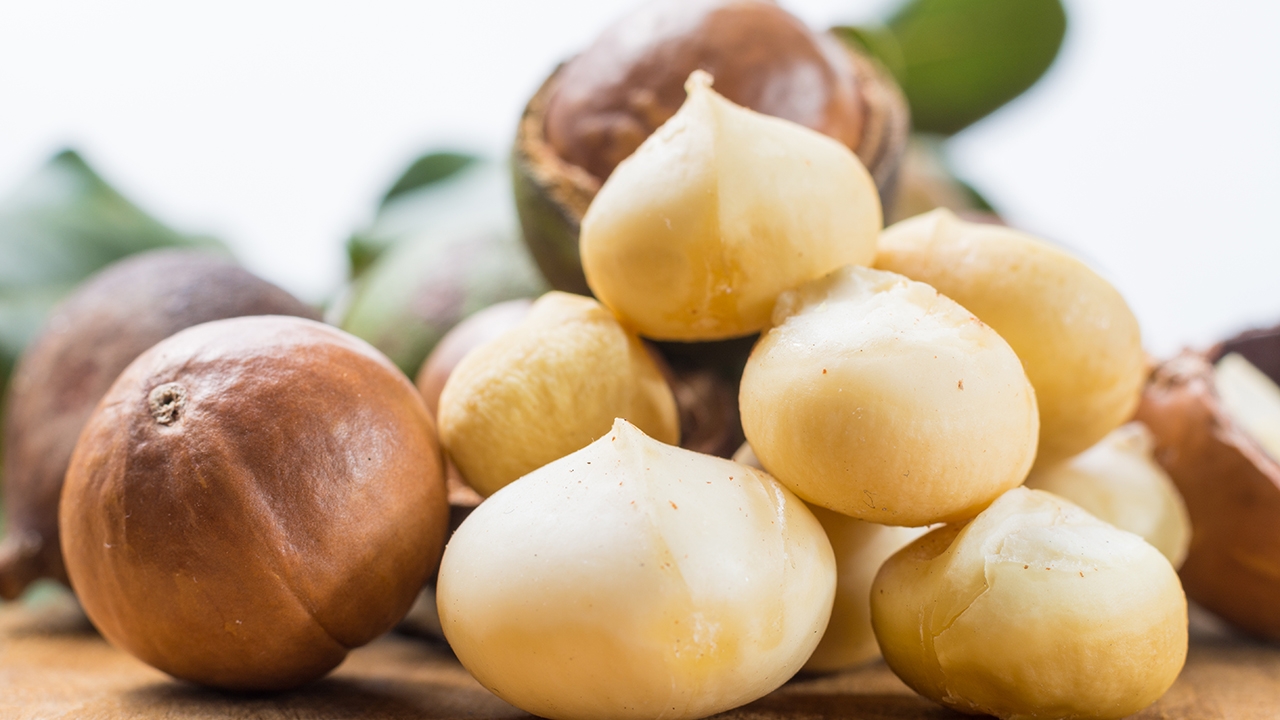
Clearing up the question of why "Macadamia" is a nut with a high price tag. We delve into the difficulties of cultivating it and reveal the health benefits of macadamia nuts. Good for the heart and health, packed with healthy fats that health-conscious people shouldn’t miss.
"Macadamia" has been dubbed the "King of Nuts" for its rich, creamy flavor and crunchy texture, making it popular worldwide. Yet many wonder why this nut costs more than typical market nuts. Today, we explore the behind-the-scenes journey to becoming a pricey nut and uncover its hidden benefits.

Originating in Australia, macadamias were widely cultivated in Hawaii and promoted in northern Thailand. However, the main reasons for their high cost come from limitations and complex production processes, as follows:
Long growing period Macadamia trees take 7-10 years to start yielding harvestable nuts, representing a long-term investment for farmers.
Difficult harvesting Macadamia flowers don’t bloom all at once, so nuts ripen unevenly. Farmers must harvest the fallen nuts in multiple rounds rather than all at once.
The hardest shell among nuts Macadamia shells are extremely hard and thick, requiring specialized, high-pressure machinery to crack them without damaging the kernels inside, increasing production costs.
Though commonly called a "nut," macadamia belongs botanically to the Proteaceae family, native to Australia, and is not part of the legume family like peanuts or soybeans. The edible part is technically a "seed." However, in food industry classifications, it’s grouped with hard-shelled nuts for consumer understanding.

Macadamia trees are medium to large evergreens favoring cool climates, often grown in northern Thailand’s highlands. The nut goes through several layers before becoming the white edible kernel:
Fresh outer shell: On the tree, it’s a smooth green fruit resembling a lime.
Husk (middle layer): Once the green shell is removed, a very hard, thick dark brown shell remains, requiring special tools to crack.
Kernel (innermost layer): The creamy white edible part rich in nutritional value.

Despite their high price, macadamias are nutrient-dense and worth consuming, offering key benefits:
1. Rich in healthy fats – a must for health enthusiasts
Macadamias are packed with monounsaturated fatty acids, good fats that reduce bad cholesterol (LDL) in the blood, helping lower the risk of cardiovascular diseases.
2. High in antioxidants
They contain flavonoids and tocotrienols, a form of vitamin E, which protect cells from damage caused by free radicals and may reduce risks of chronic diseases.
3. Supports weight management
Although calorie-dense, the healthy fats, protein, and fiber in macadamias promote satiety and curb snacking. Consuming a moderate amount (about a handful or 10-12 nuts daily) makes an ideal snack for weight control.
4. Nourishes brain and nervous system
Oleic and palmitoleic acids in macadamias help support nervous system and brain health, enhancing memory and protecting against brain cell degeneration.
5. Aids digestive health
Dietary fiber in macadamias promotes regular digestion and serves as prebiotics, feeding beneficial gut bacteria.
The journey of macadamia nuts—from cultivation to cracking their tough shells—reflects in their higher price compared to other nuts. Yet, considering their benefits for heart, brain, and digestive health, they represent a worthwhile investment in wellbeing when eaten in moderation alongside regular exercise for sustainable health.