

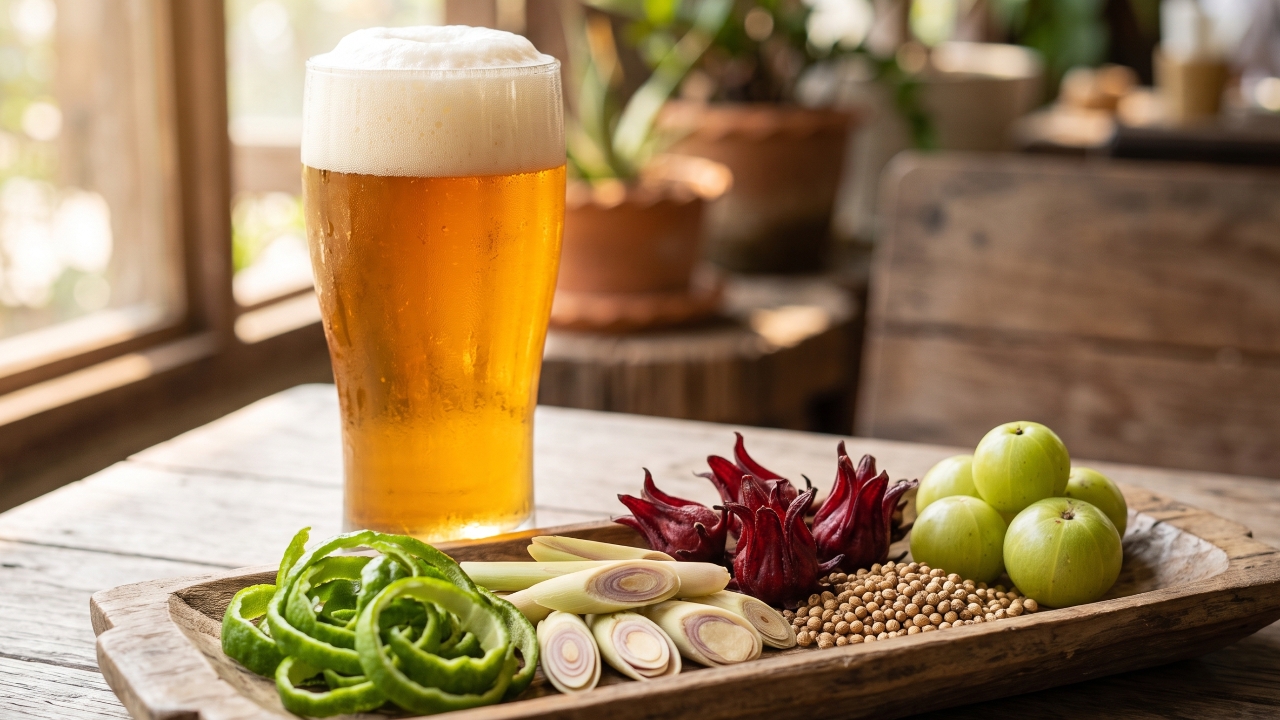
The Thai craft beer scene is entering an exciting new era as producers begin embracing Botanical Brewing by using five native Thai herbs for fermentation instead of imported hops.
This approach draws on the unique aromas of household plants to create a new type of refreshing flavor, perfectly suited to Thailand's hot and humid climate.
It not only offers new taste experiences for craft beer enthusiasts but also demonstrates the potential of local Thai ingredients to reach global standards.
Kaffir lime peel is a popular ingredient for brewing Wheat Ale or Saison styles because its essential oils contain compounds like limonene and citronellal that provide a distinct zesty citrus aroma.
Brewers usually add fresh or dried kaffir lime peel late in the wort boiling process to preserve its essential oils from heat loss. The peel's scent can perfectly substitute for foreign hops with orange or grapefruit aromas, enhancing clarity, freshness, and making it ideal for quenching thirst.
Lemongrass is a kitchen staple herb containing citral, which offers a soft fragrance blending natural plant and lemon notes. In craft beer, lemongrass is typically bruised or cut to release its aroma fully.

In Belgian Witbier, coriander seeds are essential, but Thai craft brewers use local coriander varieties that offer a more distinctive aroma profile. The linalool compound in coriander delivers a sweet scent with a subtle spicy note.
When lightly crushed and added during boiling, coriander bridges the malt's soft sweetness and the hops' bright bitterness, creating a complex, gentle aroma without overpowering the beer's base character.
For sour beer lovers, dried roselle flowers are a top choice because they provide natural citric and malic acids for a friendly sweet-sour taste, along with water-soluble anthocyanins.

Brewing with roselle yields a ruby red or bright pink beer color without synthetic dyes. The gentle sourness stimulates the palate, fitting modern refreshing drink trends.
Indian gooseberry and its young shoots are native ingredients known for their unique sour and astringent taste. Their rich tannins and vitamin C enhance the beer's texture and depth during brewing.
The natural slight astringency balances excess malt sweetness, creating harmony between sweet, sour, and astringent flavors at the finish, offering a novel experience unlike traditional craft beers.
Transforming household Thai herbs through scientific fermentation adds significant value to local agricultural products. Modern brewing art brings out Thai plants' aromatic and flavor potential in unprecedented ways. Those interested in beverage culture should open their minds to Thai craft beers infused with native herbal charm or support local producers to help elevate Thai raw materials onto the global stage.
Source references: National Farmers Council Office: Data on processing and adding value to Thai herbal plants; Journal of the Institute of Brewing: Studies on the use of botanicals and herbs in fermentation processes.