

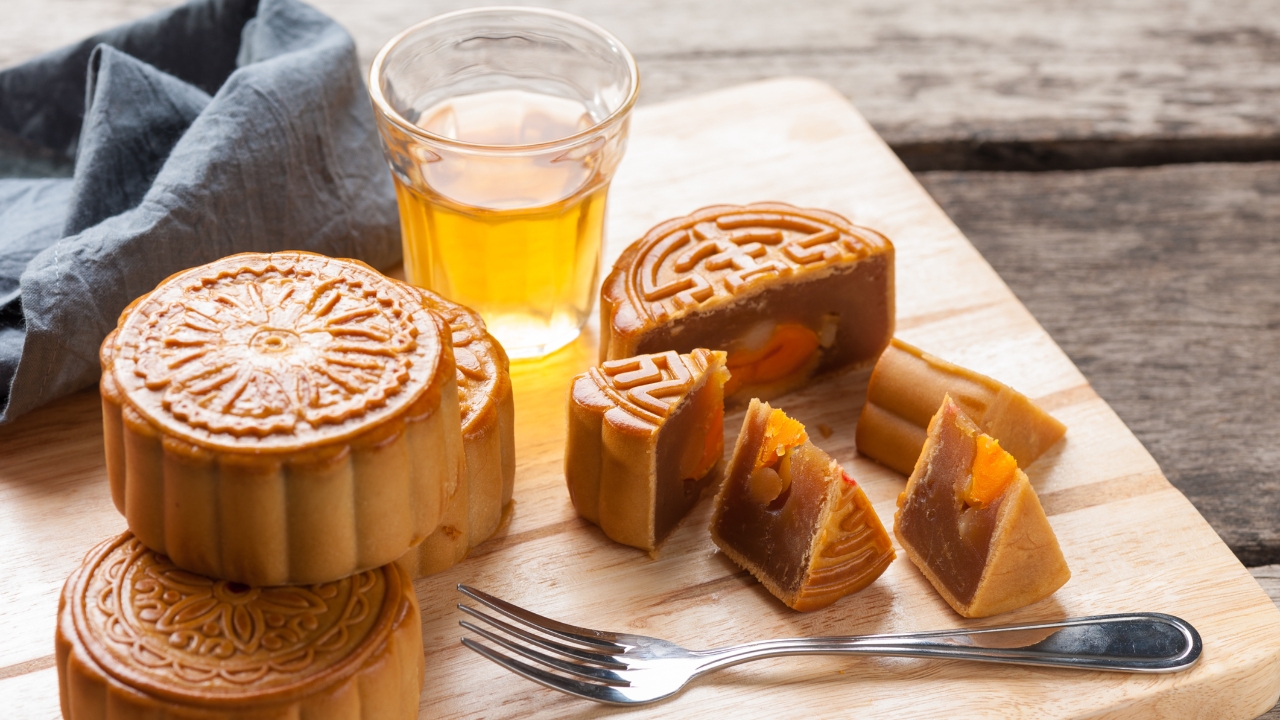
Half a mooncake delivers as much energy as a full plate of fried rice or noodle soup. Although many people cut and eat only half to reduce calorie intake, the actual energy consumed remains among the highest for traditional festival sweets.
Choosing the mooncake filling directly affects the calorie amount your body receives. Managing portion size appropriately is therefore crucial and should not be overlooked.
A standard mooncake (weighing about 160-180 grams) provides an average of 700-800 kilocalories. When cut in half, the calorie content of each popular filling roughly breaks down as follows.
Seeing calorie numbers on packaging might not convey the energy density, but imagine that eating just half a mooncake, with 350-400 kilocalories, provides energy equivalent to a full main dish such as:

Having half a mooncake as an evening snack is essentially like doubling up on dinner without realizing it.
The high energy density comes from traditional mooncake recipes focusing on preservation and moist, tender textures.
First, thick syrup is used for the outer dough to keep it soft, shiny, and long-lasting. Next, vegetable or animal fat is used to knead the dough and stir-fry the filling over hours to create a smooth, moist texture. Finally, salted egg yolk adds about 70-80 kilocalories per yolk, along with saturated fat and high sodium. Combined in a small piece, these ingredients pack energy densely and quickly raise calorie counts.
You don’t have to refuse this delicious festival treat. Simply change how you eat it to manage calorie intake at a suitable level.

Celebrating the Mid-Autumn Festival doesn’t have to mean worrying about weight. Knowing the calorie content of each filling helps you plan your eating wisely. Those with health conditions like diabetes, high cholesterol, or hypertension should be especially cautious and control portions strictly. Try cutting mooncakes into eight pieces this festival, identify your favorite filling, and share the joy in moderation for long-term health.
Sources: Nutrition Division, Department of Health, Ministry of Public Health; Food and Drug Administration (FDA)