

Jay Festival 2026 GMT+7, Many people may assume that foods without meat or those resembling vegetarian dishes are all suitable for Jay, but in reality, some foods may contain hidden animal ingredients such as fish sauce, oyster sauce, milk, eggs, or seasoning ingredients, even if these are not visible to the naked eye.
Thairath Online We invite you to check 10 foods that look like Jay but may not actually be Jay, to help those observing the Jay precepts—especially beginners—choose their food confidently and reduce the chance of unknowingly eating foods that violate Jay principles.
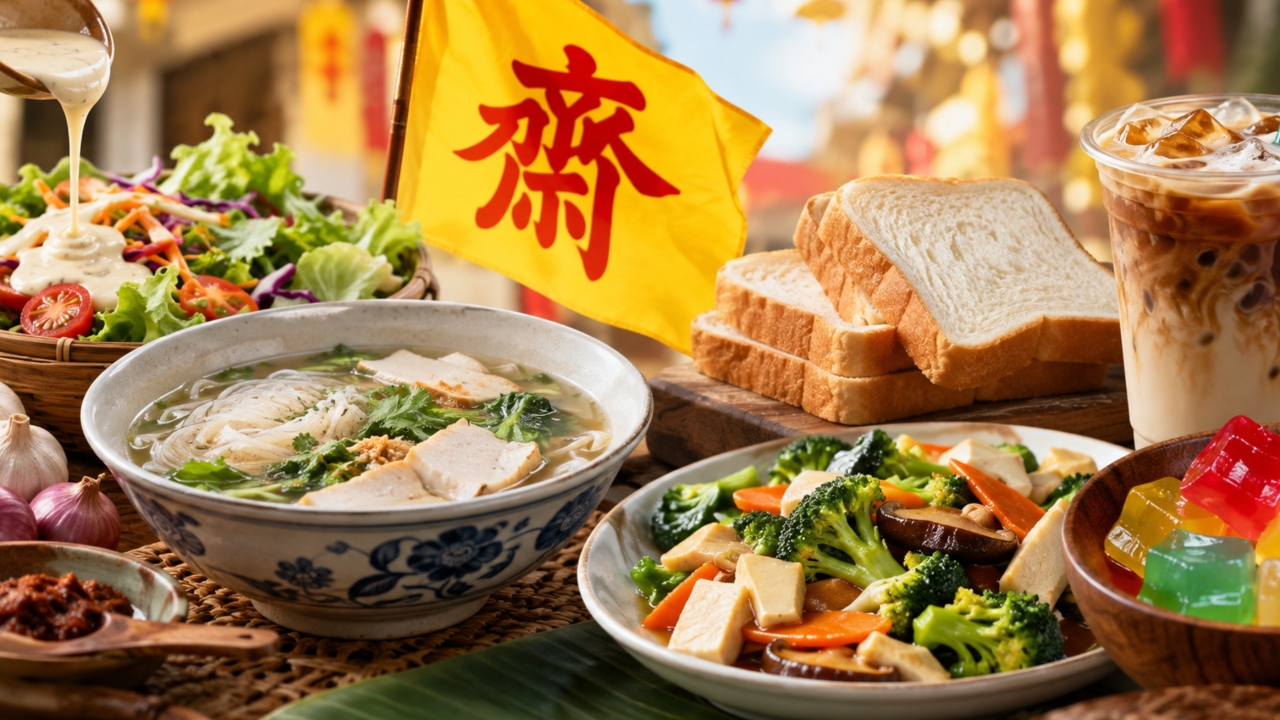
Some breads appear to be made from flour, water, and yeast only, but common recipes may include powdered milk, butter, or eggs, which are animal-derived. Especially milk bread, fresh butter bread, and some soft breads. Jay eaters should read labels carefully and choose breads labeled as Jay or free from animal ingredients.
Stir-fried mixed vegetables are often chosen during the Jay festival because they mainly consist of vegetables. However, many restaurants use oyster sauce or fish sauce for flavoring, which are not Jay seasonings. Some may also add garlic. Jay eaters should clearly request no oyster sauce, fish sauce, or garlic, and choose Jay seasoning sauces instead.
Although salads consist only of fresh vegetables, what makes the dish non-Jay may be the dressing, especially creamy dressings using mayonnaise, which often contains eggs, as well as some dressings with milk, cheese, or honey. To eat Jay, choose Jay dressings or use olive oil mixed with lemon juice and seasonings without prohibited ingredients.

Black coffee or Americano with just coffee and water can be consumed during Jay.But other coffee or tea recipes may add cow's milk, condensed milk, cream, or some non-dairy creamers containing milk proteins. Also, drinks with honey do not comply with abstaining from animal products. Jay eaters should check ingredients before ordering.
Even if some curries contain only vegetables, tofu, and coconut milk, ready-made or common curry pastes may include shrimp paste made from shrimp or fermented shrimp, as well as garlic and shallots, which are not part of traditional Jay foods. Thus, simply substituting meat with tofu is insufficient. One should choose curry paste recipes that exclude prohibited ingredients from the start.
Noodles containing only noodles, vegetables, and tofu do not always mean the dish is Jay, because the broth is often simmered from pork or chicken bones or uses seasoning powders containing animal ingredients. Even if the meat is removed, the broth is not considered Jay. Suitable options are noodles with vegetable broth and seasonings specifically made for Jay.

Some colorful jellies made from fruit juice use gelatin to create a chewy texture, which is derived from collagen in the skin, bones, or connective tissues of animals like pigs and cows. However, not all jellies contain gelatin. Jay eaters can choose products using agar from seaweed or plant-based gelled jellies instead.
Thai papaya salad without crab or fermented fish might be thought of as Jay, but typical recipes often include fish sauce and dried shrimp. Some vendors add garlic, which is among the five pungent vegetables that Jay adherents traditionally avoid. To eat Jay papaya salad, order it without fish sauce, dried shrimp, or garlic, and use soy sauce or Jay seasonings instead.

Potato chips are mainly plant-based, but some flavorings may contain milk powder, whey protein, cheese powder, or animal-derived flavor enhancers, even if the package states vegetable or natural flavor. Therefore, check the ingredients on labels carefully, especially seasonings and flavor additives, before buying.
Tofu is a popular Jay food made from soybeans and provides plant protein, but egg tofu contains chicken eggs and is therefore not Jay, even though it contains no meat. Jay eaters should choose plain white tofu, firm tofu, or soft tofu made solely from soybeans without animal ingredients.

Observing Jay means not only abstaining from meat but alsoavoiding animal-derived ingredients such as eggs, milk, fish sauce, oyster sauce, and shrimp paste, as well as the five pungent vegetables,which are garlic, onions, Chinese chives, leek, and tobacco leaves. Practices may vary by community or belief system. Beginners can reduce the risk of unintentionally eating non-Jay foods by following these simple steps:
However, the 10 food types above do not mean all recipes are non-Jay. Many dishes can be adjusted with suitable ingredients to be Jay. The key is to read labels, ask about ingredients, and select foods that align with your own precepts to confidently observe Jay without excessive worry over every dish.