

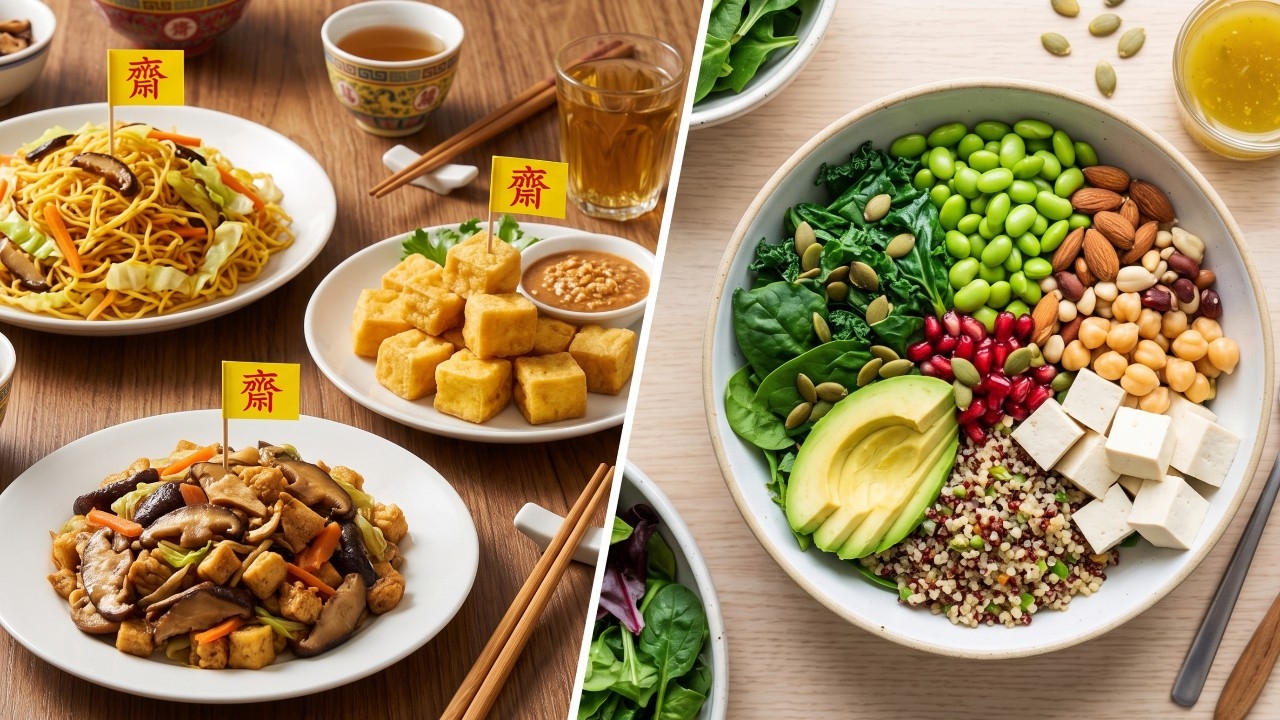
Worried about avoiding animal products but fear gaining weight or high sodium from the Jae diet? The answer lies in choosing the right type of food to fit your goals.
“Jae Diet”Focuses on observing moral precepts and abstaining from meat, while“Plant-based”emphasizes using plants as the main source to care for health and body shape.
Simply understanding the differences and choosing the right way to eat means your next break from meat can nourish both peace of mind and good health.
At first glance, both avoid meat, but their foundational beliefs and practices differ significantly.
Eating Jae is not just about avoiding meat; it has roots in Mahayana Buddhist beliefs and Chinese culture, aiming to purify the mind, avoid harming animal life, and uphold moral precepts.

Jae food strictly prohibits all kinds of meat and animal products, as well as five pungent vegetables—garlic, onions of all kinds, Chinese chives, leek, and tobacco leaves—which are believed to affect the five elements and stimulate sensual desires.
However, traditional Jae dishes often use wheat-based meat substitutes and are commonly fried or heavily salted. Therefore, careful attention to body weight and sodium intake is especially important.
If you want to eat plants for health without observing precepts, "plant-based" is the ideal approach. It emphasizes natural, unprocessed plant foods to reduce chronic disease risk and help address environmental crises.

A clear advantage over Jae is that all pungent vegetables like garlic and onions are allowed, rich in antioxidants, without spiritual restrictions.
The key is to choose vegetables, fruits, legumes, whole grains, seeds, and mushrooms while avoiding synthetic meat, refined flour, and excessive oil for true health benefits.
Comparison Items | True Jae Food | Plant-Based |
Main Goal | Spiritual merit, observing precepts, abstaining from killing animals | Health care, anti-aging, climate change mitigation |
Meat and animal products | Strictly prohibited | Prohibited or very limited in some types |
Five pungent vegetables | Prohibited (garlic, onions, chives, etc.) | Allowed normally (focused on health) |
Main protein sources | Tofu, textured vegetable protein, wheat gluten, meat substitutes | Dry beans, fresh tofu, tempeh, whole grains |
Cooking methods | Often fried, sautéed, or pickled | Focus on boiling, steaming, baking, and minimal seasoning |
Processing level | Ranges from low to highly processed | Emphasizes natural foods with minimal processing |
The Department of Health and the Thai Health Promotion Foundation (ThaiHealth) regularly warn consumers about Jae dishes that are overly sweet, oily, and salty. If you want both the peace of mind from abstaining from meat and a strong body, you can apply Plant-Based principles to your Jae eating as follows.

Combining the good intentions of observing Jae precepts with choosing natural plant foods in a plant-based way is a solution that benefits both body and mind.
This approach makes abstaining from meat during festivals or daily life a true form of self-care, energizing you without worries about weight gain or health problems.
References