

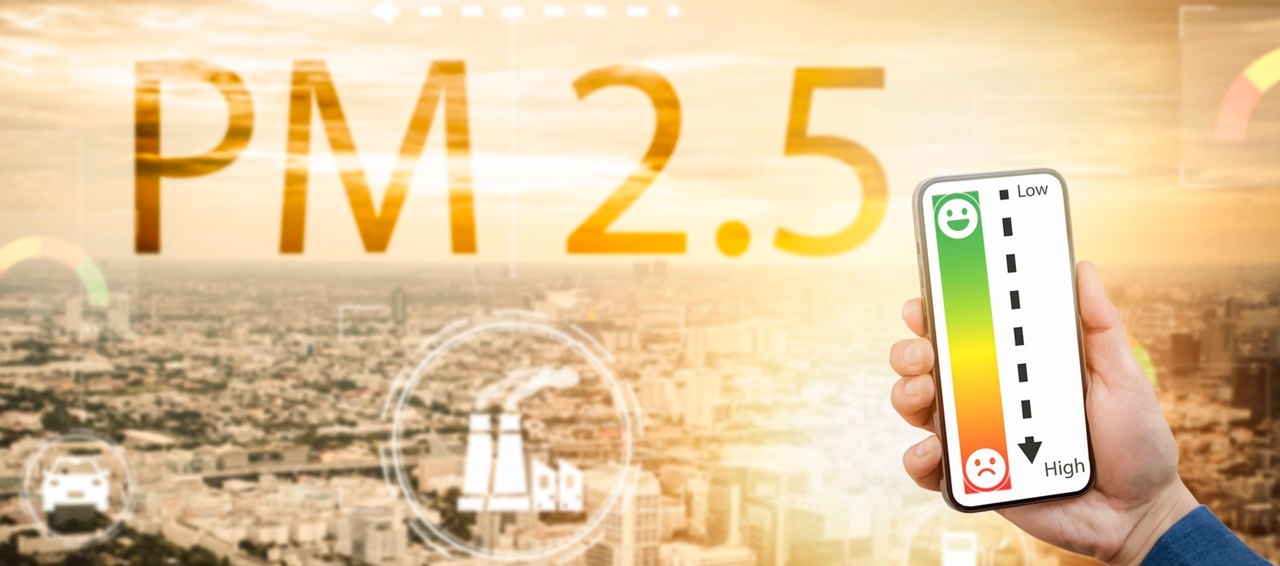
The PM 2.5 dust situation has returned to cover Thailand once more, with reports showing dust levels at "Unhealthy for Sensitive Groups," meaning "not good for health," especially in Bangkok and its vicinity. Heavy traffic, various constructions, and pollution cause dust and smoke, raising the air quality index to levels hazardous to health.
PM 2.5 dust is a factor that causes and triggers respiratory diseases such as bronchitis, asthma, chronic obstructive pulmonary disease, and emphysema. The risk is higher among smokers, drug users, and those who work outdoors regularly.
PM 2.5 dust can trigger allergy symptoms and cause skin inflammation or irritation. This can affect young children, adults, the elderly, and those with chronic illnesses.
PM 2.5 dust can settle on the eyes and conjunctiva, causing irritation, itching, burning sensation, tearing, or conjunctivitis.
PM 2.5 dust affects the circulatory system by causing blood vessel inflammation and dysfunction, increasing the risk of ischemic heart disease and stroke.

Long-term exposure to PM 2.5 dust increases the risk of lung cancer by approximately 1 to 1.4 times when continuously exposed to pollution, especially among smokers or those living in highly polluted areas regularly.
At-risk groups include children, pregnant women, the elderly, and those with chronic diseases (lung, heart, brain, kidney). Those exposed to carcinogens should avoid dust pollution and undergo annual health checkups for early lung cancer screening and prevention.

For lung cancer risk groups, lung cancer screening (Low-dose CT scan) is recommended. Individuals aged 50 or older or long-term smokers should be regularly screened to reduce lung cancer risk from PM 2.5. If concerned about lung health, one should promptly consult a doctor for advice and appropriate care.
Article by Dr. Yanisa Kluanwan, a respiratory and critical care medicine specialist at World Medical Hospital (WMC).