

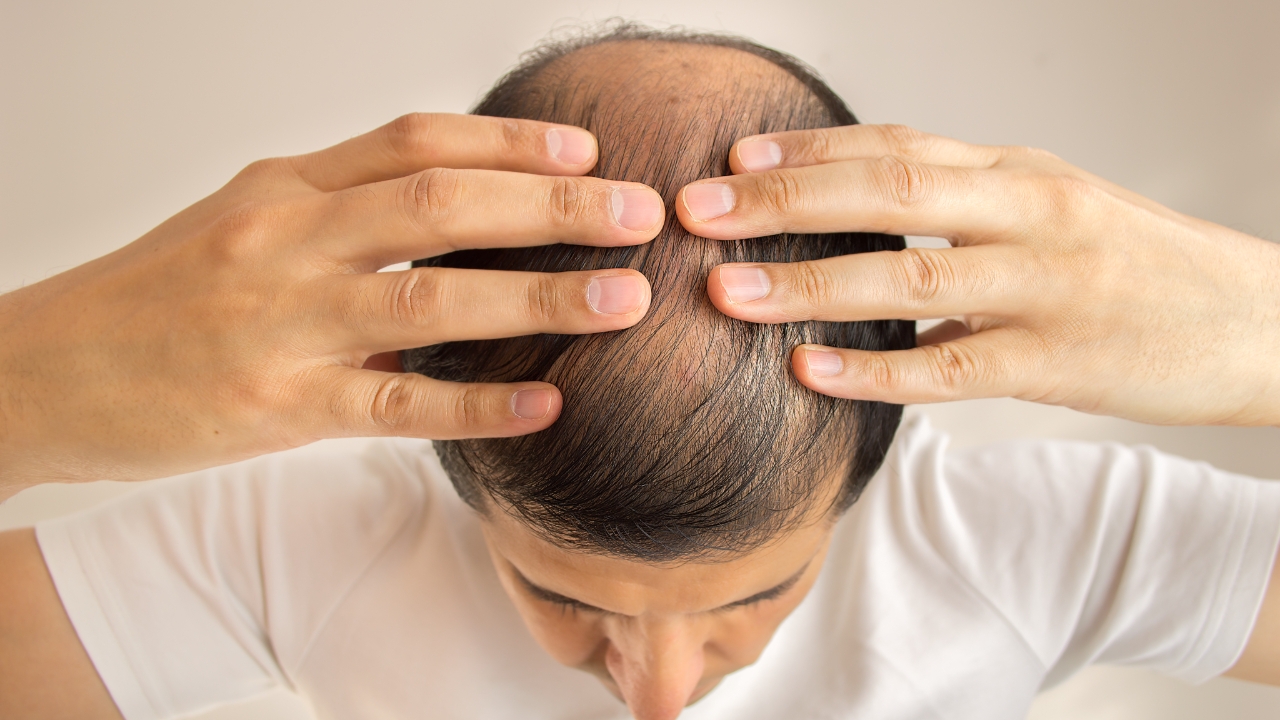
" Hair Loss " might seem like a minor issue that anyone can experience, but when hair starts falling out excessively, thinning, or clumping after washing, it may signal underlying problems such as stress, lack of rest, unbalanced nutrition, hormonal changes, or hidden scalp issues.
" Hair Loss " is a problem many have faced, affecting both women and men across all ages. While losing about 50–100 hairs daily is normal in the hair cycle, noticing increased shedding, visible scalp due to thinning, or weakened hair may indicate abnormalities that need attention.
Hair loss results from multiple complex factors, including internal body conditions and external environmental influences.

Human hair follows a natural life cycle divided into three main stages:
Any disruption to this cycle—due to hormones, nutrition, stress, or follicle abnormalities—can lead to excessive hair loss and thinning.
1. Genetics: the most common cause.
Genetic hair loss, known as Androgenetic Alopecia, occurs in both men and women. It typically presents as gradual thinning along the hairline, crown, or top of the head. This is mainly due to hair follicles' sensitivity to androgen hormones, causing follicle shrinkage and progressively thinner, shorter hair growth.
2. Hormonal changes or imbalances.
Hormonal fluctuations directly affect the hair cycle, such as:
These conditions often cause sudden hair loss (Telogen Effluvium), where many hairs shed simultaneously. Additionally, insulin resistance or polycystic ovary syndrome (PCOS) can cause hair thinning in women.
3. Nutritional deficiencies.
Hair reflects nutritional status clearly. Insufficient energy or lack of nutrients such as:
can weaken hair, making it brittle and prone to falling out, especially in those losing weight rapidly, eating unbalanced diets, or having conditions affecting nutrient absorption.
4. Abnormalities of hair follicles and scalp.
These conditions require diagnosis and treatment by specialists, as leaving them untreated can cause permanent follicle damage.

If you notice that
you should consult a doctor or hair and scalp specialist. Accurate diagnosis will help address the problem effectively, saving time and preventing permanent hair loss.
Hair loss is not a trivial matter and should not be viewed merely as a cosmetic issue, as it can signal internal body abnormalities. Understanding its causes and proper early care is key to maintaining healthy hair in the long term.
Information by : Dr. Polinee Rattanasiriwilai, specialist in preventive medicine, beauty care, and hair treatment at the Aesthetic Surgery and Laser Dermatology Center, Phyathai 1 Hospital.