

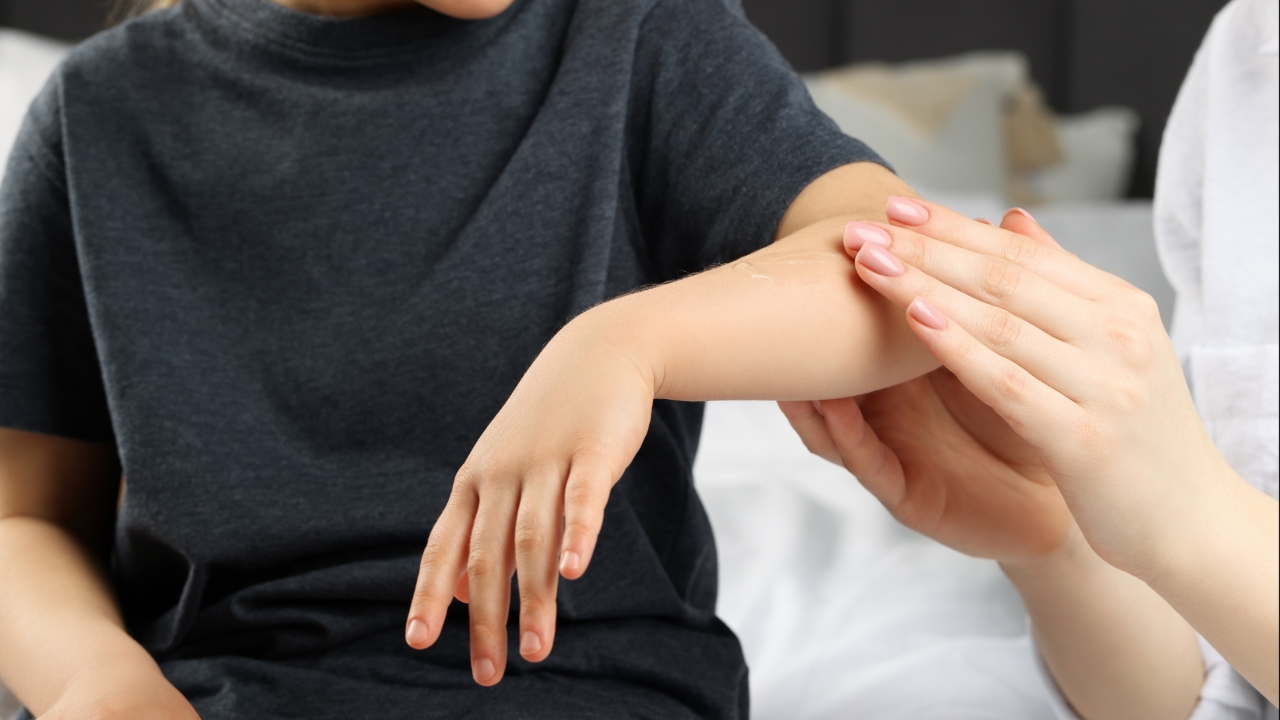
One of the health issues that often affect children is "skin diseases," which include various types with different causes and symptoms. Parents should watch for symptoms to find suitable treatment and learn ways to prevent them.
During cold and dry weather, children's skin may itch and develop white flaking patches, especially on the legs. The skin there tends to be drier than other parts because it has less fat. Other factors include taking warm baths, which feel relaxing but often last longer than usual, further drying the skin.
In cases of very dry skin, red, inflamed rashes can develop. Excessive scratching may cause wounds, providing entry points for infections that can lead to further skin problems.

Treatment
Molluscum contagiosum appears as bumps with a soft, grainy center resembling cooked rice, hence its name. It is a viral infection affecting all ages but is more common in children due to their weaker immunity against the virus, making infection easier.
Usually, molluscum contagiosum causes no symptoms, but patients notice raised bumps matching skin color or red, which can spread rapidly, especially in those with weakened immune systems, such as patients on immunosuppressive drugs or with certain skin diseases like atopic dermatitis. It is often seen in preschool children.
Treatment
In healthy individuals, the condition may resolve on its own but can take from one month up to two or three years. For symptomatic cases, several treatments are available:
Warts are caused by the Human Papilloma Virus (HPV), producing hard bumps on the skin, commonly on the palms and soles, which can be painful when walking.
Treatment
Warts can resolve spontaneously but usually take a long time, so treatments include:
Head lice are small insects living on the scalp, transmitted through direct contact. They are common in crowded places like schools and shelters.

Initially, there may be no symptoms, but white nits appear attached to hair strands. Some children experience itching, which can be severe enough to cause scalp sores and swollen lymph nodes in the neck.
Treatment
This rash occurs when children frequently come into contact with saliva, which touches the skin of the face, arms, and legs. Prolonged exposure causes inflammation that can thicken into a rash with oozing. Children may experience pain and itching, scratching leads to skin inflammation. This can affect children from 2 months to 3 years old.
Treatment
Information provided by Dr. Sanchawan Wittayakornruk, Department of Outpatient Pediatrics and Adolescent Medicine, Department of Pediatrics, Faculty of Medicine Ramathibodi Hospital, Mahidol University.