

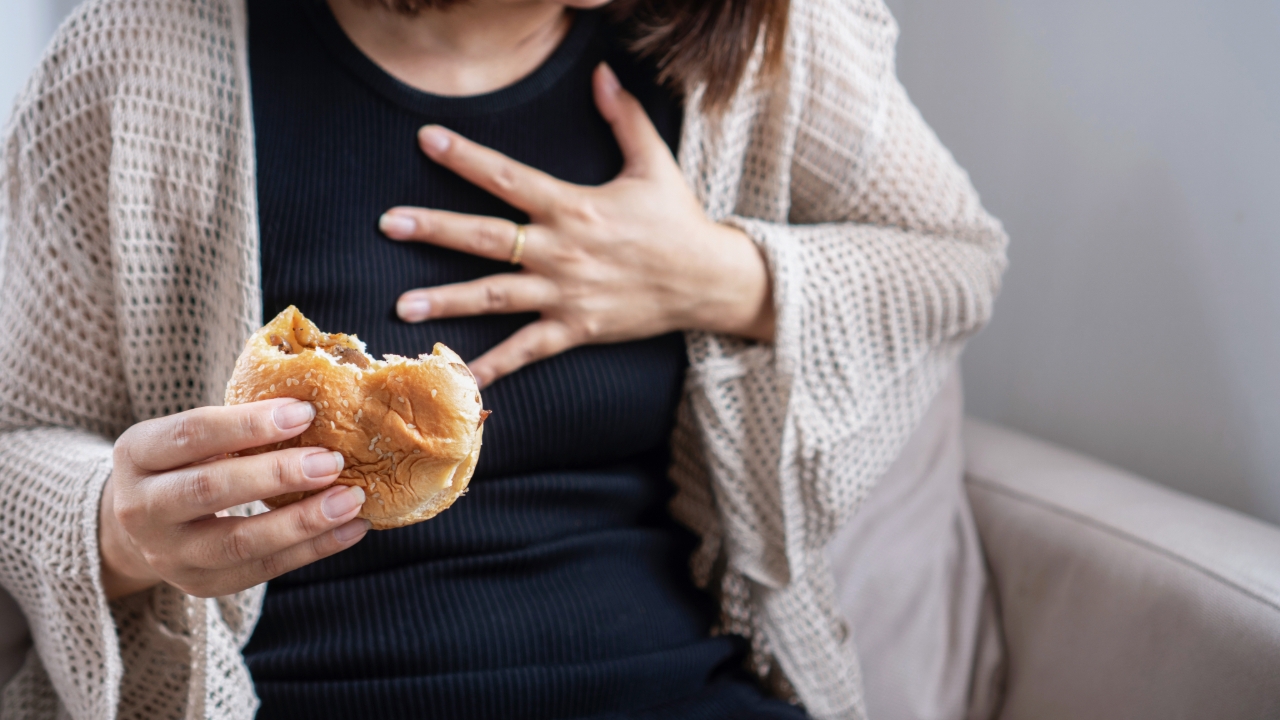
After New Year: Is Your Chest Burning and Bloated Just from Overeating or Acid Reflux?

During the New Year, many people tend to eat more than usual, including large meals, sweets, fried and fatty foods, or alcohol at parties. This can lead to symptoms like bloating, fullness, burning chest pain, or flare-ups of acid reflux. This article explains why you might experience these “sharp” sensations and how to properly care for your esophagus and stomach, so you can enjoy the New Year without discomfort.
Why is bloating and fullness more common during the New Year?
When we eat heavily or consume high-fat foods, the digestive system works harder. The stomach secretes more acid to digest food. Eating quickly, overeating, or lying down immediately afterward can cause excess gas in the digestive tract and food to remain longer in the stomach, leading to feelings of bloating, fullness, or burning chest pain. Those with existing acid reflux or gastritis are more likely to have flare-ups during this time. Triggering factors include:
- Fatty or fried foods slow stomach digestion, stimulate acid secretion, and increase gas buildup, such as shabu-shabu, grilled pork, crispy pork belly, fried chicken, nuggets, and French fries.
- Spicy foods stimulate increased stomach acid secretion and can irritate the stomach lining, causing burning chest pain. Examples include spicy tteokbokki, som tam (papaya salad), tom yum soup, and very spicy stir-fried holy basil.
- Alcohol relaxes the esophageal sphincter, promoting acid reflux and irritating the stomach lining. Examples include wine, beer, whiskey, and sweet cocktails like margaritas and mojitos.
- Carbonated drinks increase stomach gas due to their bubbles and fizz, causing bloating and fullness. Examples are cola, orange soda, and soda mixes like lime soda and rambutan soda.
- Eating multiple large meals in a short period makes the stomach work continuously without rest, leading to fullness, bloating, and abnormally early satiety.
Warning signs indicating your stomach is working hard
- Bloating and fullness
- Burning chest pain (heartburn)
- Upper abdominal discomfort after eating
- Nausea and abnormally early fullness
If severe symptoms occur, such as intense abdominal pain, vomiting blood, or black stools, see a doctor immediately as these may indicate stomach bleeding.
5 simple ways to "rest your stomach" after heavy eating during the New Year
- Eat smaller, more frequent meals to reduce the stomach's workload and avoid digesting large amounts at once.
- Avoid acid-triggering foods such as fried foods, fatty dishes, very spicy foods, strong coffee, and carbonated drinks.
- Do not lie down immediately after eating; wait at least 3-4 hours to reduce the risk of acid reflux.
- Take a slow 10–15 minute walk after meals. Moving helps the stomach and intestines function better and reduces bloating.
- Limit alcohol consumption. Generally, the safe amount is no more than 2 standard drinks per day for men and 1 for women.
Light meals help restore the stomach
They are gentle on the stomach and prevent it from overworking.
- Fish rice porridge
- Brown rice congee
- Boiled or steamed vegetables
- Clear soups
- Steamed chicken breast
- Severe or persistent abdominal pain lasting several days
- Frequent burning chest pain that disrupts daily life
- Frequent vomiting or vomiting blood
- Black stools
- Unexplained weight loss
If you experience bloating, fullness, burning chest pain, or easy bloating after eating, or suspect gastritis or acid reflux, it is recommended to see a specialist in gastroenterology for proper diagnosis and treatment planning. This helps you confidently manage your health and reduces the risk of recurring symptoms in the future.
Information provided by Dr. Natthida Sribuathong, gastroenterologist at Phyathai 2 Hospital.