

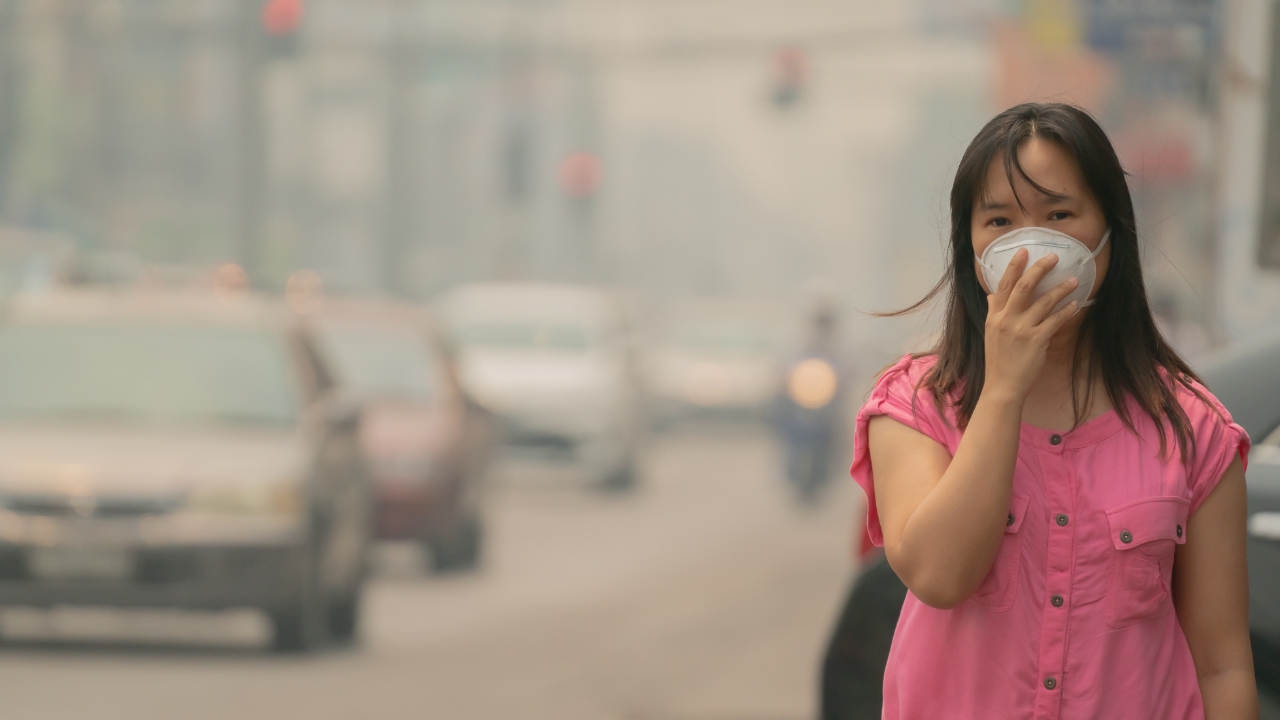
Advanced methods to cope with PM2.5 for Bangkok residents, ranging from choosing the right N95 mask and portable air purifiers to cellular-level anti-dust nutrition and techniques for selecting walking routes that avoid pollution.
The toxic dust crisis has returned. Recently, PM2.5 levels in Bangkok and its metropolitan area surged to “red zone” levels, exceeding standards at many key spots—especially along roadsides and in downtown areas with heavy traffic. This directly affects the respiratory system. For office workers, delivery riders, traffic police, and others who must work outdoors and cannot avoid leaving home, wearing an N95 mask may no longer be sufficient. Here are ways to protect yourself and find “Safe Zones” to survive when Bangkok becomes a city shrouded in toxic haze.

According to the latest reports, dust levels in many Bangkok districts have exceeded safe limits, reaching red zone levels. The frightening factor is the “atmospheric stagnation” that traps dust, preventing it from dispersing.
If you must travel outdoors, apply the Micro-climate principle—considering local weather conditions or small sub-areas differing slightly from the surrounding environment—to find safer spots.

For office workers commuting by public transport or delivery riders spending long periods outdoors, selecting the right equipment is crucial.

When tiny PM2.5 particles travel through the alveoli into the bloodstream, they create “rust” at the cellular level (oxidative stress). Nutrition to combat dust focuses on “cleansing” and “repairing” as follows:
Found abundantly in broccoli sprouts, this compound activates the liver’s detox switch, accelerating the removal of air pollution toxins through urine by up to 61%. It is best eaten raw or briefly blanched to preserve key enzymes.

Research from Columbia University shows that vitamins B6, B12, and folic acid reduce PM2.5's effects on the cardiovascular system and help maintain DNA stability, preventing mutations.
For those spending long hours outdoors, fatty acids from marine fish or chia seeds improve blood vessel flexibility and lower the risk of dust-triggered sudden heart attacks.
Surviving PM2.5 today requires more than just N95 masks and portable air purifiers as frontline defenses. Proper cellular-level nutrition and smart route choices in the city are key to enabling Bangkok residents to live outside confidently and more safely.