

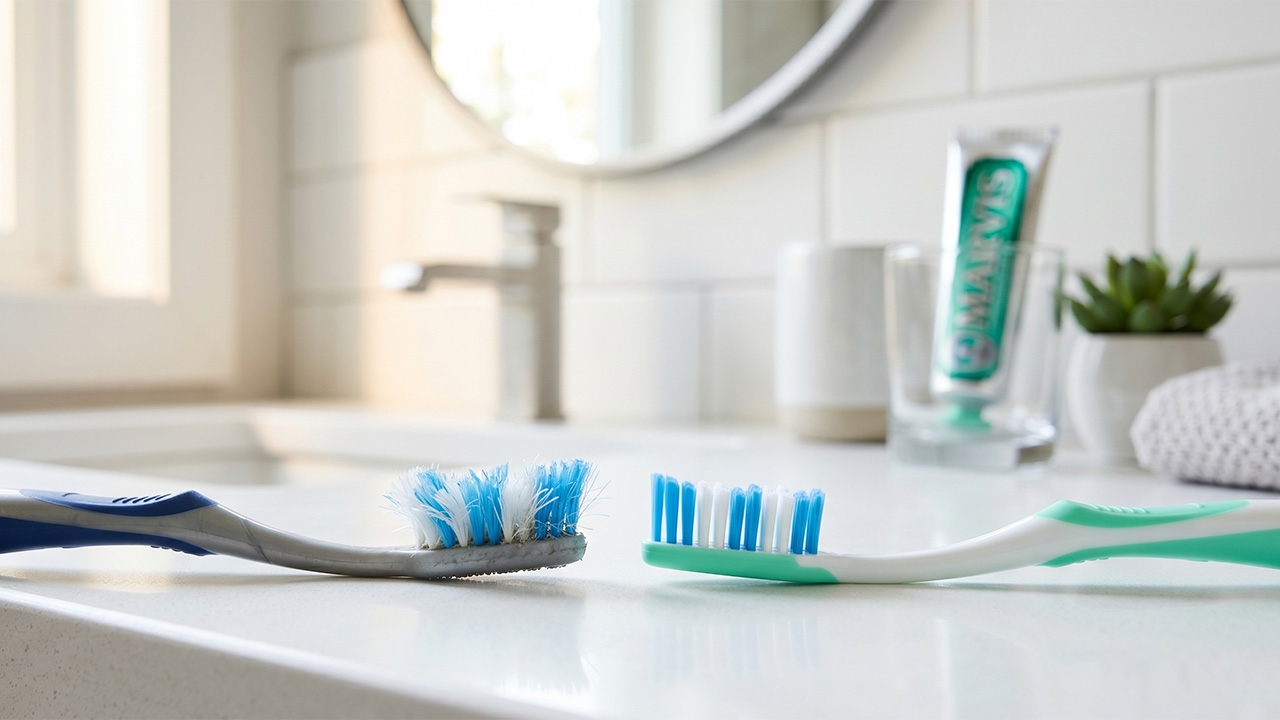
The world "changes" often, but if you want bright, beautiful teeth that stay the same, start with "changing your toothbrush." Many people may think it’s fine to keep using it as long as the bristles haven’t fallen out. But from a dentist’s perspective, this small tool is crucial for oral health and requires close care.
According to information from the Dental Council and expert dentists, it is advised that we should change our toothbrush every 3-4 months at minimum. The reason isn’t just worn bristles that can’t clean properly, but also the "silent enemy" that we cannot see.
1. A breeding ground for biofilm (bacterial film) Dentists explain that every time we brush, food particles and bacteria get caught in the bristles. No matter how well you rinse, if you use the same brush for more than 4 months, it becomes an ideal home for germs that can cause gum inflammation.
2. Worn-out bristles When bristles start to splay, dentists compare it to using a worn-out broom to clean your house. Not only does it fail to reach between teeth, but stiff, splayed bristles can damage tooth enamel and poke the gums, causing sores.

Besides tracking time, dentists advise watching for these signs and replacing your brush right away if they appear.
For better dental health, here are some selection tips:
Remember this clearly: how often you should change your toothbrush. Following dentists’ advice not only keeps your teeth clean but is also a worthwhile investment to prevent future dental expenses. So, don’t forget to check your toothbrush tonight and see if it’s time to "change your brush." Yet?