

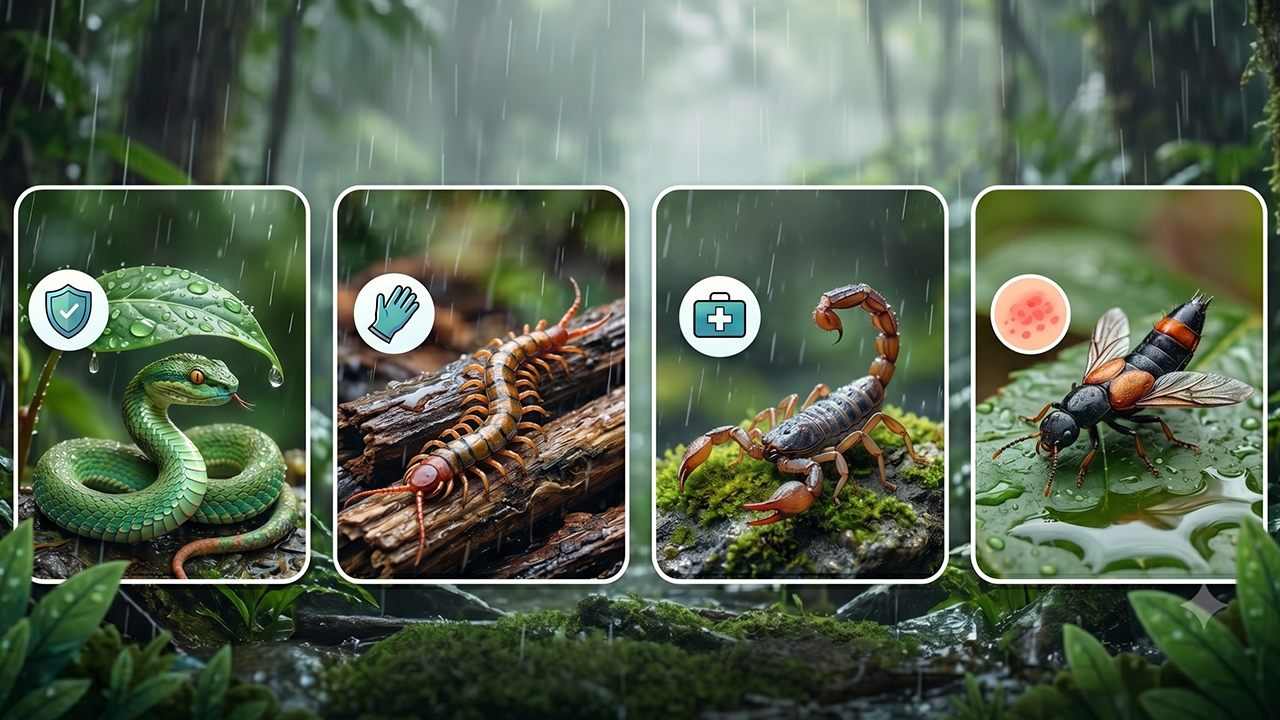
The rainy and flood seasons bring venomous creatures like snakes, centipedes, scorpions, and rove beetles fleeing into homes. Here are proper prevention and first aid methods to keep every family member safe.
During the rainy season, frequent thunderstorms and widespread flooding cause a common problem that endangers the public: "Venomous animals" which often escape rising waters to seek shelter in houses. According to data from the Department of Disease Control, Ministry of Public Health, statistics show a significant increase in venomous animal bites during the rainy season. Therefore, understanding prevention and basic first aid is crucial to reducing injury severity and preventing potential fatalities.
Snakes often escape floodwaters to hide in damp, dense areas, including bathrooms and shoes.
First aid for snake bites:
Precautions: Do not cut the wound, suck out venom, or use a tourniquet, as these can cause tissue death. Take the patient to the nearest hospital immediately.
Venomous animals that hide in damp places like wood piles, under plant pots, or in shoes. Their bites cause pain, swelling, and redness.
First aid for centipede bites:
Scorpions hide in crevices, rock piles, or shoes. Their venom causes burning pain, redness, swelling, and sometimes fever.
First aid for scorpion stings:
Small insects attracted to lights at night. Their venom (pederin) is in their body fluids and causes long, blistering burn marks upon contact.
First aid for rove beetle contact:
To reduce the risk of encounters with venomous animals, follow these simple guidelines:
1. Keep your home tidy Clear clutter, wood piles, leaves, and garbage around the house to eliminate hiding places for venomous creatures.
2. Check your shoes before wearing them Always tap or shake shoes before putting them on, as snakes, centipedes, and scorpions often hide inside.
3. Seal gaps in your home Inspect and fill cracks around doors, windows, and drainage pipes.
4. Ensure adequate lighting Venomous animals are active in the dark; installing lights around the house improves visibility.
5. Use mosquito nets or screens To prevent rove beetles and other venomous insects from entering the home at night.
During the rainy and flood seasons, vigilance against venomous animals is essential. Maintaining cleanliness, checking belongings before use, and knowing proper first aid can lessen injury risks and severity.
In emergencies or severe allergic reactions, seek medical help or call emergency hotlines immediately to ensure the highest safety for life.
Source:Public Relations Department