

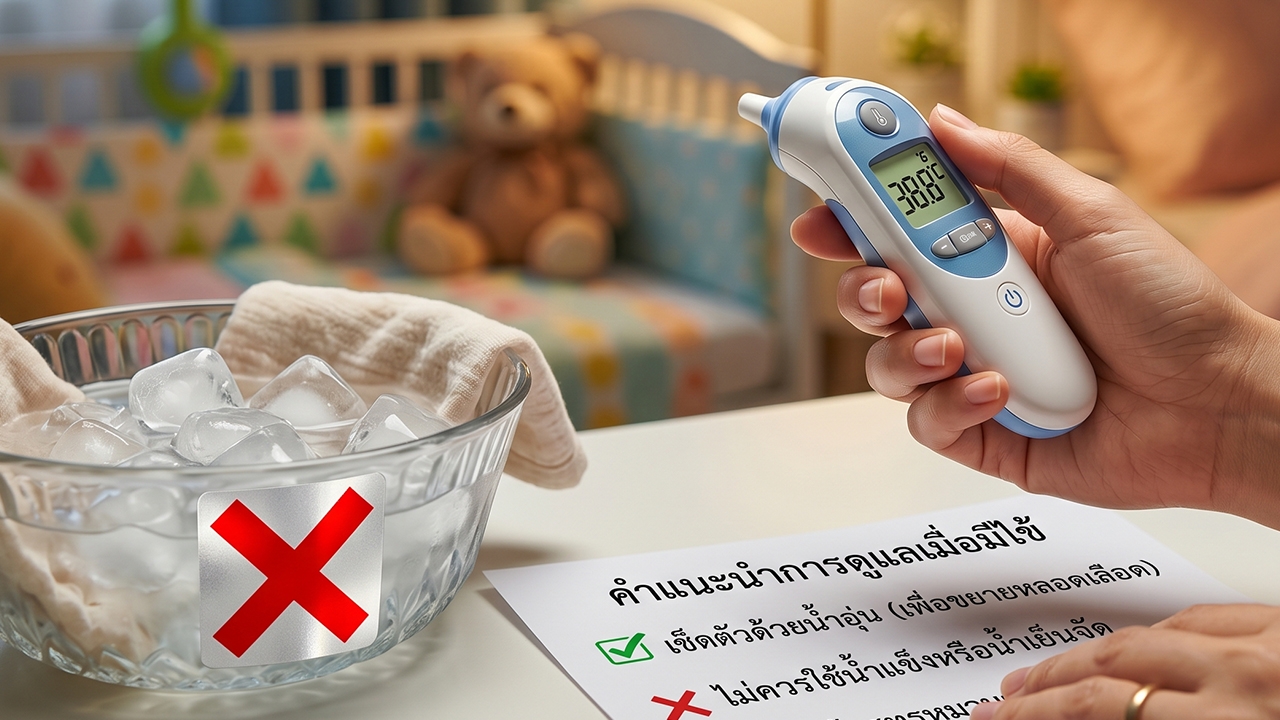
A fever signals that the body is fighting inflammation or infection. Medically, a body temperature over 37.5 degrees Celsius is considered a fever, and if it rises above 38.5 degrees Celsius, it is classified as a high fever. "High fever" This condition requires urgent medical care to prevent complications.
Before reviewing the correct methods, we need to adjust misunderstandings because medical statistics show many patients are hospitalized with complications caused by incorrect first-aid practices based on false beliefs.
Statistics from Ramathibodi Hospital Medical Faculty show that young children (6 months to 5 years old) are at high risk of febrile seizures if their body temperature rises rapidly, so meticulous care is needed as follows.
1. Prepare supplies Room temperature or warm (not cold) water and 2-3 small towels.
2. Suitable environment Sponge in a well-ventilated room, temporarily turn off air conditioning to prevent shivering.
3. Heat removal technique Wring the towel until damp and sponge the face, neck folds, and behind the ears.
4. Tips for handling fussy children If the child resists sponging and crying worsens the fever, gently dab instead of rubbing, distract with conversation or favorite toys, and continue sponging for about 15-20 minutes.
Although adults have less risk of seizures, prolonged high fever can cause dehydration and severe fatigue. Follow these guidelines.
Common question: Can you bathe if you have a fever? If the fever is mild and there is no shivering, a warm bath is acceptable. For high fever, sponging is safer to avoid sudden temperature drops.
Siriraj Piyamaharajkarun Hospital advises that if fever does not improve within 48 hours despite sponging and proper medication, or if any of the following "Red Flags" appear, urgent hospital care is necessary.
1. Noticeable lethargy Difficulty waking or crying without tears (sign of dehydration).
2. Labored breathing Or severe coughing.
3. Convulsive seizures Rolled-back eyes or red rashes/pinpoint bleeding on the body (risk of dengue fever or severe influenza strains).
Sponging to reduce fever is a critical first-aid step for both children and adults to prevent complications, especially seizures in young children. Good intentions can backfire if based on false beliefs. The most important rule: never use ice-cold water; only warm or room temperature water should be used along with sponging against hair growth and applying compresses on folds with large blood vessels.
However, sponging only provides temporary relief. If fever persists beyond 48 hours or warning signs such as lethargy, labored breathing, or bleeding spots appear, promptly take the patient to the hospital for proper diagnosis and treatment.