

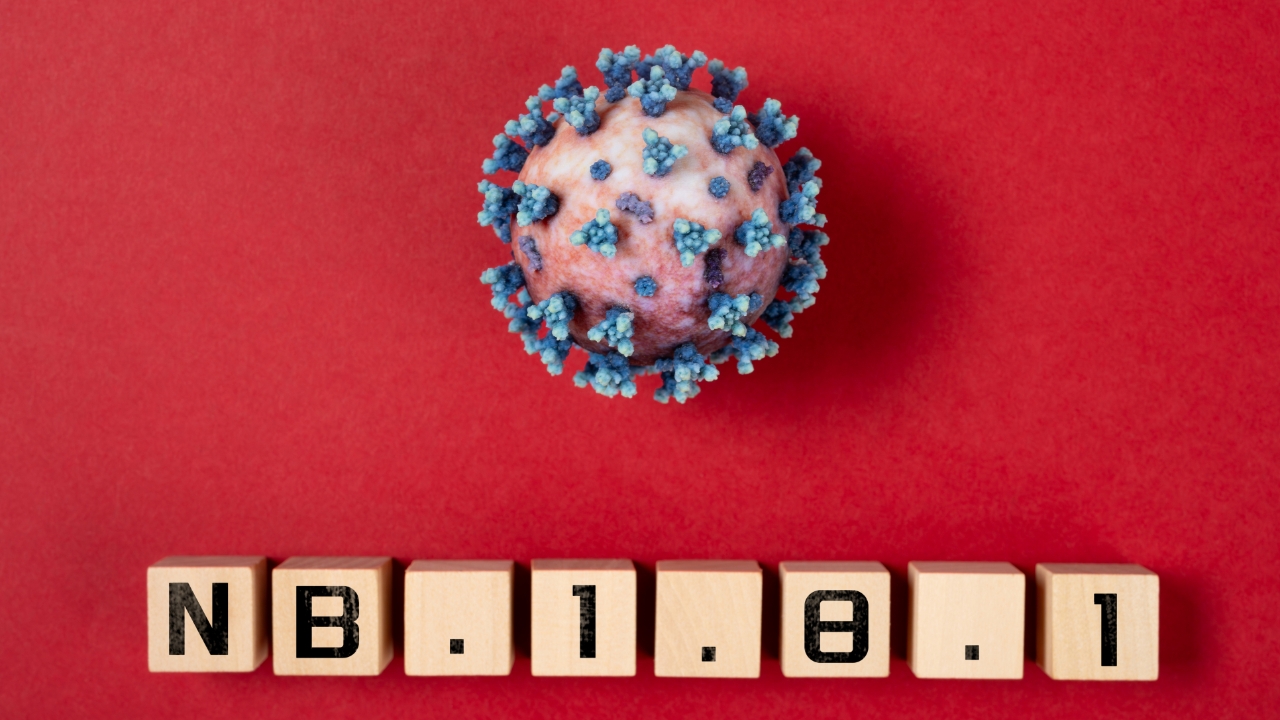
COVID cases in Singapore surged past 10,000 in May 2026. Here is an in-depth look at the new COVID variant NB.1.8.1 and its key symptoms."A sore throat like being cut by a razor blade"Vaccines remain essential, experts confirm.
This has become a major concern for health-conscious individuals and travelers, as COVID-19 in Singapore regained attention in mid-May 2026. Cases jumped sharply by 12,700 within one week, up nearly 60% from the previous week.
We will explore what this new spreading COVID variant is, its symptoms, and how to prepare safely.
According to Singapore's Ministry of Health and related agencies, the main variant currently accounting for over half of infections is the subvariant NB.1.8.1 (also called Nimbus). This virus is an Omicron subvariant derived from the recombinant strain XDV.1.5.1 and is linked to the JN.1 lineage.
Medical reports show that most NB.1.8.1 infections cause mild illness, but the most distinctive and frequently reported symptom is as follows.

Global health agencies like the WHO and South Africa's NICD have assessed and confirmed there is currently no clinical evidence indicating NB.1.8.1 causes new or more severe symptoms compared to earlier variants. ICU admissions remain very low, averaging only one case per day in Singapore.
Singapore's Ministry of Health and experts explain that this wave results from several combined factors:
Doctors and experts respond that vaccination remains"Necessary and effective"Current COVID-19 vaccines (including those updated for variants JN.1, KP.2, or LP.8.1) continue to produce antibodies against NB.1.8.1, preventing severe illness and reducing hospitalization risk. Singapore's Communicable Diseases Agency recommends booster shots at least once a year for at-risk groups such as people over 60, pregnant women, and those with chronic conditions.
Although the NB.1.8.1 variant spreads faster due to natural mutations, it is not more severe. For health-conscious people and Thai travelers, maintaining basic hygiene and following vaccination recommendations remain the best protection for safely living with this endemic disease.