

Air pollution, especially fine particulate matter (PM2.5), toxic gases, volatile organic compounds (VOCs), and microplastics, has become a primary risk factor affecting the general population, including non-smokers.
The incidence of chronic lung diseases and lung cancer among non-smokers is steadily rising and is not a coincidence.
Epidemiological and molecular biological evidence over the past decade consistently confirms that "air pollution is not just a symptom trigger but accelerates disease processes at structural and genetic levels in the lungs."

Pollutant particles and gases can bypass the upper airway filters, directly entering the distal bronchi and alveoli. When accumulated in lung tissue, they cause:
Global research shows pollution acts as a “tumor promoter,” not merely a direct mutagen.
In normal or non-smoking lungs, cells may already harbor critical gene mutations such as EGFR or KRAS that accumulate with age.
Normally, these cells remain “dormant” and harmless, but continuous pollution exposure activates lung immune cells, especially macrophages, to release inflammatory agents like Interleukin-1β (IL-1β). This substance triggers dormant mutated cells to start abnormal division, eventually leading to lung cancer.
This mechanism clearly explains “lung cancer in non-smokers,” particularly in Asian populations where EGFR mutations are more prevalent than in Western populations.
Additionally, pollutants act synergistically, serving as “carriers” for heavy metals and toxins into the lungs, while VOCs and microplastics penetrate epithelial linings, provoking chronic inflammation and foreign body reactions—foundations for chronic lung diseases and long-term lung degeneration.

Pollution effects usually develop gradually, altering lung structure and function at multiple levels, including:
In early stages, most patients typically show no symptoms.
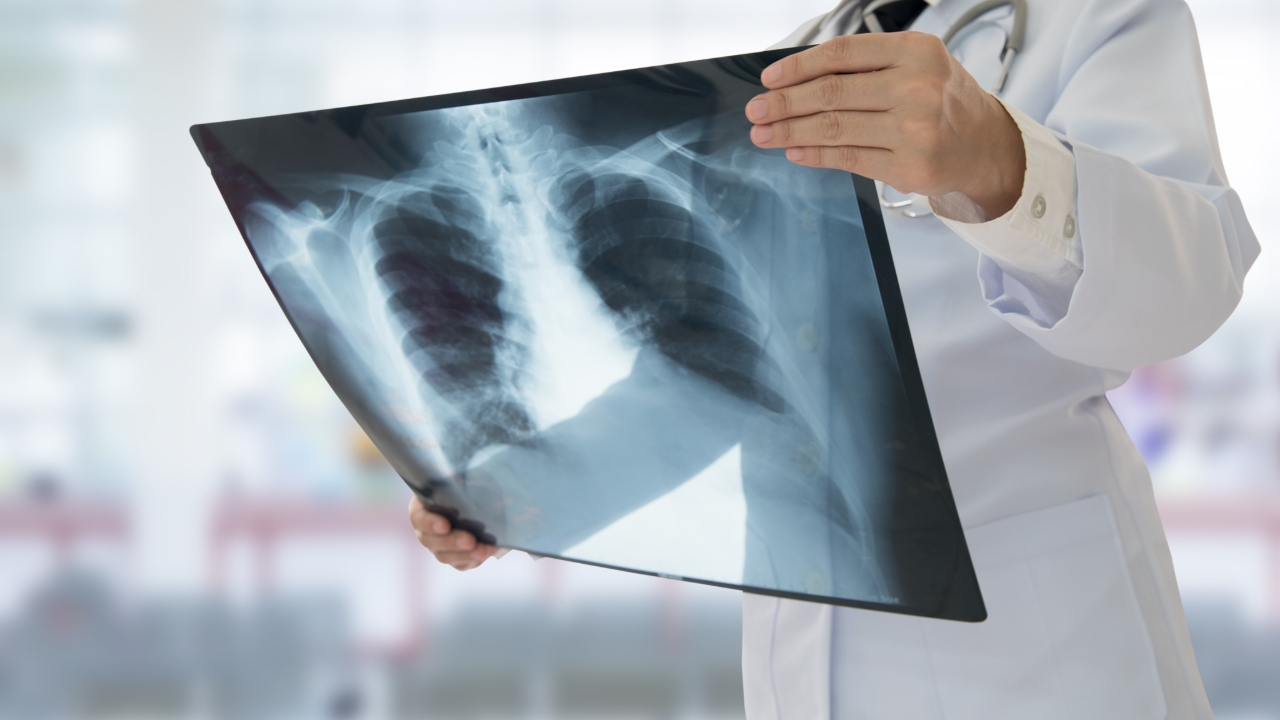
Standard tests such as chest X-rays, lung auscultation, or blood oxygen measurement often cannot detect these abnormalities. This underscores the crucial role of “in-depth lung health screening” in the pollution era.
Low-Dose CT Chest (LDCT) is a low-radiation computed tomography scan providing detailed three-dimensional images far superior to standard chest X-rays, without compromising diagnostic capability.

Examples:Early-stage lung cancer lesions detectable by Low-Dose CT Chest (LDCT). Large studies show LDCT reduces lung cancer mortality by about 20% and detects early-stage lung cancer with over 93% sensitivity.
Pulmonary Function Tests: revealing lung degeneration before disease manifests.
The lungs have a high functional reserve; patients can lose 30–40% of lung capacity without feeling breathless.
Pulmonary Function Tests assess lung and airway performance, detecting abnormalities “before symptoms appear,” especially small airway dysfunction where pollution damage begins.
Pulmonary Function Tests measure lung volume and airflow during inhalation and exhalation. The patient inhales fully then exhales forcefully and continuously into a Spirometer, which records data as a graph (Spirogram) and quantitative values.
This test requires patient cooperation and skilled technicians to ensure accurate and reliable results.
Key parameters to evaluate lung function.
FVC (Forced Vital Capacity).
Total air volume exhaled after a full inhalation.
Normal value is ≥ 80% of predicted.
Reduced in diseases with limited lung expansion, such as pulmonary fibrosis (restrictive lung disease).
FEV₁ (Forced Expiratory Volume in 1 second).
Air volume exhaled in the first second.
Normal value is ≥ 80% of predicted.
Decreased when airway obstruction is present.
FEV₁ / FVC (%).
Indicator of airway obstruction.
Normal value is ≥ 70%.
1. Obstructive – airway blockage (e.g., asthma, COPD).
2. Restrictive – reduced lung expansion (e.g., pulmonary fibrosis).
3. Combined – both obstructive and restrictive patterns.
Interpretation requires specialist physicians to ensure accuracy and appropriateness for each patient’s context.
1. Low-Dose CT Chest.
2. Pulmonary Function Tests.
3. Safety of the tests.
Together, these tests provide comprehensive lung care in the pollution era, detecting early abnormalities, increasing chances of cure, minimizing permanent damage, and preserving quality of life. Good lung health starts not with treatment after illness but with recognizing risk before disease becomes apparent.
Information courtesy of: Dr. Silawan Sathitrattanachaiwin, MD 54682, Pulmonary and Critical Care Specialist.Samitivej Sukhumvit Hospital.