

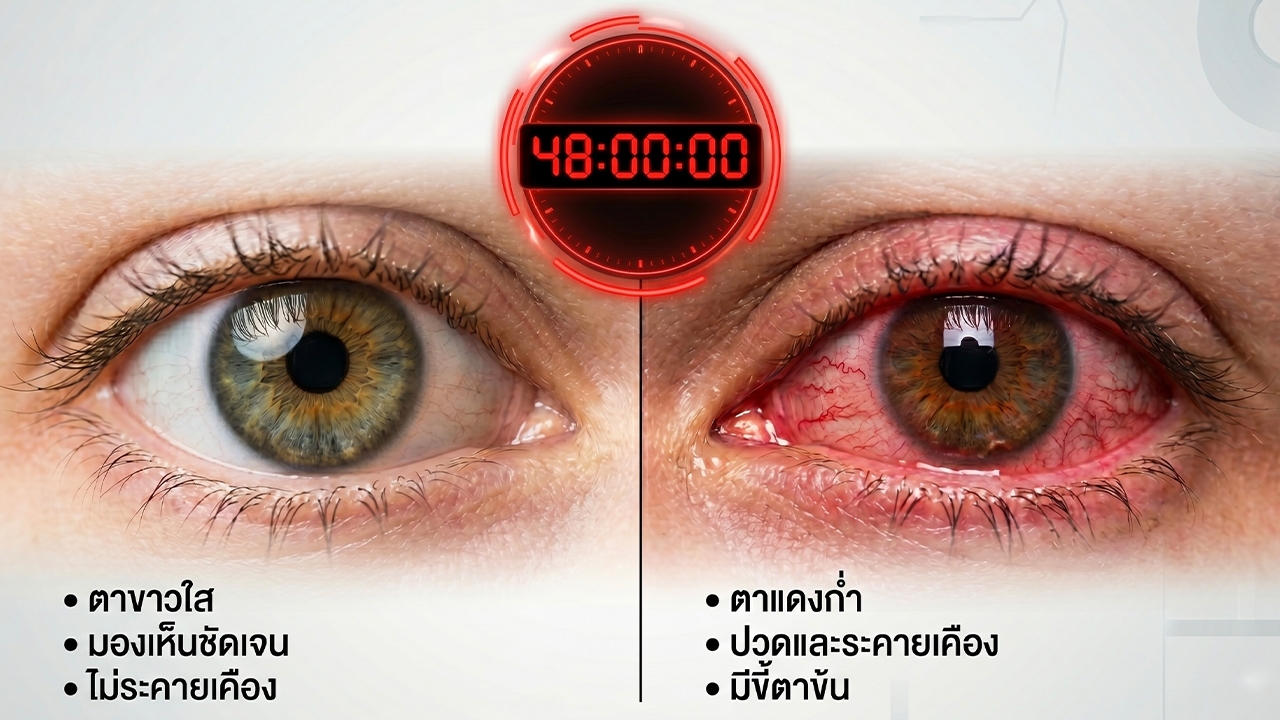
Waking up with red eyes should not be taken lightly! There are three types of red eye conditions to know about, along with warnings about risky behaviors that can cause "permanent blindness" and critical signs that require immediate hospital treatment. Important facts that many Thais often misunderstand and neglect are revealed.
. Symptoms "Red eye" or "conjunctivitis" is one of the most common eye disorders. According to statistics from the Department of Disease Control, Ministry of Public Health, tens of thousands of patients with red eye seek treatment nationwide each year, especially during the rainy season or times of waterlogging, which is the main epidemic period.
Although most people consider red eye a normal issue that "will go away on its own," ophthalmologists point out that red eye comes in several types. Some behaviors and certain infectious agents are acutely dangerous; if improperly treated, they can lead to vision loss or permanent blindness.
| Types of red eye disease | Main cause | Key symptoms to watch for | Risks and transmission |
| 1. Viral type | Adenovirus infection | Watery eyes, clear discharge, starts in one eye then spreads | Highly contagious via contact |
| 2. Bacterial type | Common bacteria / gonorrhea bacteria | Thick sticky discharge, yellow-green, difficulty opening eyes | Most dangerous; risk of corneal perforation |
| 3. Allergic type | Dust mites, pollen, animal dander | Severe itching, swollen watery eyes | Not contagious |
This type spreads fastest and easiest, often starting in one eye and spreading to the other within days. The real danger is not the virus itself but the "behavior of self-medicating with eye drops."
Warning from ophthalmologists Many patients confuse viral red eye with allergic red eye and buy steroid-containing eye drops on their own. Steroids suppress the immune system, allowing the virus to multiply rapidly. If unlucky with herpes group viruses, it can cause deep corneal ulcers leading to blindness.
Generally, bacteria cause thick green or yellow discharge, with eyes so sticky that they cannot open upon waking. The most dangerous case is infection with "Neisseria gonorrhoeae" or gonorrhea bacteria, which can enter the eye through contact with infected genital secretions.
Gonorrhea bacteria have a frightening ability to "directly penetrate intact conjunctiva and cornea," unlike other bacteria that require existing eye wounds. This infection causes constant pus discharge and can dissolve the cornea within 24–48 hours. Without prompt treatment, that eye will become completely blind immediately.
Caused by the body's hypersensitive reaction to allergens, key symptoms include "intense itching that makes one want to rub the eyes," mild redness, and swelling. While it is not contagious and does not directly cause blindness, the hidden danger is "vigorous and chronic eye rubbing" which may deform the cornea, causing severe astigmatism and long-term blurred vision.
One longstanding misconception in Thai society is that looking at someone with red eyes can infect you. This is "not true." The Department of Disease Control clarifies that viruses and bacteria cannot travel through the air just by looking at each other. Infection occurs only through "direct contact," such as touching the eyes with contaminated hands, sharing towels, or having infected tears and secretions splash into the eyes.
If you have red eyes, do not wait or self-medicate with eye drops if you experience any of the following:
1. Worsening vision Feeling blurred vision or unclear images (common red eye does not cause blurred vision)
2. Sensitivity to light Severe eye pain or burning when exposed to bright light
3. Deep eye socket pain Persistent throbbing pain, not just irritation
4. Purulent discharge Constant pus discharge that does not stop despite wiping
Maintaining eye hygiene and promptly consulting an ophthalmologist when abnormalities occur is the best way to protect your precious eyes and reduce the risk of vision loss.
InformationPublic Relations Department