

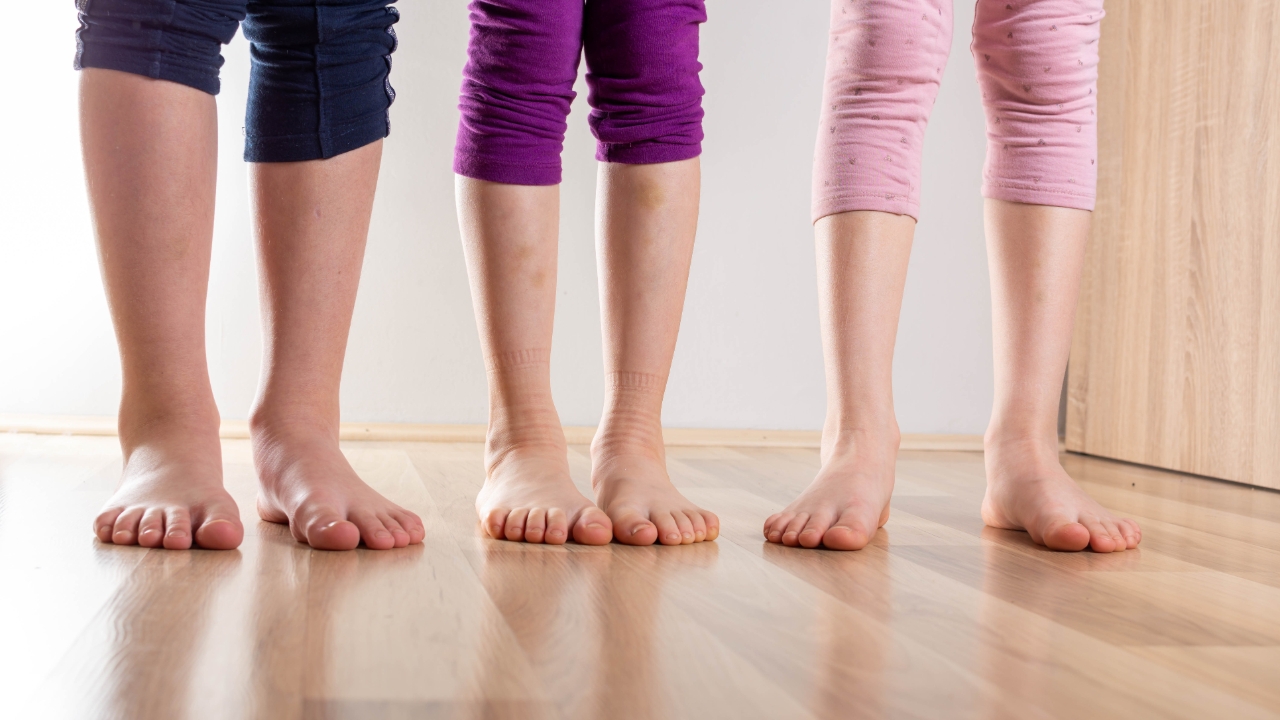
Parents who notice their child has bow legs and are concerned whether it is abnormal should know that bow legs in young children are common and mostly resolve naturally with age. However, in some cases, it may indicate underlying health issues that require specialist diagnosis and appropriate care.
Bow legs (Bow legs) is a condition where the child's legs and knees curve slightly. It can affect one or both legs and may be accompanied by inward-turned feet. When standing straight with heels together, the knees remain apart. This is frequently observed in infants and toddlers and is usually a normal condition that corrects naturally.
1. Normal bow legs in children
2. Abnormal bow legs in children can have several causes, including

If your child shows any of the following signs, you should take them to a doctor for evaluation:
Most cases of bow legs in children improve naturally as they grow. The legs gradually straighten, typically improving by ages 2-3, sometimes with slight bowing again at ages 3-4, then returning to normal by around 7-8 years. Parents usually do not need to intervene.
treatment : Doctors recommend vitamin D and calcium supplements as advised. Early treatment generally yields good results.
treatment : In early stages or mild cases,Blount's diseasemay be managed with leg braces to help correct alignment.

In cases of severe bow legs that do not respond to other treatments or progressively worsen, surgery may be recommended. Surgical options include:
1. Guided Growth(Hemiepiphysiodesis), a minor surgery where small pins or plates are placed on the growth plate inside the knee to slow growth on that side. This allows the faster-growing outer side to straighten the leg naturally. This is usually done in children still growing (often school-aged children).
2. Osteotomy, a more complex surgery where a portion of the leg bone is cut and realigned to a straight position, then fixed with metal plates or screws. This is typically for very severe cases, unresponsive to other treatments, or older children.
Whether monitoring normal bow legs or treating abnormal cases, it is important to follow the doctor's advice closely, especially when using braces or after surgery, so the doctor can assess progress, adjust treatment plans, and prevent complications.
Although bow legs in children usually resolve naturally as they grow, parents should regularly observe changes in leg shape, walking, and other symptoms. If there is any doubt,or ifabnormalities are noticed, consulting a doctor is essential for proper diagnosis and care to ensure your child grows strong and develops well.
Information provided by Assoc. Prof. Dr. Chatuporn Chotikavanich, Orthopedic Surgery, License No. W.19653Samitivej International Children's Hospital