

Thairath Online
Thairath Online

How to Use Wrist and Finger Splints to Relieve Pain and Reduce Joint Stiffness Risk

Health-and-beauty03 Jul 2026 05:00 GMT+7

Share

How to Use Wrist and Finger Splints to Relieve Pain and Reduce Joint Stiffness Risk

An in-depth look at important information about"wrist and finger splints"tools that help treat pain and inflammation, along with proper and safe usage instructions from expert doctors at Ramathibodi Faculty of Medicine.

The "hand" is a distal part of the arm with a complex anatomical structure, comprising the wrist, palm, five fingers, and nails. Its main functions include grasping objects, sensing touch, and performing daily activities. Injury or inflammation can cause pain and reduce hand function.

Nowadays, the use of"wrist and finger splints"has become widespread as part of treatment for various conditions. According to Assistant Professor Dr. Monratchata Pitakcharoen from the Department of Rehabilitation Medicine, Ramathibodi Hospital, Mahidol University, key points to know are as follows.

Which diseases and symptoms require"hand splints"?   

Hand splints are not only for fractures but also help treat and relieve symptoms in the following conditions.

  1. Carpal tunnel syndrome: patients experience numbness or pain in the fingers, commonly affecting the thumb, index, and middle fingers.
  2. Tendinitis of the wrist and thumb: frequently seen in mothers who carry their babies for long periods, dentists, bus conductors, and tailors who often use scissors.
  3. Inflammation of wrist or finger joints: including infectious arthritis, rheumatoid arthritis, gout, and osteoarthritis.
  4. Hand degeneration or finger deformities: often found in rheumatoid arthritis patients.
  5. Weakness of wrist and hand muscles: caused by nerve injury (such as wrist drop), requiring splints to prevent joint stiffness and improve grip strength.
  6. Trigger finger: characterized by catching or locking when bending a finger.
  7. Osteoarthritis of the distal finger joints: common in elderly people, causing the fingertips to bend downward.
  8. Joint stiffness of the wrist and fingers: requiring splints to improve joint mobility.

A closer look at the two main types of wrist and finger splints.

Medical wrist splints are divided into two main types based on material and usage.

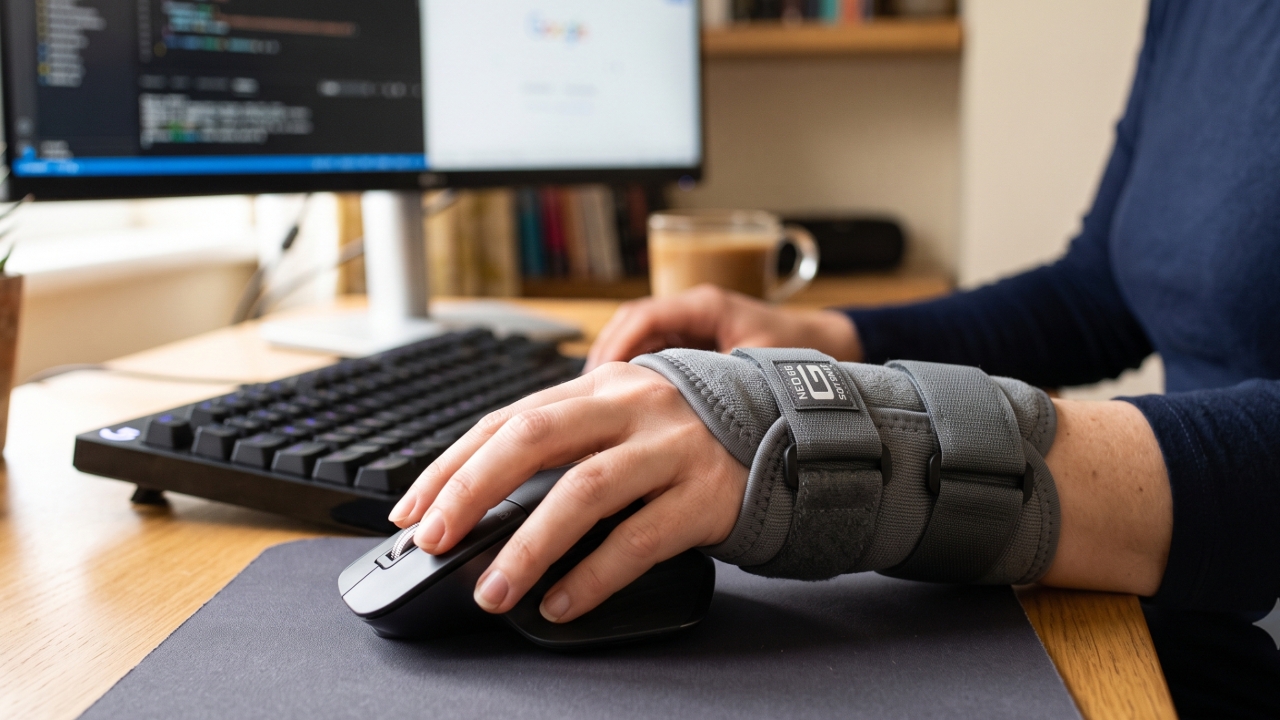
1. Soft splints

ภาพจาก iStock

Made from elastic fabric, these feel comfortable and flexible when worn and are suitable for"use during hand activity"in daily life.

2. Rigid splints

Made from medical-grade plastic, these may feel slightly uncomfortable or restrictive but effectively limit joint movement. They are ideal for resting joints and reducing pain and inflammation.

ภาพจาก iStock

  • Physician’s precautions: Choosing between soft or rigid splints and determining the appropriate wearing duration depends on each patient's condition and pathology, requiring individual medical assessment to maximize benefits.

The purpose of wearing"hand splints"   

varies according to treatment goals prescribed by doctors, as follows.

1. To rest the joint: In cases of joint pain or acute inflammation caused by infection or rheumatoid arthritis.

2. To restrict movement: For carpal tunnel syndrome patients: rigid splints are recommended for nighttime use to lock the wrist, and soft splints with plastic supports are used during daytime activities.

ภาพจาก iStock

  • For trigger finger: rings are worn to limit finger movement, allowing bending but preventing catching.
  • For thumb base pain: such as mothers carrying babies for extended periods.

3. To prevent or correct deformities: In rheumatoid arthritis patients with torn joint tendons or elderly patients with distal finger osteoarthritis, splints are worn during sleep.

4. To improve grip strength: Supporting patients with weak hand muscles or wrist drop.

5. To increase joint mobility: For patients with existing wrist and finger joint stiffness.

Beware of side effects from improper use.

Although splints are highly beneficial, prolonged or incorrect use can cause the following problems.

  • Joint stiffness: wearing splints too long or unnecessarily restricting movement can cause joint fixation and loss of normal function.
  • Pressure sores and inflammation: pain, swelling, and redness may occur where the device presses on bony prominences.
  • Device dependency: some patients become reliant on splints and refuse to stop wearing them even after symptoms improve.

Three golden rules for safe splint use.

For maximum and safe treatment effectiveness, patients should strictly follow these recommendations.

  • Correct size: splints must fit properly—not too tight to impair circulation nor too loose to fail in support.
  • Regular skin checks: after each use, remove the splint to inspect for pressure marks or redness.
  • Wear at prescribed times: some splints are worn continuously, others only at night or during work, according to the condition.

Use of wrist and finger splints should be under expert medical supervision to prevent long-term complications and promote faster pain relief.