

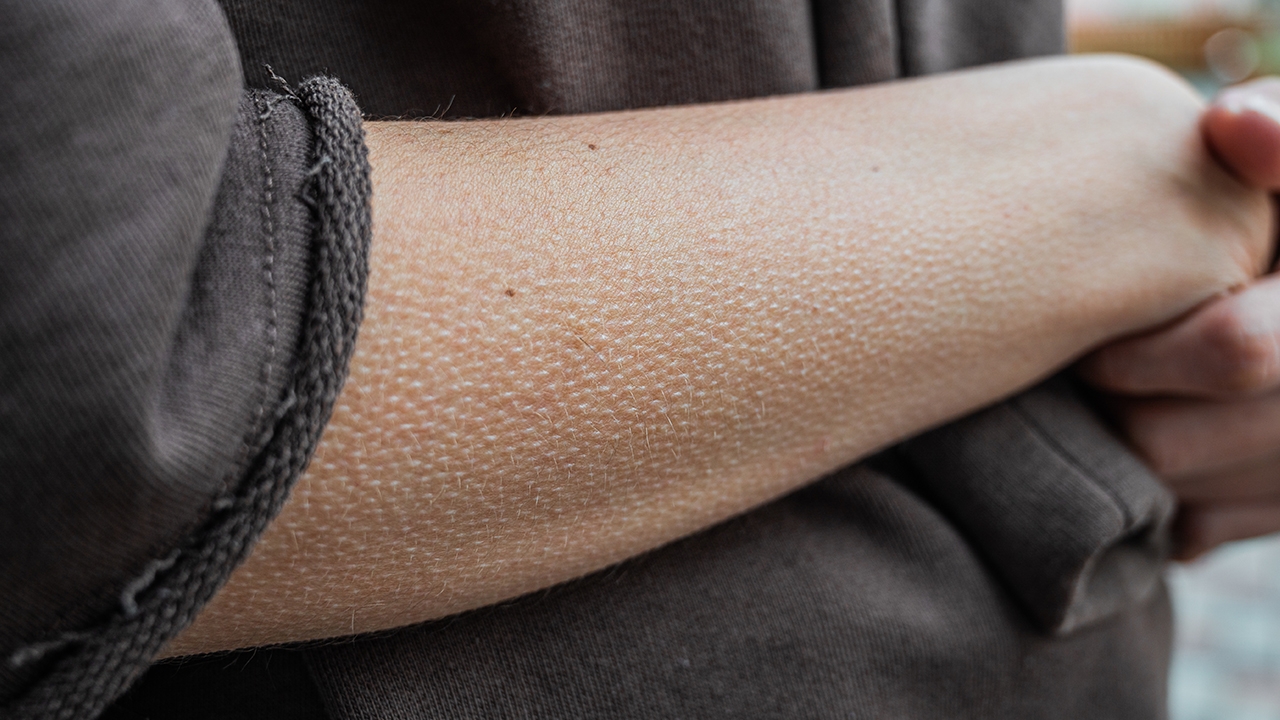
Have you ever wondered "Why do we get goosebumps?" This reaction doesn't just happen in cold weather or fear; it's a natural mechanism responding to emotions and hormones. Let's explore what causes goosebumps and what they reveal about our health.
From an evolutionary perspective, "goosebumps" are a defense mechanism inherited from our ancestors when humans still had dense body hair. In cold weather, tiny muscles at the hair roots contract, making hair stand up to trap warm air near the skin. When facing threats, raised hair made the body appear larger and more intimidating. Although humans now have much less body hair, these muscles and the nervous system still function as before.
Goosebumps result from the autonomic nervous system—especially the sympathetic nervous system—being suddenly activated. This triggers adrenaline release, causing tiny muscles called "Arrector Pili Muscles" attached to hair roots to contract. This pulls hair follicles upright, forming small bumps on the skin resembling chicken skin.
Goosebumps can be triggered by various daily factors, mainly classified into four causes as follows:
When the surrounding temperature drops or the body feels cold, the hypothalamus commands the body to maintain core temperature. Goosebumps act as a natural mechanism to reduce heat loss from the skin.
Feelings such as fear, excitement, surprise, or deep emotional impact stimulate rapid adrenaline release, causing goosebumps even in warm environments.

Neuroscience research shows some people experience goosebumps or tingling sensations when hearing beautiful music, powerful sounds, or moving movie scenes. This "Frisson" happens as the brain releases dopamine, the pleasure chemical, in response to stimuli that resonate deeply.
Goosebumps accompanied by chills are a body mechanism to raise temperature to fight infection, known as "fever." Muscles contract and relax rapidly to generate heat.
Although goosebumps are natural, frequent occurrences without clear temperature or emotional triggers may signal health issues worth noting, such as:
The symptom of "goosebumps" is not merely a superstition or a simple cold reaction but a smart natural mechanism involving the nervous system and hormones that protect the body and respond to the environment. Understanding these mechanisms helps clarify everyday mysteries and enables timely detection of bodily abnormalities. If goosebumps occur with high fever, unusual chills, or neurological symptoms, consult a doctor for thorough diagnosis.