

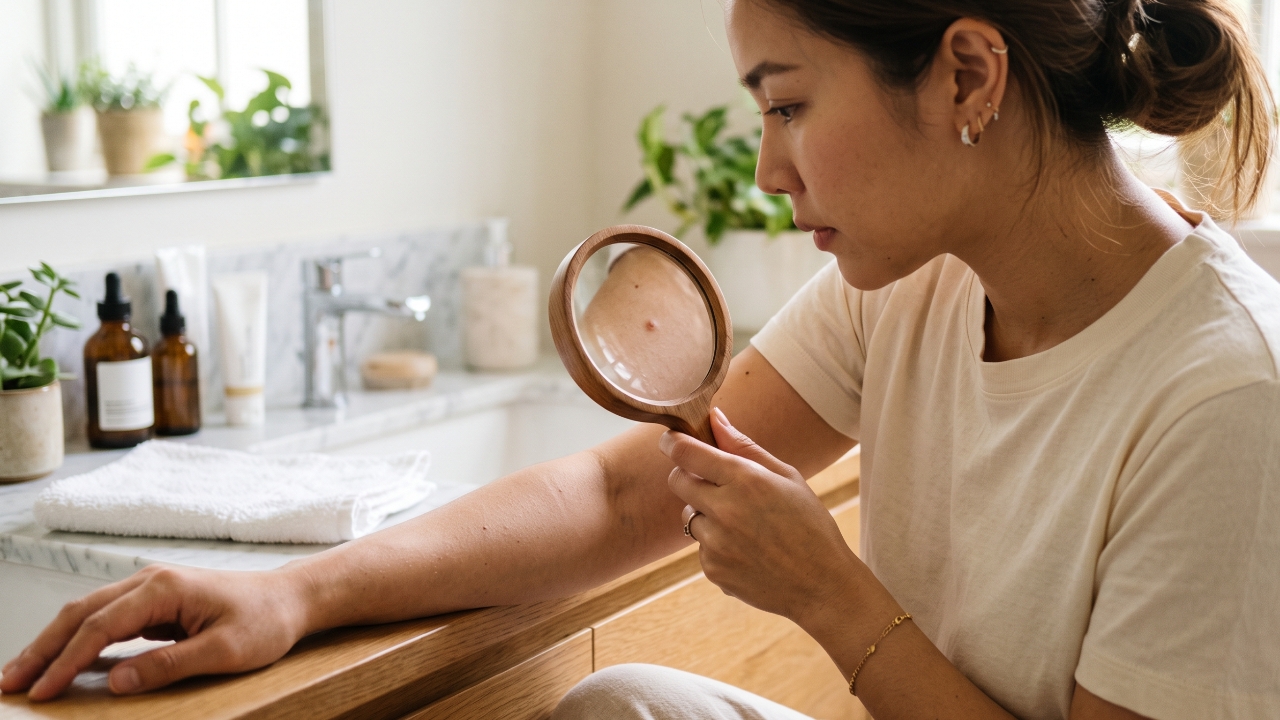
Clearing up what 'lesions' are: Understanding skin changes such as rashes, bumps, and moles—what's normal and what's dangerous—along with a simple self-checklist and warning signs that require prompt medical consultation.
Have you ever noticed strange spots, rashes, raised bumps, or unusually growing moles on your skin? Many have heard the term "lesion" from doctors during health check-ups and wondered what it really means and whether it indicates a serious condition. Today, the Thairath lifestyle team will clarify the meaning of lesions and share an easy self-skin check anyone can do!
In medical terms, a "lesion" refers to an abnormal condition of tissue or an organ that has changed or been damaged. This term is most commonly used when examining external skin—such as spots, rashes, bumps, wounds, moles, or birthmarks that have changed. A lesion is not a specific disease name but rather a visible abnormality that helps doctors diagnose the underlying cause.
Skin lesions can be divided into two main groups to help better understand and observe their characteristics.
Lesion types | Visible characteristics | Common examples |
Primary lesions | Abnormalities that first appear on normal skin. | Flat spots (Macule), raised bumps (Papule), clear fluid blisters (Vesicle), pus-filled bumps (Pustule). |
Secondary lesions | Changes that occur following the original lesion or due to scratching or picking. | Scabs (Crust), scratch marks (Excoriation), scars (Scar), thickened skin (Lichenification). |
If you find strange moles or dark spots on your body, you can use the internationally recognized ABCDE Rule to assess lesion risk as follows.

While most lesions are common and harmless, such as insect bites or contact dermatitis, you should see a dermatologist promptly if you notice any of the following.
Understanding what a lesion is is not distant from everyday life, because our bodies often send warning signals through the skin. Regularly monitoring spots, rashes, or moles using the ABCDE rule helps us detect problems early. If it’s a simple rash, we can care for it properly, but if a lesion poses a risk of serious disease, early medical consultation is essential for effective treatment.
References: The Dermatological Association of Thailand, Institute of Dermatology, Department of Medical Services, Ministry of Public Health, Mayo Clinic Medical Service Center.