

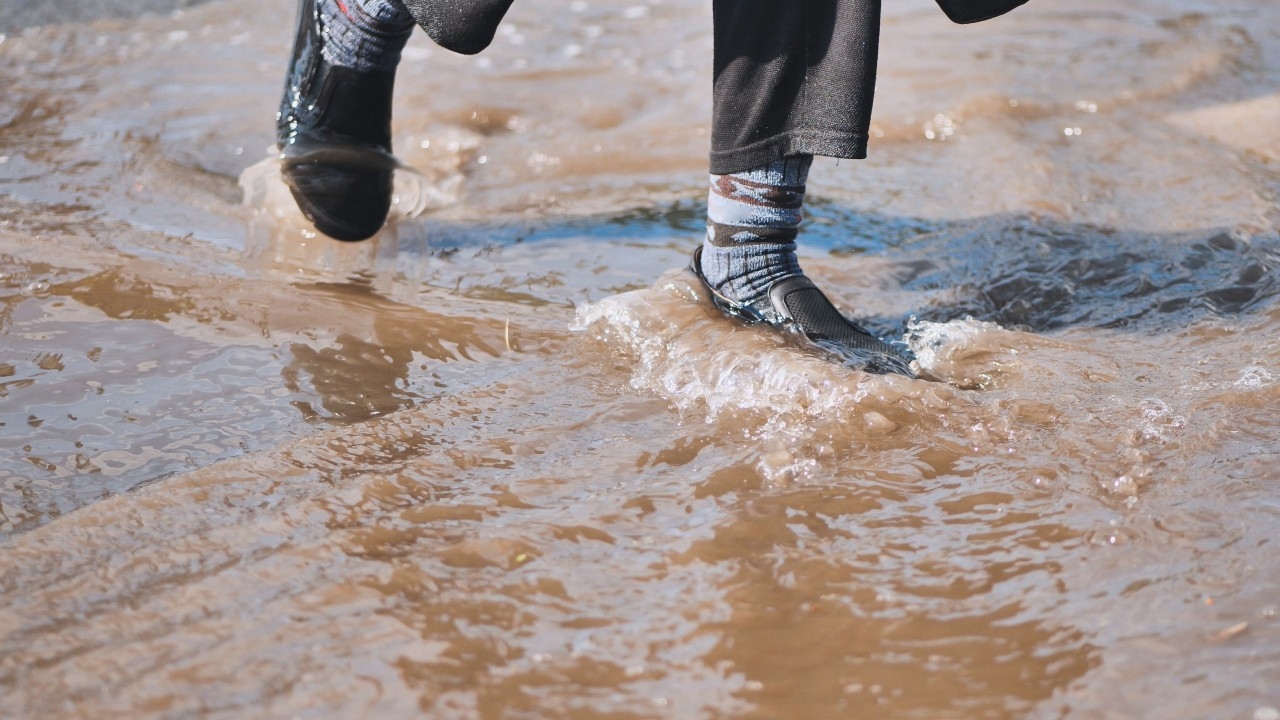
During heavy rains causing flooding in alleys and side streets, many people cannot avoid wading through dirty water on their way home. This often raises concerns about hygiene, especially foot infections and various germs lurking in the water. Moreover, some who clean their feet well after returning home still suffer persistent itching, peeling, or swelling. The main cause is usually incomplete care or neglecting small but critical steps. Proper immediate response after contact with floodwater should not be overlooked.
The first step upon entering your home is to remove external dirt at once. Let clean water flow over your feet to wash away mud, oil stains, or foreign matter. Then use mild soap to gently lather the back, soles, and between toes. It is important to rub gently—not scrubbing harshly—as vigorous scrubbing can cause tiny skin wounds that allow bacteria and fungi easier entry into the body.

This crucial step is often overlooked. Washing feet clean is pointless if moisture is left behind. Fungi, the main cause of foot infections, thrive best in damp, enclosed environments. Areas between toes—especially between the fourth and fifth toes—often retain water after washing. Simply wiping feet superficially then immediately wearing socks or shoes traps moisture, providing an ideal breeding ground for fungi.
The correct way to dry feet is to use a clean, dry towel to pat between each toe until completely dry. If possible, use a fan or a cool setting on a hairdryer to further dry these areas, ensuring the skin is fully dry before proceeding with other activities.
After drying your feet, carefully inspect the skin around them. If you find scratches, sores, or areas of white, peeling, itchy skin, provide first aid promptly. For open wounds, apply an antiseptic like povidone-iodine immediately to prevent secondary bacterial infections such as leptospirosis or soft tissue infections, which are more severe than typical foot infections. If redness, swelling, heat, or pus occurs, see a doctor for proper medication and avoid self-medicating with antibiotics.
Germs and fungi are not only on the skin but also accumulate in damp shoes and socks. Wearing the same damp shoes after cleaning your feet can cause immediate reinfection.
1. Socks Remove and wash socks immediately using detergent mixed with disinfectant, then dry them thoroughly in direct sunlight.
2. Sneakers or closed-back shoes Clean off mud, air them in a well-ventilated area or dry them in the sun to kill germs. If possible, remove insoles to wash separately.
3. Rubber shoes or sandals Wash with soapy water, scrub off dirt with a brush, then wipe or air dry completely before reuse.
Foot care after walking through floodwater is not just about cleanliness but preventing skin infections and serious fungal diseases. Taking time to clean, dry between toes thoroughly, and properly care for shoes helps prevent foot infections and maintain sustainable hygiene.