

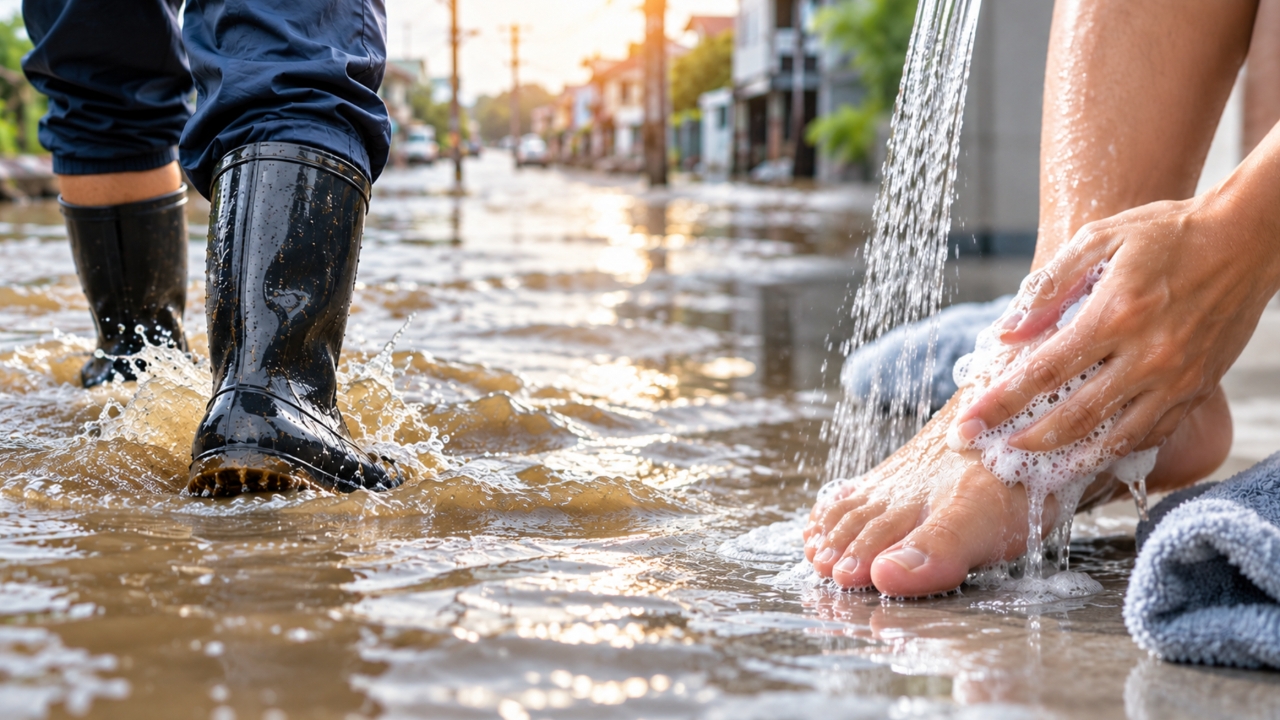
After walking through floodwaters or soaking feet in water for a long time, you should promptly wash and dry your feet, as moisture can cause the skin to soften, itch, sting, and become irritated—commonly known as "water-soaked feet." Water-soaked feet In its early stage, this condition is not always caused by fungal infection. However, if the skin remains moist for a long time until cracks develop, it may increase the risk of bacterial or fungal infections.
Within about the first 1 to 3 days after feet have been exposed to or soaked in water for a long time, the skin may become irritated from water and moisture. Symptoms to watch for include:
Most early symptoms result from prolonged skin exposure to water and moisture accumulation, so it is premature to immediately conclude it is a fungal foot infection. However, if you continue to wade through water, soak your feet, or keep them moist for about 3 to 10 days, the skin may soften further, causing abrasions or tears that allow germs to enter more easily. If you begin to notice redness, swelling, pain, pus, or oozing fluid, be cautious of bacterial infection.

After walking through floodwaters, clean your feet immediately when possible; you do not need to wait until itching or rash appears. Follow these simple steps:
1. Wash your feet with clean water and soap
After leaving the water, wash and lather your feet with soap to remove dirt on the skin. Pay special attention to the soles, around the nails, and between the toes.
2. Dry your feet thoroughly, especially between the toes
This step is as important as washing. Moisture trapped between toes causes skin softening and can lead to further skin problems. Use a clean towel to dry all areas, including between every toe.
3. Check for wounds or cracks
After cleaning, inspect the soles, between the toes, and around the nails for any cuts, abrasions, or tears. Damaged skin can be an entry point for germs. If wounds are present, keep them clean and avoid unnecessary exposure to floodwater.
4. If you must wade through water again, wear protective boots
If avoiding floodwater is impossible, wear boots to reduce direct water contact. After leaving the water, wash and dry your feet again promptly. Avoid keeping your feet wet or trapped inside shoes for long periods.

Another common misconception is that when people experience itching or peeling after floods, they assume it is a fungal infection and immediately buy antifungal creams.
In reality, early water-soaked feet may result from irritation and skin softening due to prolonged water exposure, which can lead to infection later. Therefore, itching, redness, or peeling after floods does not always confirm fungal infection.
True fungal foot infections often cause itching, peeling, redness, or swelling between the toes and may appear on the soles or heels. Accurate diagnosis is important because several skin conditions can look similar.
Additionally, you should not use steroid creams to treat suspected fungal rashes without a diagnosis, as steroids can worsen fungal infections or alter rash appearance, making diagnosis harder.

See a doctor if your skin softens extensively or your feet have many cracks, redness, swelling, pain, pus, oozing fluid, rapidly spreading rash, or fever, as these may indicate infection requiring treatment.
For those who must wade through floodwaters, the best way to reduce risk is to wash feet with soap and clean water after leaving the water, dry thoroughly especially between toes, wear protective boots if returning to water, and avoid prolonged wetness. Taking care before wounds or infections develop is easier than treating complications.
Read related articles