

;
Thairath Online
Thairath Online

Longer Life Expectancy But Potentially Less Healthy: Encouraging Adjustments in Thai Meals to Reduce Chronic Disease Risks in the Final 10 Years

Health-and-beauty25 Nov 2026 11:12 GMT+7

Share

Longer Life Expectancy But Potentially Less Healthy: Encouraging Adjustments in Thai Meals to Reduce Chronic Disease Risks in the Final 10 Years

The average life expectancy of Thais has increased to 78.1 years, which sounds positive, but the reality behind the statistics is that the period of truly good health lasts only about 67 to 70 years.

This means that nearly the last 10 years of life for many people are spent dealing with heart disease and diabetes.

This issue became a key topic in a health forum."Longevity Kitchen"On the occasion of Bertolli's 30th anniversary in Thailand, doctors, nutritionists, and renowned chefs gathered to find answers on how to adjust daily meals to avoid chronic diseases and maintain long-term good health.

Nearly half of Thais are obese! Revealing eating and lifestyle formulas to reduce heart disease risk by 30%.

The 7th National Health Survey found obesity among Thais increased from 38% to 45%, nearly half the population, a major cause of non-communicable chronic diseases (NCDs) like diabetes, hypertension, high cholesterol, and cardiovascular disease.

However, more Thais are adopting preventive health measures, with 59% exercising at least once a week and 46% choosing more nutritious foods.

Dr. Wiwat Sanglertsilpachai, a cardiologist, explained that quality longevity begins with lifestyle adjustments in six areas: diet, exercise, sleep, stress management, avoiding alcohol and smoking, and maintaining good relationships.

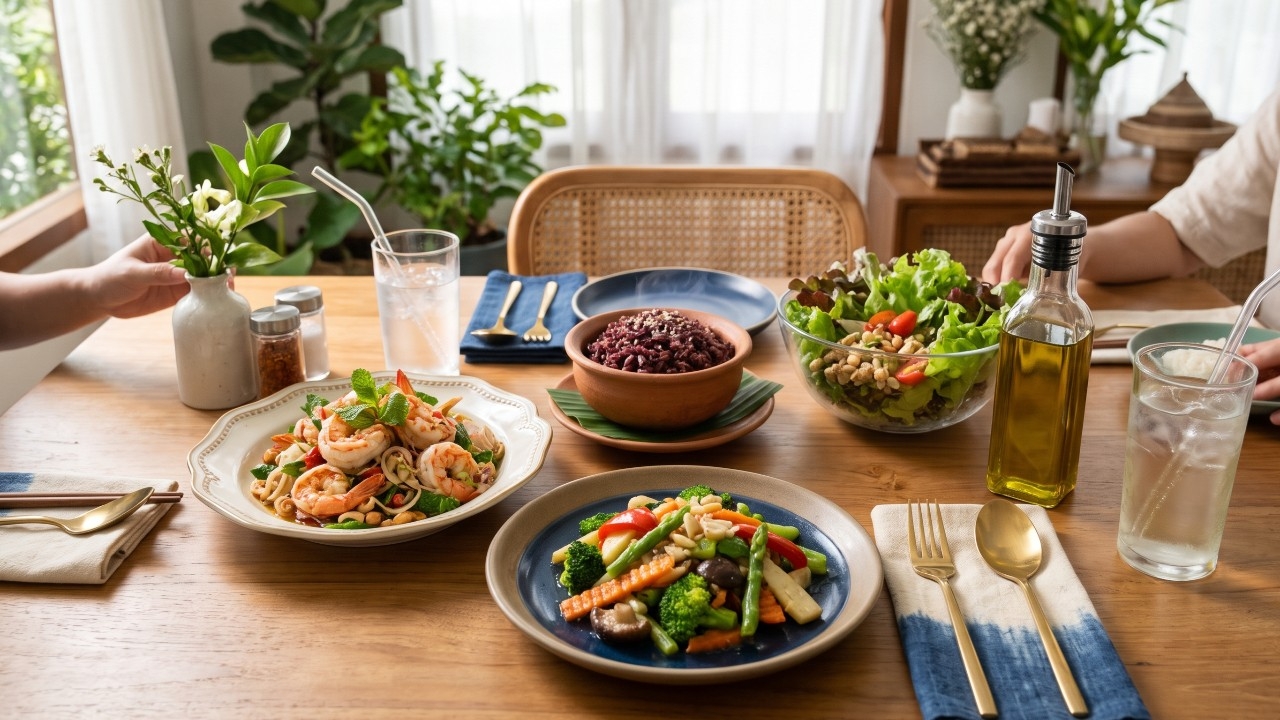
Regarding nutrition, the Mediterranean diet emphasizing vegetables, fruits, whole grains, fish, and healthy fats from olive oil is scientifically proven to reduce heart and vascular disease risk by up to 30%.

Health-conscious people don't need to avoid fats! Revealing formulas for choosing healthy fats and daily oil intake limits.

The belief that good health requires eliminating all fats is not always correct. Associate Professor Dr. Rewadee Jongsuwat from the Thai Heart Foundation explained that the body still needs about 30% of daily energy from fat, so choosing the right types of fat is crucial.

  • Avoid harmful fats: Limit saturated fat to no more than 7% of daily energy and reduce trans fats because they increase harmful LDL cholesterol in the blood.
  • Add healthy fats (MUFA): It is recommended that Thais consume 13% of daily energy from MUFA, which helps reduce dangerous small dense LDL and increase good HDL cholesterol, which constitutes up to 70% of olive oil.
  • Daily quantity limits: Working-age adults should consume no more than 5 teaspoons of oil daily, while seniors can have up to 6 teaspoons, along with controlling sugar intake to 6 teaspoons and salt to 1 teaspoon (sodium not exceeding 2,000 mg) following the 6:6:1 formula.
  • Antioxidant intake: Extra virgin olive oil is rich in over 25–30 types of polyphenols; just one tablespoon provides 45% of daily vitamin E needs, helping protect cells and reduce inflammation.

Can olive oil be used for high-heat Thai stir-fry or frying? Guide to choosing and buying.

A common question for Thai cooks is whether olive oil can withstand the high heat of stir-frying or frying. Chef Surakit Khemkaew (Chef Ping) clarified that olive oil can be adapted to various Thai dishes if the correct type is selected for each recipe.

  • Extra Light: Has a high smoke point of up to 220°C and a very mild aroma, suitable for high-heat stir-frying, basil stir-fry, or frying at around 180°C; however, vitamin and antioxidant levels gradually decrease above 120°C heat.
  • Classico: Suitable for medium to low-heat cooking such as gentle stir-frying, baking, and simmering.
  • Extra Virgin: Cold-pressed oil that retains the highest levels of polyphenols and vitamin E, ideal for making salad dressings, drizzling just before serving, or adding flavor to Thai herbal salads.

For selecting quality extra virgin olive oil, Warana Surachetthanik, Senior Brand Manager at Sino-Pacific Trading (Thailand) Co., Ltd., recommends four key points: check for the Extra Virgin label and cold-press process, choose dark bottles to protect from sunlight, verify the expiration date, and select producers with quality control standards.

Stress-free self-improvement: learning the Add & Swap technique for urban health care.

Many people become stressed when suddenly trying to improve their health, which disrupts metabolism and recovery. Health content creator Intiporn Taemsukin (@maxdicine) suggests sustainable self-care by consistently applying the simple Add & Swap technique.

  • Add (incorporate good things) Try adding leafy greens or a drizzle of olive oil to existing meals. Meal prepping by marinating meat with vegetables and olive oil saves time. Increase walking by parking farther and using stairs instead of elevators.
  • Swap (make small substitutions) Modify familiar dishes to be healthier, such as replacing deep-fried omelets or fried eggs with boiled eggs, or swapping sugary desserts for dark chocolate with mint tea.
  • Reduce seasoning and prioritize good sleep. Chef Ping adds that Thai cuisine already includes many beneficial herbs; simply reducing sweetness, saltiness, and greasiness slightly and getting sufficient sleep allows the body to repair itself fully.

Maintaining quality longevity does not require waiting until illness or retirement; starting with small, consistent daily changes on your plate is enough.