

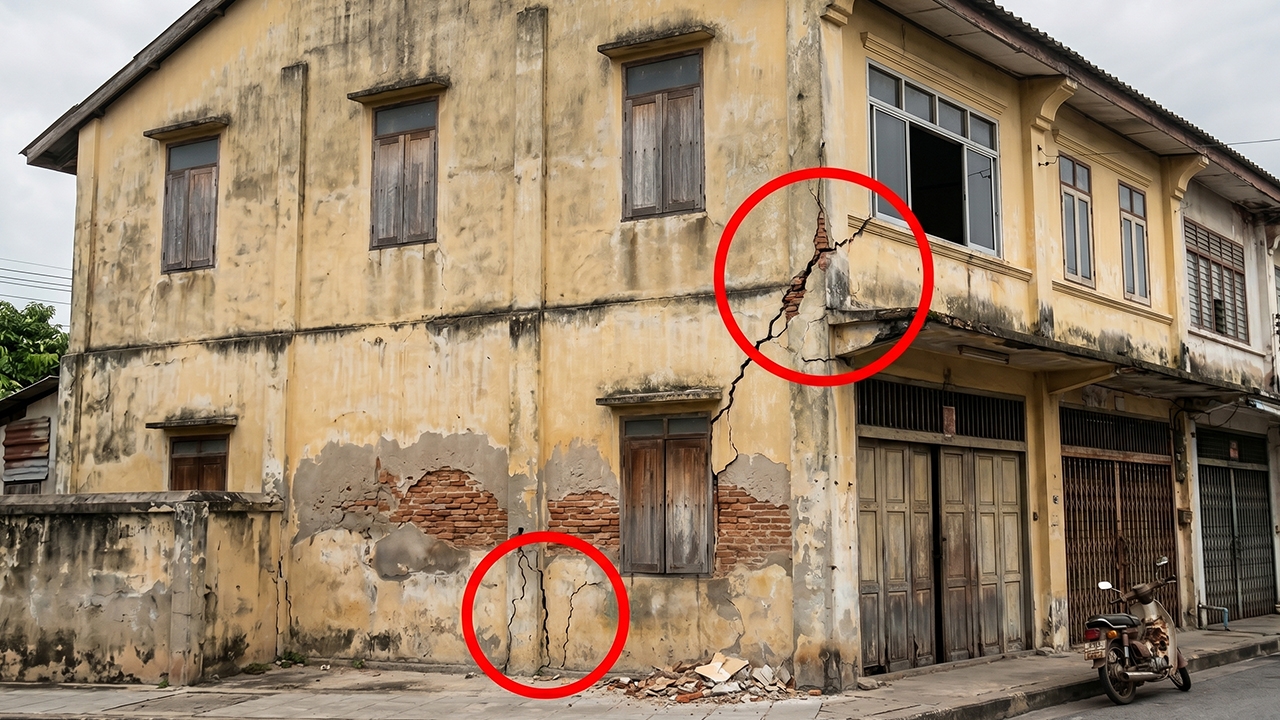
Living in rented rooms, second-hand condos, or working in old buildings calls for caution! Let's observe cracks and warning signs of structural subsidence: which cracks are just peeling paint and which indicate risk of collapse. Check carefully before danger occurs.
Urban living, whether for salaried workers or students, often involves renting dormitories, apartments, second-hand condominiums, or working in office buildings that have been in use for decades. News reports of incidents "Old building collapse" or structural subsidence happen periodically, causing considerable concern among occupants.
Having basic knowledge to assess building safety is thus a crucial survival skill. Thairath Online invites you to observe your surroundings. How to check old buildings, warning signs of subsidence, and which types of cracks are dangerous.
Wall cracks are common in old buildings, but not all cracks pose a risk of collapse. Distinguishing crack types helps assess risk more accurately.
These cracks appear as small, winding lines like tree roots or spread widely on the wall surface. They usually result from plaster expansion and contraction due to temperature changes or moisture accumulation causing paint to bubble and peel. These cracks affect only aesthetics and do not impact the building's main structure.
If you find long diagonal cracks crossing the wall or X-shaped cracks, these are warning signs that the building's structure has problems. Such cracks often occur due to uneven foundation settlement, causing the wall to be pulled and torn. If cracks widen or deepen through to the other side, notify the property manager or building owner immediately.
Columns and beams are the main load-bearing structures. Cracks here are the highest danger signs, including:
Besides cracks, other physical signs may indicate problems with an old building's subsidence:
If doors or windows that once worked normally suddenly stick, won't close properly, or door frames press against jambs, it may indicate structural distortion from uneven subsidence.
A simple test is placing a marble or small ball in the center of a room. If it quickly rolls to a corner or water regularly pools in a corner during cleaning, it likely means the floor is sloped and uneven.
At quiet nighttime hours, if you hear creaks from concrete, falling plaster, or structural steel inside walls or ceilings (not rodent noises) intermittently, it suggests abnormal stress on the structure.
If you rent a dorm, apartment, or work in an old building and notice these risk signs,
1. Take photos as evidence Record images of cracks, date and time found, and monitor if cracks enlarge.
2. Notify the caretaker immediately Report to the property manager, dorm owner, or building maintenance to have technicians or engineers inspect.
3. Avoid modifications Do not place heavy furniture or large items against walls with severe cracks.
Noticing small abnormalities around you can help prevent unexpected incidents, as safety in living environments should never be compromised.
(Preliminary information based on building structure observation principles according to the Engineering Institute of Thailand under Royal Patronage - EIT)