

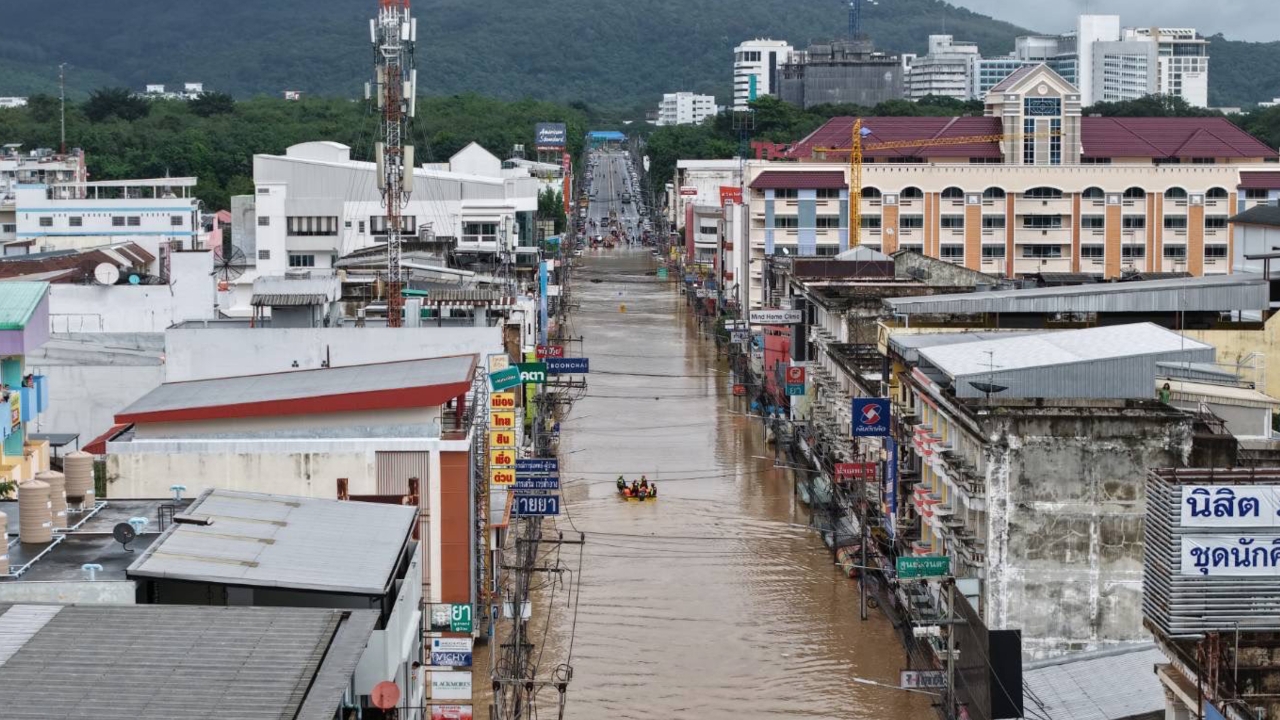
Images of Hat Yai, a major economic city, and surrounding areas in Songkhla province submerged under massive floodwaters in November 2025.
This is not the usual familiar flood season image that southern residents know, but a critical warning sign shouting that nature is changing.
Clearly seen from breaking centuries-old rainfall records combined with urban expansion and psychological traps, turning a city once thought manageable into a disaster zone overnight.
Thairath Online invites you to decode four key factors that forced Songkhla to face one of its toughest tests in history.
The undeniable first cause is nature’s fury. Hydrological statistics show that rainfall on 21 November alone reached 335 millimeters, and over three days accumulated over 630 mm—setting a “300-year record” with an extremely low chance of occurrence.
This is an Extreme Weather phenomenon caused by La Niña and monsoon winds colliding strongly over Hat Yai, creating a “Rain Bomb” — a sudden, heavy downpour overwhelming any drainage system’s capacity.
By nature, Hat Yai is a “water catchment point” as a basin receiving water from three directions: Kho Hong Mountain, Banthat Range, and Sankalakhiri Range, with a single main drainage route—U Taphao Canal—leading out to Songkhla Lake.
The problem is the human-made “bottleneck.” Urban expansion has constricted the once wide, winding U Taphao Canal with constructions, turning it into a clogged artery. When faced with the giant water mass from the Rain Bomb, water quickly overflowed, flooding economic areas.
Questions arise about the R.1 Drainage Canal, or Phuminat Damri Canal, which once helped the city drain water multiple times. This time, the situation differed because the canal was designed to divert floodwaters from outside the city around to the sea.
The crisis was heavy rain falling directly in the city center, causing flooding in Hat Yai’s basin that could not drain out as main canal levels were full. Coupled with the high tide, it was like boiling water in a sealed pot—water levels rose and were slow to recede.
Despite warnings from the Department of Disaster Prevention and Mitigation, many remained trapped. The answer lies in a “cognitive trap”: Normalcy Bias from past experience surviving the 2010 floods or seasonal flood familiarity led residents to underestimate the severity, thinking it wouldn’t be serious or would subside as usual.
Additionally, communication traps—rumors among residents and signals from local leaders implying “it’s manageable”—caused people to lower their guard and not prepare seriously to evacuate.
Combined with the rapid water rise from the Rain Bomb, flooding levels surged within hours rather than days, shortening decision time and catching people off guard.
Amid ongoing rain and stabilized water levels, one clear sight alongside the damage is the resilience of southern residents. Even with the heaviest rainfall in 300 years, the fighting spirit of the people remains unbroken.
This costly lesson demands we learn and adapt for the future. But today, in this moment, Thairath Online sends support to the people of Songkhla, Hat Yai, and all southern regions to endure this difficult night. After the storm, the skies will clear, and Thai people never abandon each other.
Photo: Yutthana Wattanawongsiri