

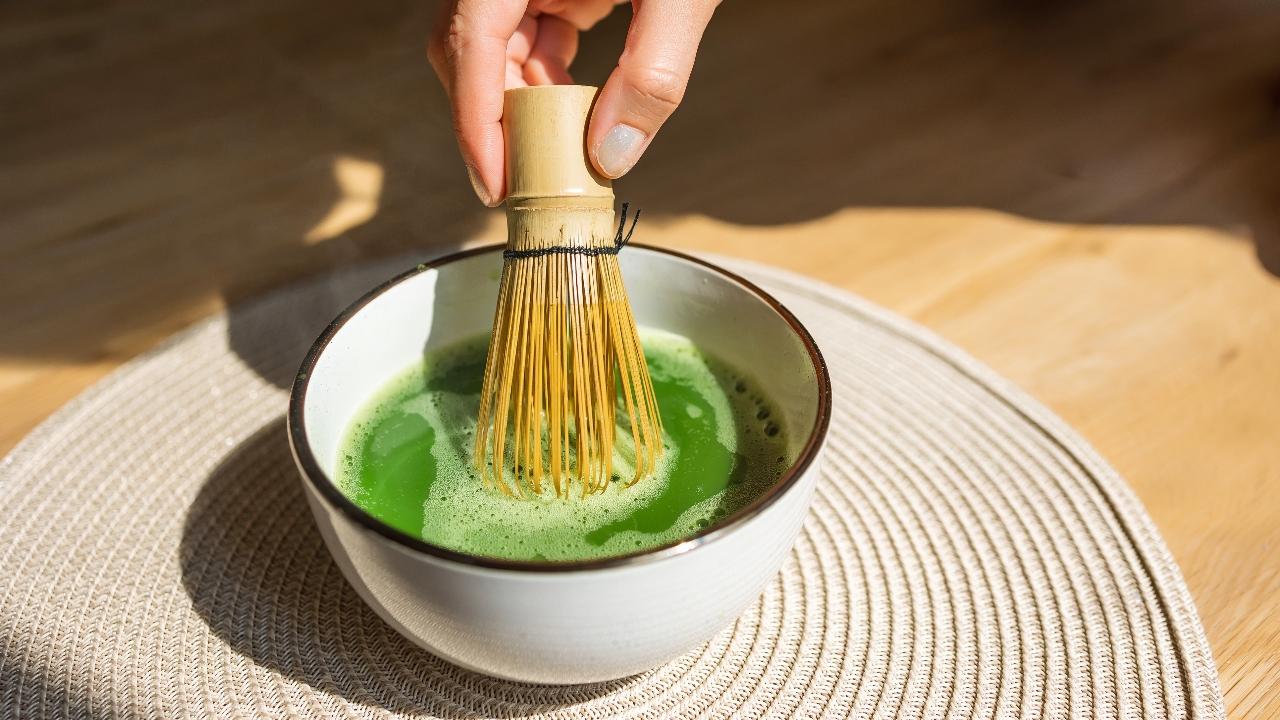
Have you ever bought matcha to brew at home but found it so bitter it made your eyes squint? Or maybe you've used an expensive grade in baking, only to lose its aroma entirely? These problems vanish once you understand matcha's grading system. Matcha isn't uniform worldwide—though its green color is consistent, its character and purpose vary greatly. While no fixed legal standards exist, the green tea community grades matcha based on harvest timing and leaf quality. Thairath Online invites you to decode the three main grades every green tea lover should know, to make every sip worthwhile.
Ceremonial Grade
Ceremonial Grade is the highest and most expensive grade, made from the first tender tea buds of the harvest. It is slowly stone-ground with granite mills to preserve quality, typically showcasing a bright, vivid green color.
The flavor of Ceremonial Grade is smooth and delicate, rich in umami, with a mellow taste reminiscent of seaweed or broth, and almost no bitterness. This grade is best brewed pure with hot water (Usucha) as in traditional tea ceremonies, to savor its true flavor.
It should not be mixed with milk, sugar, or used in baking, as its subtle flavors would be completely masked, wasting its value.
Premium Grade
This grade is just below Ceremonial, offering a balanced profile. It usually combines leaves from the first and second harvests to achieve a stronger flavor, maintaining a beautiful green hue, though slightly less bright than ceremonial grade.
Its taste is more pronounced and begins to show a slight astringency, which is beneficial because this astringency helps cut through richness when combined with milk or sweetness. It's suitable for mixed beverages such asMatcha Latte, smoothies, or iced drinks made with milk or oat milk. The flavor stands up well to dairy without fading or being overwhelmed.
Culinary Grade
Culinary Grade does not necessarily mean the lowest or poor quality. It is made from fully mature tea leaves, resulting in a heavier body. The color tends to be dull green or slightly yellowish rather than bright green. The taste is distinctly bitter and astringent, with a strong tea aroma.
This grade is ideal for baking, such as cakes, cookies, brownies, ice cream, or for cooking, because its intense bitterness and aroma remain intact even when exposed to heat or masked by flour, butter, milk, and sugar.
It is not recommended to brew Culinary Grade with plain water, as its strong bitterness and astringency can spoil the experience or cause discomfort.