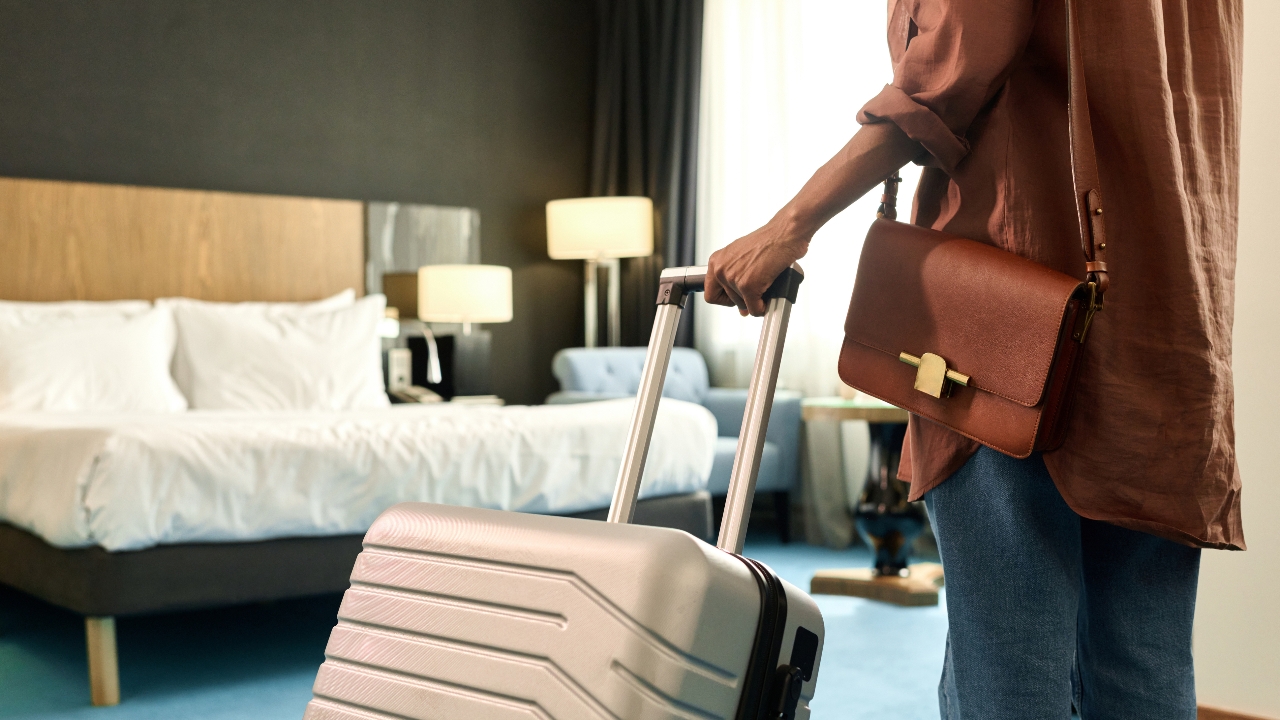
A collection of self-defense methods for staying alone in hotels, teaching techniques to lock doors using coat hangers and glasses, along with safety checkpoints in hotel rooms that women should know before sleeping.
Traveling alone is an exciting challenge, but safety is paramount—especially when staying alone in an unfamiliar hotel. We have gathered DIY self-protection techniques, from using coat hangers to glasses, to create your own security system so you can rest assured and stay safe from intrusions.
How to stay safe when "sleeping alone in a hotel"? Here are essential tips every solo female traveler must remember.
The trend of solo female travelers is growing rapidly, whether for leisure or business trips. But a common question is, "How can I stay safe when sleeping alone in a hotel?" Since standard door locks may not provide enough peace of mind, today we offer a complete guide to turning everyday items in your hotel room into an excellent locking system.
1. The “Two Coat Hangers” technique for professional double door locking.
Many don’t realize that wooden or plastic coat hangers in hotel closets are excellent security tools, especially for doors with lever locks and latch or chain locks.
- How to do it: Hang the first coat hanger on the wall-mounted latch lock, then hang the second on the door’s lever handle. Interlock the heads of both hangers tightly.
- Result: The tension from the hangers holds the lever down, preventing it from being pressed from outside. If someone tries to push the door, the latch lock is held firmly by the hanger’s structure.
2. "Glass on the doorknob" as a homemade alarm signal.
If you worry someone with a master key might sneak in, use sound as your alert:
- How to do it: Place a weighted or ceramic glass over the doorknob inside the room. If someone tries to turn the knob, the glass will fall and break, making a loud noise.
- Result: The noise will immediately alert you and startle the intruder, causing them to flee.
3. Carry a Door Stop Alarm for added peace of mind.
For frequent solo travelers, it’s recommended to invest in a Door Stop Alarm—a portable wedge-shaped anti-theft device placed under the door. If someone tries to push the door open, it emits a loud sound (up to 120dB) to warn and deter intruders. Prices range from a few hundred to thousands of baht depending on model, features, and materials.
4. Know how to choose a hotel and room wisely.
- Avoid isolated locations: Choosehotels near busy areasor close to transit stations.
- Avoid ground-floor rooms: Request rooms on the 2nd floor or higher to prevent window break-ins, but not above the 6th floor to ensure fire ladders can reach you in an emergency.
- Rooms near but not directly next to elevators: This reduces walking through dark hallways while maintaining privacy.
5. Check “hidden spots” immediately upon entering your room.
Don’t put down your bags until you check these three things:
- Hidden cameras: Turn off the lights and use your phone flashlight to scan smoke detectors, alarm clocks, or power outlets. If you see blue or red reflections, investigate immediately.
- Peephole: Check if it’s tampered with (outsiders shouldn’t be able to see in). Use tape or paper to cover it when not in use if concerned.
- Closets and behind curtains: Make sure no one is hiding before locking the door with the double lock.
6. Create the impression that you are not alone.
- Hang a “Do Not Disturb” sign at all times—even when you’re not in the room—to signal occupancy.
- Keep the TV on quietly: Let voices be heard outside your door.
- Place men’s shoes (if available): Some carry large men’s sandals outside the door to deter intruders.
For women hesitating to travel alone, worry is a natural protective instinct. But it shouldn’t stop you from exploring the world. Preparing with these safety tips is not pessimism but building a shield so you can live freely and confidently.