

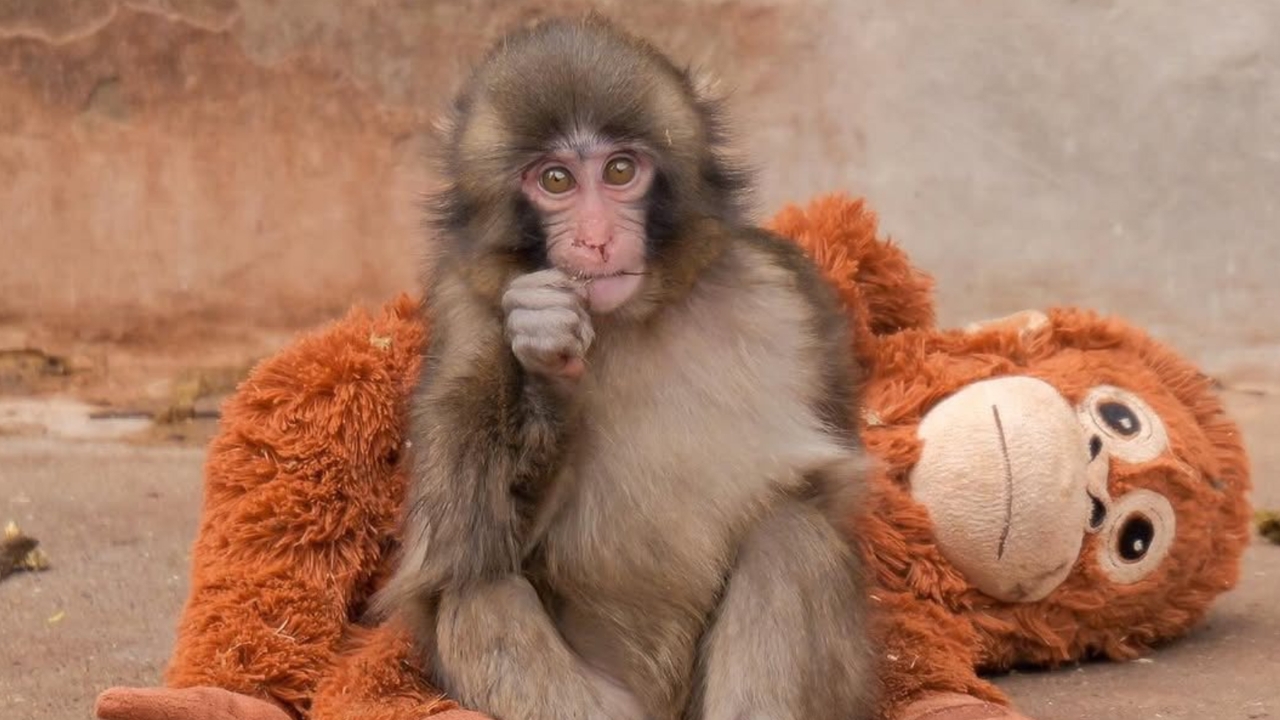
Exploring the viral phenomenon"Punch-kun"the snow monkey who must struggle alone to join the troop, viewed through a psychologist's lens, reflecting the loneliness and hope of people in today's society
This story has gone viral, touching the hearts of animal lovers worldwide,"Punch"(Punch), or as Thai fans call him,"Punch-kun",a Japanese snow monkey abandoned by his mother and fighting to join the troop alone. Behind his adorable image lies a psychological lesson reflecting"loneliness"in humans during the digital age in a remarkable way.
According to a report byThe Guardian,the phenomenon of mother monkeys abandoning their offspring is not without reason. Zoologists explain that in nature,"survival instinct"is more important than love. If a mother senses her infant is weak or the environment unfavorable, abandonment may be a natural mechanism to preserve her own life for the next season. Punch-kun thus becomes a symbol of"the abandoned"who must fight to survive in a harsh world from day one.
What made Punch-kun viral was the image of him hugging a stuffed toy or soft object. An article fromThe Conversationlinked this to Harry Harlow's Attachment Theory from the 1950s,

where experiments showed that infant monkeys crave"warmth from touch"more than just food. Seeing Punch-kun yearn for a hug triggers the basic human instinct for safety and acceptance.
This aligns with psychologist John Bowlby's view that humans instinctively seek fundamental relationships. When we see a young monkey trying to join the troop but being rejected, it activates"emotional wounds"(Inner Child) in many who have felt unaccepted or abandoned in the past.
Dr. Sherry Bamford, a psychotherapist, wrote inPsychology Todaythat humans often project their own feelings onto animals, especially in an era when people face increased"social isolation"(Social Isolation).
Behavioral analysis notes that Punch-kun shows the skill of falling and getting back up. The little monkey doesn't sit in sadness for long but chooses to"observe and imitate"for survival. This is an adaptive mechanism humans should learn.

"We don't pity Punch-kun because he is weak, but we admire him because he is trying hard in a world without support."
Additionally, Punch-kun's physical features—large round eyes and baby-like behavior—trigger oxytocin release, the bonding hormone, in observers, creating a desire to protect and support him. This is the same mechanism that makes us love babies and pets.
"Punch-kun"is not just an unlucky baby monkey but a symbol of effort and survival that speaks directly to the human heart. This phenomenon underscores that whether animal or human,"the need to belong to someone"is the most powerful driving force. In a world full of distance, the story of this small monkey becomes a soothing balm, giving us courage to face loneliness ahead.