

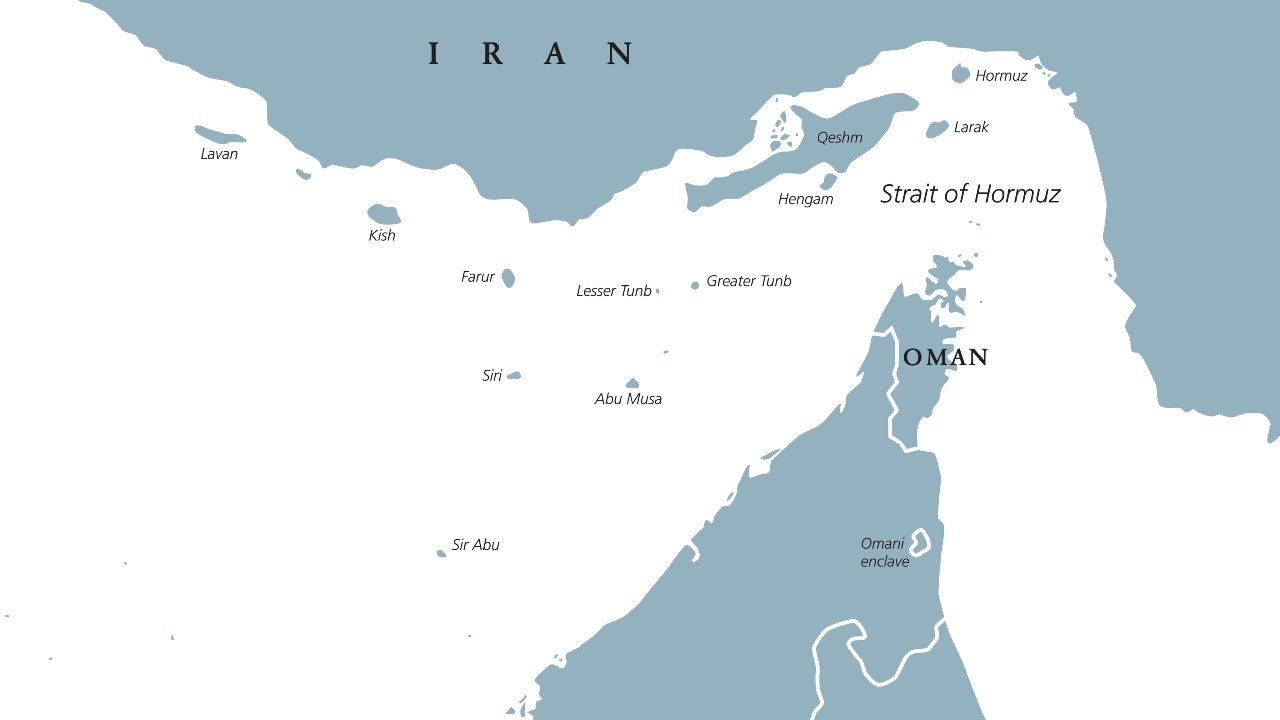
Get to know the "Strait of Hormuz," a strategic area the world is watching closely after the U.S. and Israel launched attacks on Iran. This article delves into its importance to the global economy and oil prices that could soar if the strait is sealed off.
Following the major military operations by the U.S. and Israel in Iran in late February 2026, all eyes turned to the "Strait of Hormuz," a strategic area known as the "artery" of the world’s energy supply. Recent reports indicate that Iran’s Islamic Revolutionary Guard Corps (IRGC) has begun pressuring maritime traffic. This explains why this small area can shake the global economy overnight.
The Strait of Hormuz is a narrow waterway connecting the Persian Gulf with the Gulf of Oman and the Arabian Sea, bordered on one side by Iran and on the other by Oman and the United Arab Emirates (UAE). Though only about 33 to 50 kilometers wide at its narrowest point, it is the sole passage for oil tankers from major Middle Eastern producers to world markets.

According to 2026 data, approximately 20-25% of the world’s consumed crude oil and liquefied natural gas (LNG) is transported daily through this strait, equating to over 20 million barrels of oil per day. If the strait is blocked or severe clashes prevent ship passage, analysts predict global crude oil prices could surge to $100-120 per barrel within days.
In the latest confrontation with the U.S. and Israel, Iran has leveraged its advantageous position over the Strait of Hormuz. Despite U.S. naval superiority, Iran’s unconventional warfare tactics—such as fast attack boats, naval mines, and suicide drones—have prompted maritime insurers to halt coverage in the area, effectively causing a de facto closure of the strait.
Asian countries like China, India, Japan, and South Korea import over 80% of their oil through this strait. For Thailand, disruptions in Hormuz would immediately increase energy costs, triggering a chain reaction affecting product prices and inflation inevitably.
The tension in the Strait of Hormuz affects not only the global scale but also directly impacts the wallets of Thai people, with key figures to watch:

The 2026 Strait of Hormuz situation is not only about military security among the U.S., Iran, and Israel but also a gamble on the global economic stability. As long as there is no equally efficient alternative oil transport route, this "bottleneck" remains the most vulnerable point on the world map.