

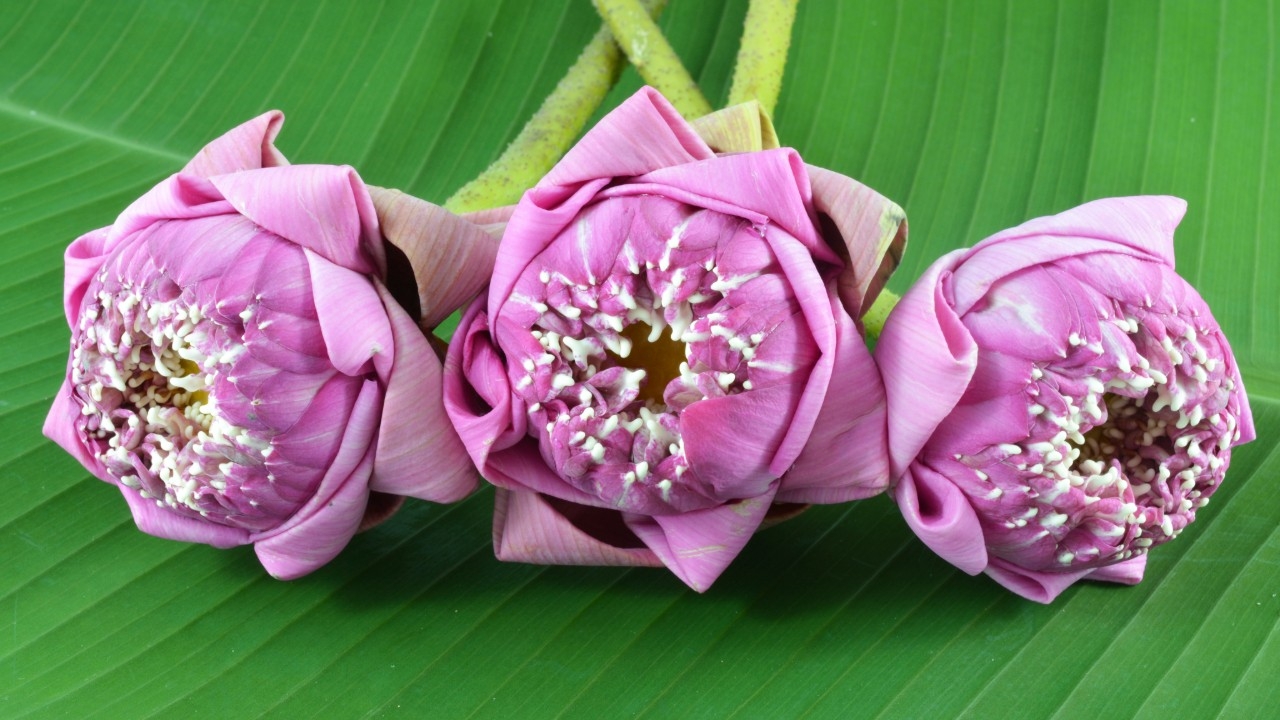
The trend of holding lotus flowers for photos is currently booming. Recently, on social media, you can see many young people holding “ lotus flowers ” and taking pictures by the Chao Phraya River near Phra Phuttha Yodfa Bridge, becoming viral as “ Phra Phuttha Yodfa Lotus Photos .” This is not just a simple photo trend but also reflects the behavior and perspective of the Gen Z generation, who value simplicity filled with art and meaning, and something anyone can easily relate to.
Thairath Online will reveal the origins of this trend of holding lotus flowers for photos at Phra Phuttha Yodfa Bridge, the surge of young people buying lotus flowers at Pak Khlong Talat, and explore the meaning of “ lotus flowers ” which are currently very popular.
Lotus flowers hold profound significance in religion, culture, and life philosophy, especially in Thai society. Overall, lotus flowers symbolize purity, goodness, and liberation. Despite growing from muddy waters, they bloom beautifully above the surface, symbolizing people’s ability to rise above negativity and improve themselves.

This trend began when a user on X posted a simple yet stylish photo of a folded lotus flower in a vase, which was retweeted over ten thousand times. This inspired netizens to buy lotus flowers from “Pak Khlong Talat,” Bangkok's famous flower market, practice folding lotus flowers, and post their photos on social media.
Some bought large bouquets of lotus flowers to photograph at “Phra Phuttha Yodfa Bridge,” known for its beautiful view of the Chao Phraya River and special evening light. As users shared these images, word spread quickly, making it a popular photo spot in a short time.

Interestingly, the “lotus flower,” originally a religious ceremonial flower, has been reinterpreted as a stylish photo prop. Its soft shape and colors help create minimalist photos that still maintain a distinct Thai character.
Repurposing familiar items in new contexts is a hallmark of today's content, showing that you don't need expensive items or distant locations to create attractive and interesting images.

For Gen Z, “lotus flowers” are no longer just for religious offerings but are seen as items full of aesthetic beauty, both emotionally and stylistically, ideal for crafting a social media image that is simple but elegant.
The lotus’s charm lies in its uncomplicated beauty, with neatly arranged petals and soft pink and white tones that feel gentle, clean, and naturally minimalist—perfect for the soft-tone photo trend popular among young people.

Moreover, the lotus holds an alluring hidden meaning. Despite growing from muddy waters, it blooms beautifully, symbolizing growth, self-acceptance, and the value of imperfection. This concept resonates deeply with Gen Z and is highly valued by them.
When paired with natural light or vintage backdrops (popular spots like Phra Phuttha Yodfa Bridge, along the Chao Phraya River, and famous temples in the Phra Nakhon area), the lotus enhances a calm, serene, and artistic atmosphere without much embellishment, perfectly conveying a slow-life mood.
Another reason for this trend's popularity is its accessibility. Lotus flowers are affordable; with just a few tens of baht, anyone can create stylish, standout photos without relying on luxury, winning over young people with simple yet unique charm.

In summary, the “ holding lotus flowers for photos at Phra Phuttha Yodfa Bridge ” trend shows that modern popularity does not always depend on luxury or novelty but on seeing familiar things from a new perspective. What was once just a religious flower has now become a symbol of style and identity for the new generation, also helping increase income for Thai farmers and local communities.