

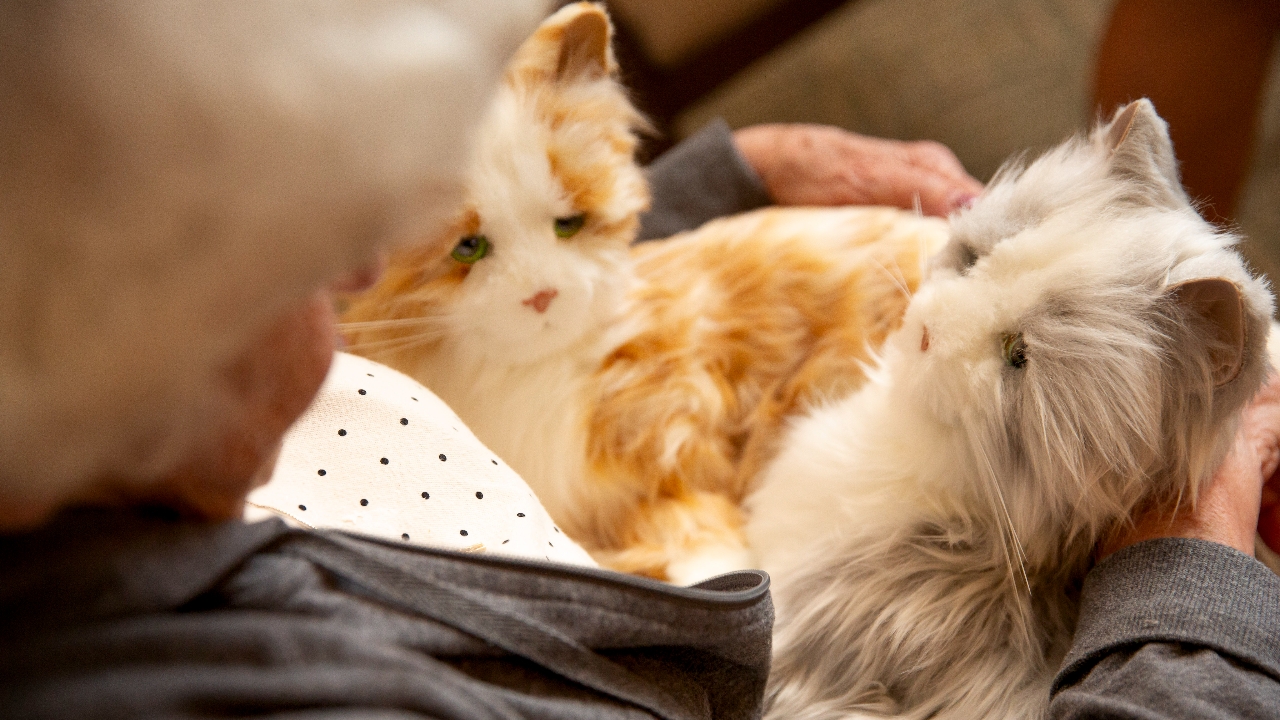
We live in an era where technology is designed not only for convenience but also to care for the human "mind." Recent medical research consistently confirms that "pet companion robots" or Pet Companion Robots are not justhigh-tech toysanymore; they are becoming highly effective drug-free therapeutic tools for caring for the elderly and specialized children, emerging as a megatrend driving the current global health market.

The main reason pet companion robots are accepted in the medical field is their ability to bring happiness and reduce loneliness without users bearing the burden of care—no need to feed, take to the vet, or worry about allergies to animal fur. This makes them especially suitable for hospitals and nursing homes. The notable medical results include the following:
Rehabilitation for dementia patients: Research from Sarasota Memorial Hospital in the United States (2025-2026) found that elderly dementia patients who received pet companion robots showed more stable blood pressure and heart rates, reduced fall risks, shorter hospital stays, and a higher chance of returning home compared to those without the robots.
Stress reduction in autistic children: A survey at a dental clinic in Sweden found that the Joy for All robotic cat acts as a "comforting friend," reducing anxiety in children on the autism spectrum (ASD) in 6 out of 10 cases, helping them accept treatment without severe resistance.
A valuable aid for caregivers: Research from Old Dominion University confirms that patients can enjoy interacting with robots independently, allowing caregivers more rest time, reducing sedative use in patients, and promoting better communication within families.

These tangible medical outcomes have propelled the pet robot industry to rapid growth. A report by Spherical Insights states that the market started at 480 million USD in 2025 and is projected to soar to 1.24 billion USD by 2035, growing at an average annual rate (CAGR) of 10.9%.
Analyzing market share reveals that currently, Connected/Smart pet robots hold the largest share at 61.0%, catering to remote health monitoring and AI interaction. Robotic Pets account for 54.0%, and premium products hold 47.0%, reflecting consumer willingness to pay for realistic technology meeting medical standards. The top five fastest-growing markets are:
This market is driven by about 10-12 technology companies and specialists. The number one leader is Sony, holding about 14.0% market share with deep AI expertise integrated into health networks. Noteworthy innovators include Tombot at rank four, focused on ultra-realistic robots for medical research, and Joy For All at rank five, known for user-friendly therapeutic robots.

In Thailand, this trend is just beginning to gain recognition and positive reception. Kongkiat Sakuljan, Managing Director of Suanyai House Co., Ltd., the first importer of the Joy for All brand in Asia, revealed, “Currently, nursing homes, elderly care centers, and medical personnel in Thailand are increasingly incorporating pet companion robots into patient care.”
“When users experience them firsthand, they immediately understand these are emotional aids that genuinely reduce loneliness. There is also a growing trend to extend their use to children undergoing long-term hospital treatment, such as cancer patients, to alleviate loneliness and create warmth during difficult times.”
Ultimately, pet companion robots are not designed to replace living beings but to fill gaps in mental health care. They represent future innovation that combines advanced technology with empathy to genuinely enhance quality of life for people of all ages.