

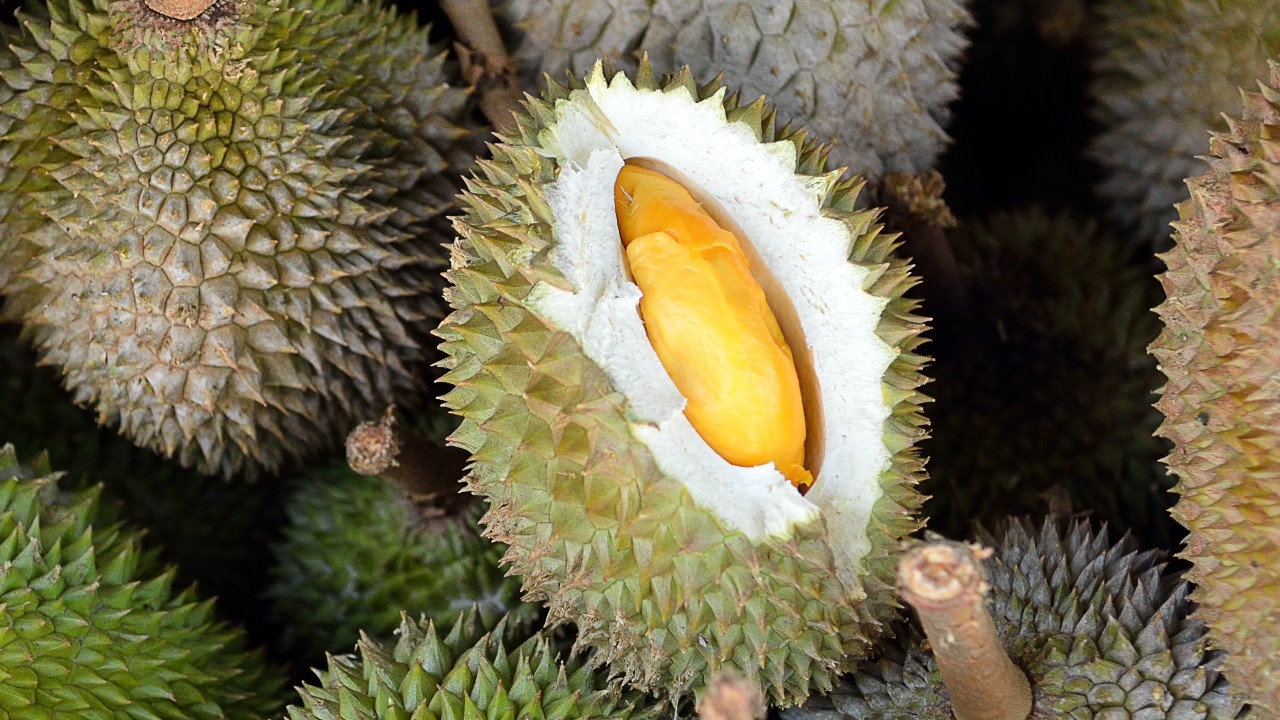
With durian season back again, food lovers are familiar with varieties like Monthong, Chanee, or Kan Yao. But did you know that among durian enthusiasts, there are ancient durian varieties regarded as rare masterpieces, for which collectors and connoisseurs are willing to spend big and compete just to taste once in their lifetime?
Thairath Online introduces two legendary varieties: “Kob Chai Nam,” dubbed the 'hundred-thousand-baht durian,' and “Yam Ma Wat,” a creamy durian from the Luang family that is hard to find and incredibly delicious. Let’s explore what secrets make their prices skyrocket and why they are so sought after.
Kob Chai Nam durian is considered a gem of Nonthaburi province, belonging to the Kob family. It originates from seeds of the Kob Mae Thao variety. The name 'Kob Chai Nam' comes from the variety’s preference for planting near ponds or water edges. It is rain-resistant and does not suffer from the soggy flesh or mushy core issues common in other varieties.
Its standout feature, which makes collectors willing to pay high prices, is its pale yellow flesh that is dense, dry, and finely textured with almost no fibers. Its flavor is sweet, rich, and perfectly balanced, similar to Monthong but with a cooler sensation when eaten. Importantly, it has abundant flesh and very small seeds, with a mild fragrance that is not overpowering. The fruit shape is oval to round, usually with full segments, and a key identifying mark is the bottom of the fruit, which dips inward like a navel.
Due to its flawless flesh quality and the expert care required to cultivate it, the current market price for Kob Chai Nam starts around 11,000 to 15,000 baht per fruit. For especially beautiful specimens classified as“Nang Phaya” (Queen level),they may be auctioned or pre-ordered at prices soaring up to 100,000 baht per fruit. Kob Chai Nam has truly become a premium symbol in the durian world.
For those who dislike overly sweet or pungent durians, Yam Ma Wat is the perfect choice. This indigenous durian from the Luang family was first grown from Luang seeds by Khun Son Choti in the Bang Kho Laem area of Thonburi, before becoming popular and widely cultivated in Nonthaburi and Chanthaburi provinces.
Yam Ma Wat’s charm lies in its pale yellow flesh that is thick, dry, and finely textured, offering a creamy and slightly chewy mouthfeel. Its flavor emphasizes a special fragrant richness rather than sharp sweetness, accompanied by a gentle, pleasant aroma without any strong unpleasant smell. The fruit tends to be oval-shaped with an irregular form, sharp spines, and tips that curve inward.
Although it is a variety that is relatively easy to care for and produces fruit abundantly, very few farmers grow it, making its market supply extremely limited. Currently, its price online or at orchards ranges from about 350 to 500 baht per kilogram, which is a great value for collectors or those wanting to savor the original taste of an ancient durian.
Eating ancient durian varieties like Kob Chai Nam and Yam Ma Wat is more than just enjoying seasonal fruit; it is experiencing the wisdom and traditional flavors passed down through generations. If you have the chance this season to encounter these two varieties, be sure to seize the opportunity to taste this legendary deliciousness.
Source: duriannon